" height="181.6126384314162px" id="NP8hNJqgt" stroke-dasharray="" stroke-linecap="round" stroke-linejoin="miter" stroke-miterlimit="10" stroke-width="5.38" stroke="rgb(255, 255, 255)" transform="translate(3.626 4.776)" width="237.6989655814808px"/><path d="M 136.481 5.055 C 121.426 -0.743 82.744 -7.401 58.913 21.606 C 31.841 54.559 33.384 62.975 0 78.124" fill="transparent" height="78.12399806693736px" id="aqxNNpIlU" stroke-dasharray="" stroke-linecap="round" stroke-linejoin="miter" stroke-miterlimit="10" stroke-width="5.62" stroke="rgb(88, 44, 139)" transform="translate(21.9 18.472)" width="136.4813613672496px"/><path d="M 63.401 0 C 65.084 20.479 65.562 44.493 35.488 59.754 M 44.605 30.017 C 41.052 34.085 30.41 42.642 16.271 44.325 M 40.538 11.221 C 37.405 17.3 24.912 30.943 0 36.891" fill="transparent" height="59.75431319554838px" id="CCKt5zBc1" stroke-dasharray="" stroke-linecap="round" stroke-linejoin="miter" stroke-miterlimit="10" stroke-width="5.62" stroke="rgb(88, 44, 139)" transform="translate(36.763 66.591)" width="64.0317496333554px"/><path d="M 52.18 2.805 C 58.352 4.909 69.601 12.68 65.225 26.932 M 37.311 6.733 C 42.642 10.053 52.208 19.75 47.832 31.981 M 22.864 12.484 C 24.687 16.505 27.24 26.034 22.864 31.981 M 8.977 12.484 C 10.847 17.814 13.129 30.045 7.294 36.33 M 74.763 40.818 C 75.324 44.185 74.278 47.27 79.532 56.107 C 84.786 64.944 84.301 82.197 79.532 90.333 C 74.763 98.468 64.804 118.106 22.864 106.604 C 13.185 102.817 8.192 99.927 0 92.297 M 69.713 0 C 75.885 2.104 88.93 10.941 87.387 26.09" fill="transparent" height="110.12864778586157px" id="pF8QmbxIB" stroke-dasharray="" stroke-linecap="round" stroke-linejoin="miter" stroke-miterlimit="10" stroke-width="5.62" stroke="rgb(88, 44, 139)" transform="translate(103.533 31.243)" width="87.51298073395489px"/><path d="M 0 0.935 C 2.665 3.741 13.283 8.887 19.645 0" fill="transparent" height="4.984302636960038px" id="X7rzmr5Ey" stroke-dasharray="" stroke-linecap="round" stroke-linejoin="miter" stroke-miterlimit="10" stroke-width="5.62" stroke="rgb(88, 44, 139)" transform="translate(148.511 112.24)" width="19.6446041335453px"/><path d="M 11.642 2.249 C 9.678 0.097 3.501 -1.96 1.048 3.415 C -1.898 9.868 1.469 17.863 9.884 21.51" fill="transparent" height="21.51009661237302px" id="nkVkpgcJC" stroke-dasharray="" stroke-linecap="round" stroke-linejoin="miter" stroke-miterlimit="10" stroke-width="5.62" stroke="rgb(88, 44, 139)" transform="translate(99.189 86.784)" width="11.64241111031076px"/><path d="M 0 0.496 C 2.619 -0.111 8.332 -0.654 10.24 2.039 C 12.147 4.732 7.949 6.995 5.611 7.79" fill="transparent" height="7.790156479162775px" id="qsyCkkhfn" stroke-dasharray="" stroke-linecap="round" stroke-linejoin="miter" stroke-miterlimit="10" stroke-width="5.62" stroke="rgb(88, 44, 139)" transform="translate(156.142 96.11)" width="10.723021170324301px"/><path d="M 0 3.927 C 0 1.758 1.758 0 3.927 0 C 6.096 0 7.854 1.758 7.854 3.927 C 7.854 6.096 6.096 7.854 3.927 7.854 C 1.758 7.854 0 6.096 0 3.927 Z" fill="rgb(88, 44, 139)" height="7.8543596184419755px" id="NXSHKkPZq" stroke-dasharray="" stroke-linecap="butt" stroke-linejoin="miter" stroke-miterlimit="10" stroke-width="0.28" stroke="rgb(88, 44, 139)" transform="translate(141.405 77.671)" width="7.8543596184419755px"/><path d="M 0 3.366 C 0 1.507 1.507 0 3.366 0 C 5.225 0 6.732 1.507 6.732 3.366 C 6.732 5.225 5.225 6.732 3.366 6.732 C 1.507 6.732 0 5.225 0 3.366 Z" fill="rgb(88, 44, 139)" height="6.732196057233693px" id="CrZ7fWfLy" stroke-dasharray="" stroke-linecap="butt" stroke-linejoin="miter" stroke-miterlimit="10" stroke-width="0.28" stroke="rgb(88, 44, 139)" transform="translate(164.131 77.671)" width="6.73219605723375px"/><path d="M 0 2.95 C 0 2.95 2.245 -1.257 7.096 0.377" fill="transparent" height="2.9498727962239997px" id="U7ztfhbRh" stroke-dasharray="" stroke-linecap="round" stroke-linejoin="miter" stroke-miterlimit="10" stroke-width="4.22" stroke="rgb(88, 44, 139)" transform="translate(137 72.865)" width="7.096313195548504px"/><path d="M 0 0.953 C 0 0.953 3.931 -1.746 7.484 1.94" fill="transparent" height="1.940203631980836px" id="v6c3wqyL1" stroke-dasharray="" stroke-linecap="round" stroke-linejoin="miter" stroke-miterlimit="10" stroke-width="4.22" stroke="rgb(88, 44, 139)" transform="translate(164.734 71.113)" width="7.483782193958632px"/><path d="M 15.526 7.458 C 15.178 4 12.679 -2.176 5.467 0.776 C -3.549 4.468 -0.361 17.645 7.419 16.773 M 23.691 7.203 C 22.326 9.253 20.313 14.185 23.19 17.513 M 33.125 10.53 C 30.584 17.509 23.05 30.554 13.248 26.905" fill="transparent" height="27.53666078013528px" id="hN_bYQt0q" stroke-dasharray="" stroke-linecap="round" stroke-linejoin="miter" stroke-miterlimit="10" stroke-width="5.62" stroke="rgb(88, 44, 139)" transform="translate(41.325 126.847)" width="33.12516001271064px"/><path d="M 11.942 2.663 C 10.124 0.342 5.473 -2.553 1.416 4.446 C -3.655 13.195 6.252 18.219 9.859 15.799 M 22.723 0 C 18.303 7.547 12.535 22.577 24.823 22.316 M 47.423 3.918 C 43.446 3.594 34.981 3.556 32.937 5.994 C 31.851 7.289 31.039 11.308 31.453 15.342 M 42.224 25.077 C 34.819 26.285 32.014 20.801 31.453 15.342 M 31.453 15.342 C 34.831 16.06 42.027 17.035 43.792 15.197" fill="transparent" height="25.24543064709987px" id="XxRiDv2Ps" stroke-dasharray="" stroke-linecap="round" stroke-linejoin="miter" stroke-miterlimit="10" stroke-width="5.62" stroke="rgb(88, 44, 139)" transform="translate(70.643 150.709)" width="47.42267168255802px"/><path d="M 0 5.829 C 1.231 10.061 5.05 18.881 10.48 20.303 C 15.91 21.726 15.81 9.189 15.081 2.742 M 32.487 0.258 C 30.013 -0.273 24.922 -0.34 24.348 3.639 C 24.054 5.678 24.228 9.459 25.134 12.993 M 34.357 20.805 C 29.251 22.65 26.436 18.076 25.134 12.993 M 25.134 12.993 C 27.529 12.682 32.599 11.712 33.713 10.314" fill="transparent" height="21.22205078044745px" id="ZzUXoJBfI" stroke-dasharray="" stroke-linecap="round" stroke-linejoin="miter" stroke-miterlimit="10" stroke-width="5.62" stroke="rgb(88, 44, 139)" transform="translate(131.804 150.935)" width="34.35730539178164px"/><path d="M 9.998 23.552 C 6.136 19.302 -1.236 10.104 0.178 7.31 C 1.945 3.817 15.649 14.093 17.68 17.691 C 19.71 21.289 20.31 11.394 9.757 0" fill="transparent" height="23.55226232114464px" id="FMupJ5Kli" stroke-dasharray="" stroke-linecap="round" stroke-linejoin="miter" stroke-miterlimit="10" stroke-width="5.62" stroke="rgb(88, 44, 139)" transform="translate(171.964 143.007)" width="18.87327399655632px"/><path d="M 14.523 20.829 C 9.816 17.229 0.321 9.272 0.006 6.25 C -0.388 2.471 20.323 15.054 22.418 12.968 C 24.512 10.883 17.934 4.76 9.504 0" fill="transparent" height="20.82886645469px" id="RQlh8pzkg" stroke-dasharray="" stroke-linecap="round" stroke-linejoin="miter" stroke-miterlimit="10" stroke-width="5.62" stroke="rgb(88, 44, 139)" transform="translate(184.633 129.761)" width="22.809804666003714px"/><path d="M 6.859 0 C 4.262 1.37 -0.728 4.76 0.089 7.365 C 0.565 8.878 5.557 12.341 10.883 14.436 M 24.224 11.176 C 23.584 17.445 17.012 16.846 10.883 14.436 M 10.883 14.436 C 12.922 12.217 16.755 6.905 15.772 3.406" fill="transparent" height="16.139388185502714px" id="pX4U33L2D" stroke-dasharray="" stroke-linecap="round" stroke-linejoin="miter" stroke-miterlimit="10" stroke-width="5.62" stroke="rgb(88, 44, 139)" transform="translate(195.085 113.4)" width="24.223996011294332px"/><path d="M 22.778 16.768 L 0.824 7.164 C 0.061 6.831 -0.249 5.909 0.225 5.224 C 2.864 1.418 8.077 -2.974 13.122 2.755 C 13.875 3.61 14.431 4.394 14.825 5.108 C 15.603 6.522 18.324 8.917 19.833 8.346 L 28.347 5.126" fill="transparent" height="16.768464437812256px" id="a21K092h4" stroke-dasharray="" stroke-linecap="round" stroke-linejoin="miter" stroke-miterlimit="10" stroke-width="5.62" stroke="rgb(88, 44, 139)" transform="translate(203.009 97.377)" width="28.34693483185572px"/></svg>)
Created in response to TfL’s brief “Cycling in London: Design for a Sustainable City,” Cycle Venner reimagines urban cycling as a shared, sustainable lifestyle — empowering women in London to ride further, safer, and together.
#CyclingInLondon #ConfidentCycling #SheRidesLondon #EmpowerThroughDesign
Project Partner
Transport for London (TfL)
Category
Transport, public health and sustainability
Duration
4 months
My Role
Service Designer · Research lead · Visual Identity · UI Designer
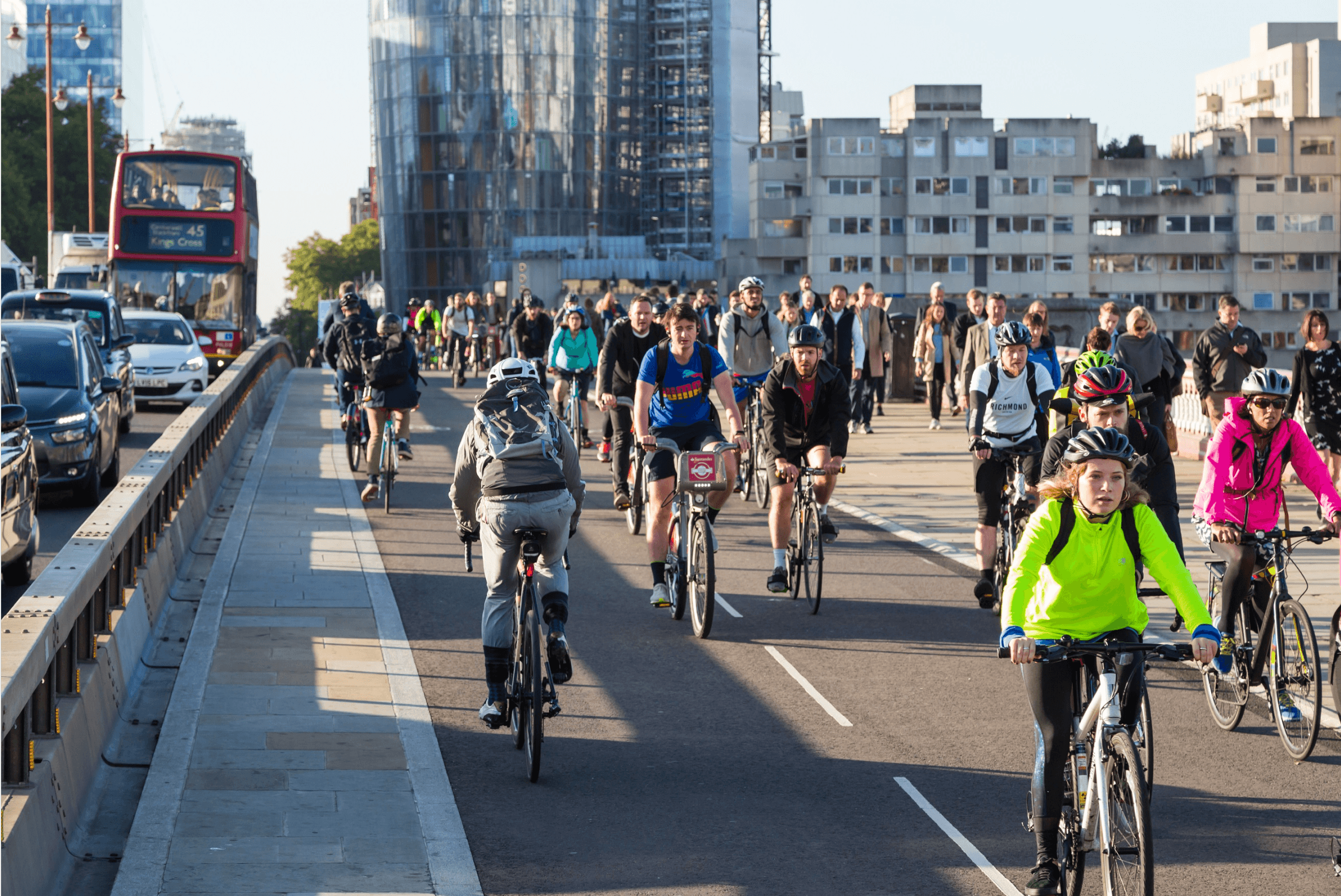
When I first received the brief, a quiet question surfaced in my mind:
“Why don’t I cycle anymore in London?”
Challenge Description
The Mayor’s Transport Strategy and Healthy Streets vision aim to make 80% of London trips sustainable by 2041—through walking, cycling, and public transport. It focuses on building better infrastructure and experiences that make people feel confident and enjoy active travel, supported by seamless, user-centred digital and physical services.
TfL aims to inspire more Londoners to start cycling, support new cyclists to ride further, and help regular cyclists integrate cycling safely into their daily lives.
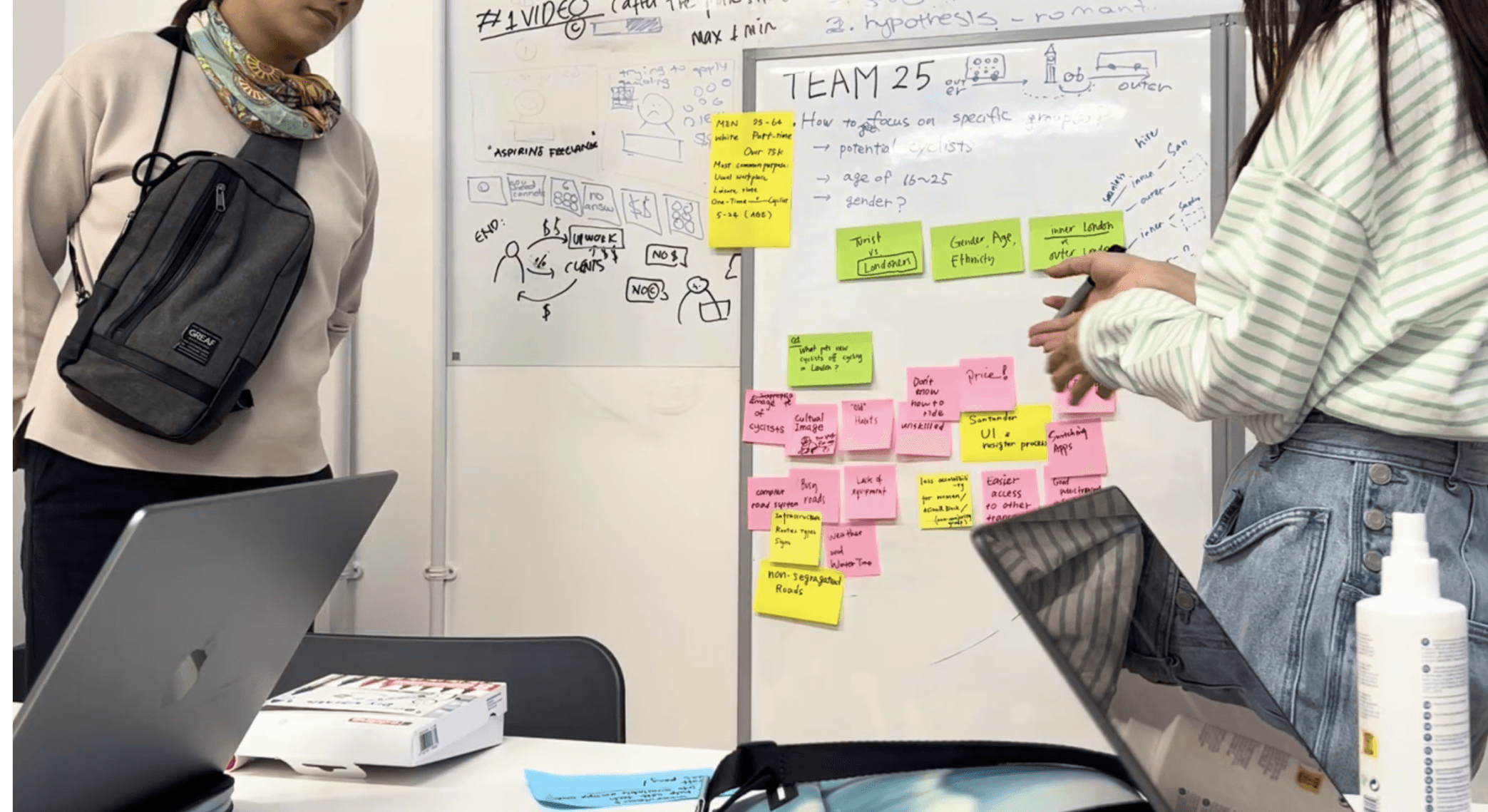
Skipping the preliminary background, and based on TfL’s materials and our everyday observations, we eventually focused—after extensive comparison and analysis—on women living in London as our target group.
Desk Research – Understanding the Context
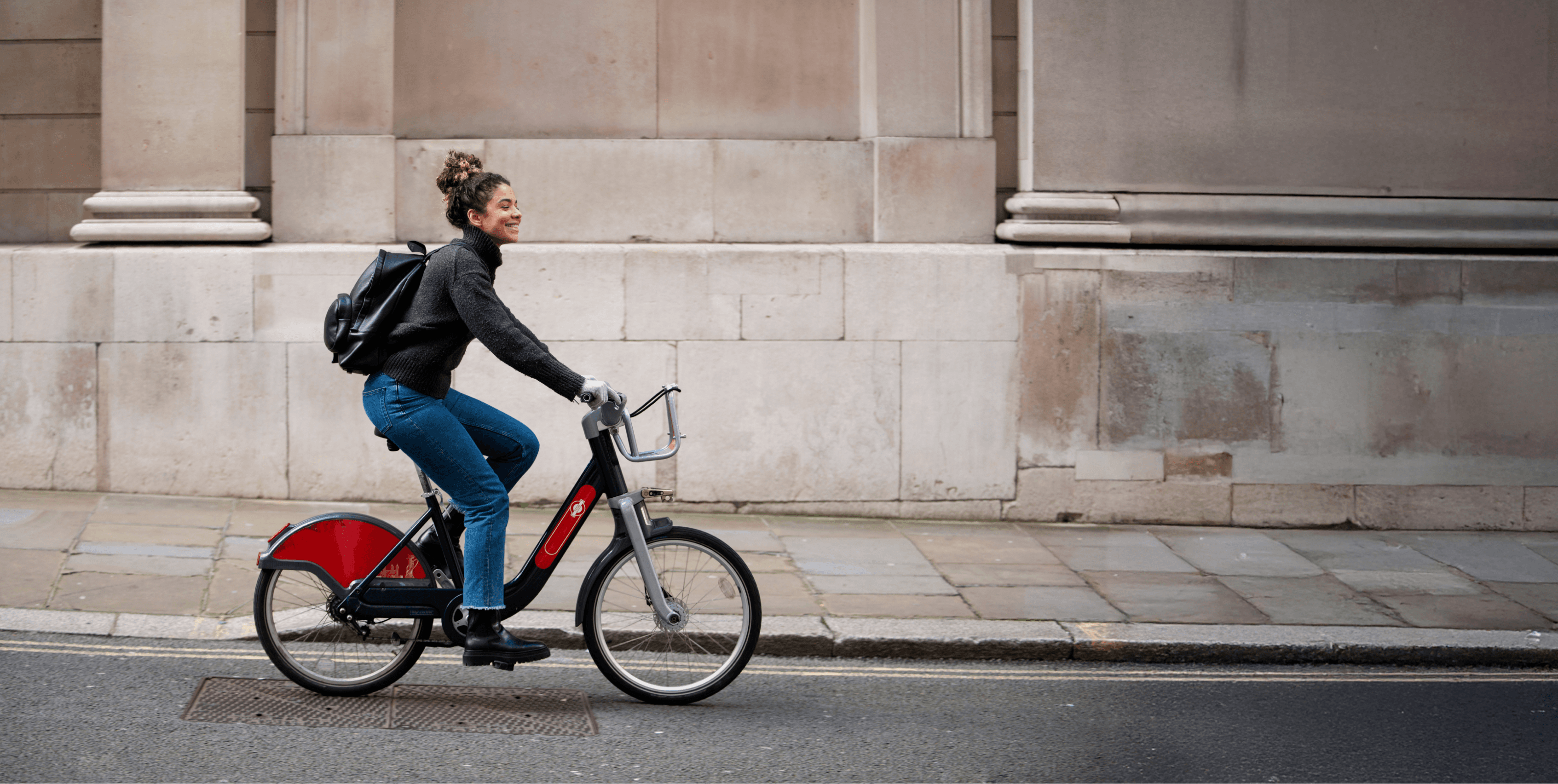
76% of women can cycle, yet only 20% do so in London. Women require safe, protected spaces to feel confident cycling, and while abundant information about cycling exists, accessing it demands strong dedication and motivation.
Female Cyclist
51% of the population is women, 76% can ride a cycle but only 20 % does.
Women Need Safe,
Protected Space for Cycling
9 out of 10 women said they would start to cycle or cycle more, if they had better infrastructure for their journeys.
Information Accessibility
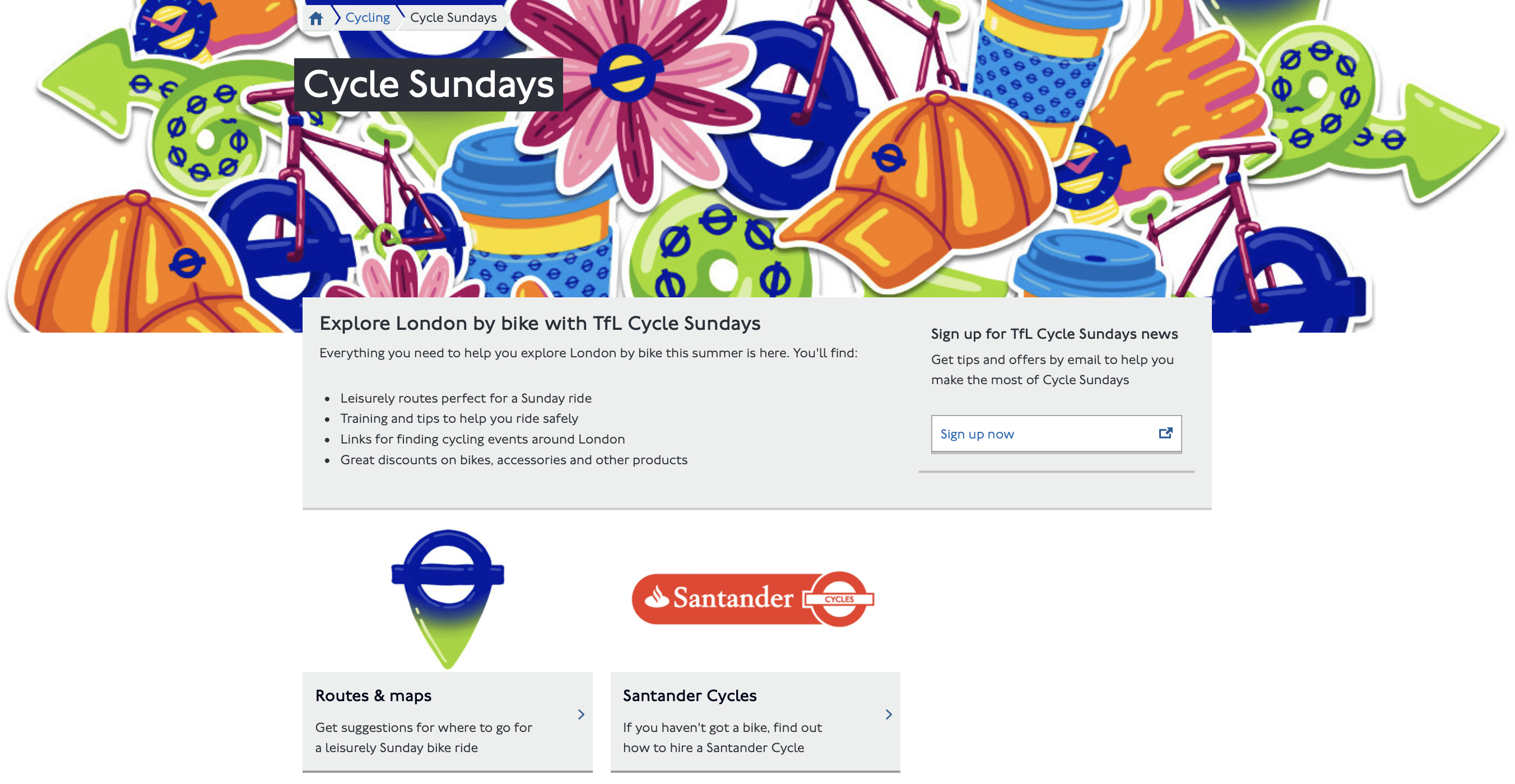
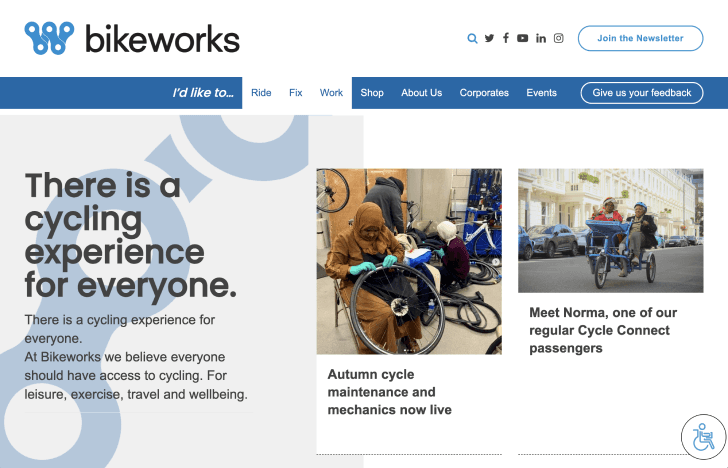
here is a lot of information about cycle routes, cycle tutorials and organisations, but you need to be modified to find it.
Primary Research – Experiencing and Mapping the Problem
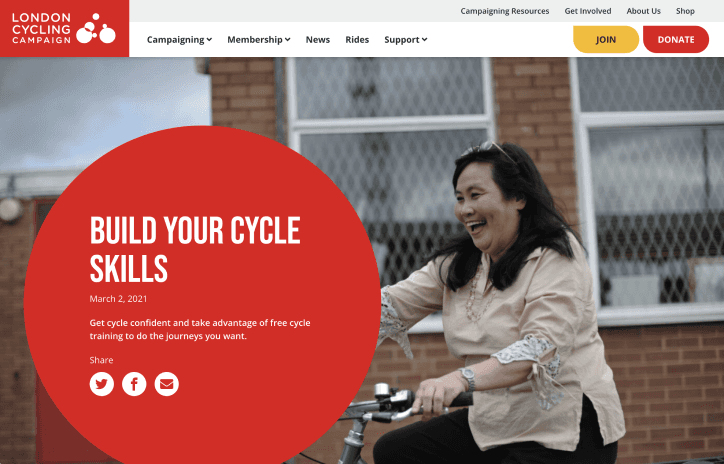
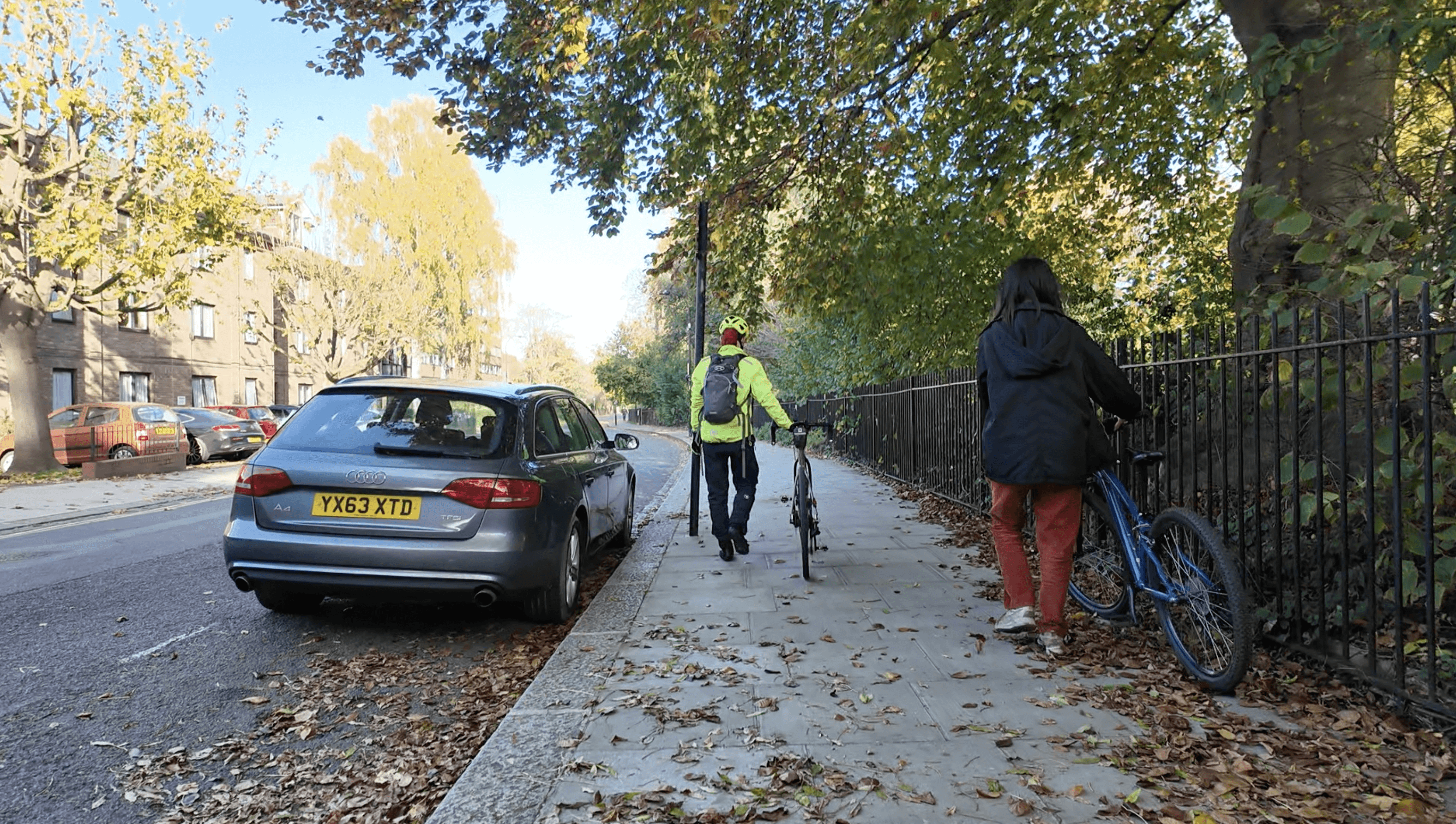
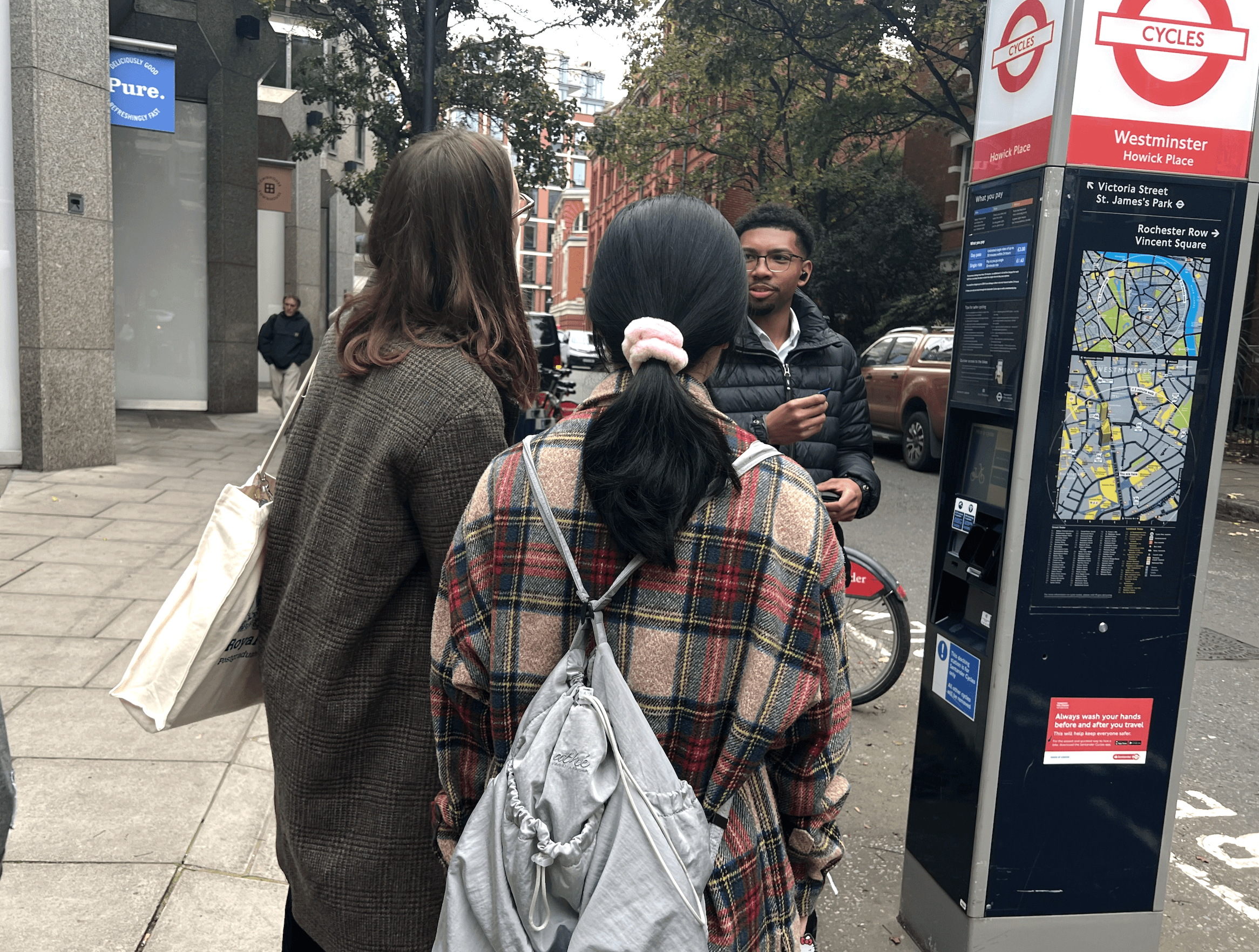
To understand why women hesitate to cycle in London, a series of first-hand explorations were carried out — including trying out cycling on TfL’s designated cycleways, visiting dangerous junctions, and joining free cycle training sessions. Additional insights were gathered through interviews with Jonathan from Hammersmith’s Group Cycle Training, RCA staff, and members of the London Cycling Campaign.
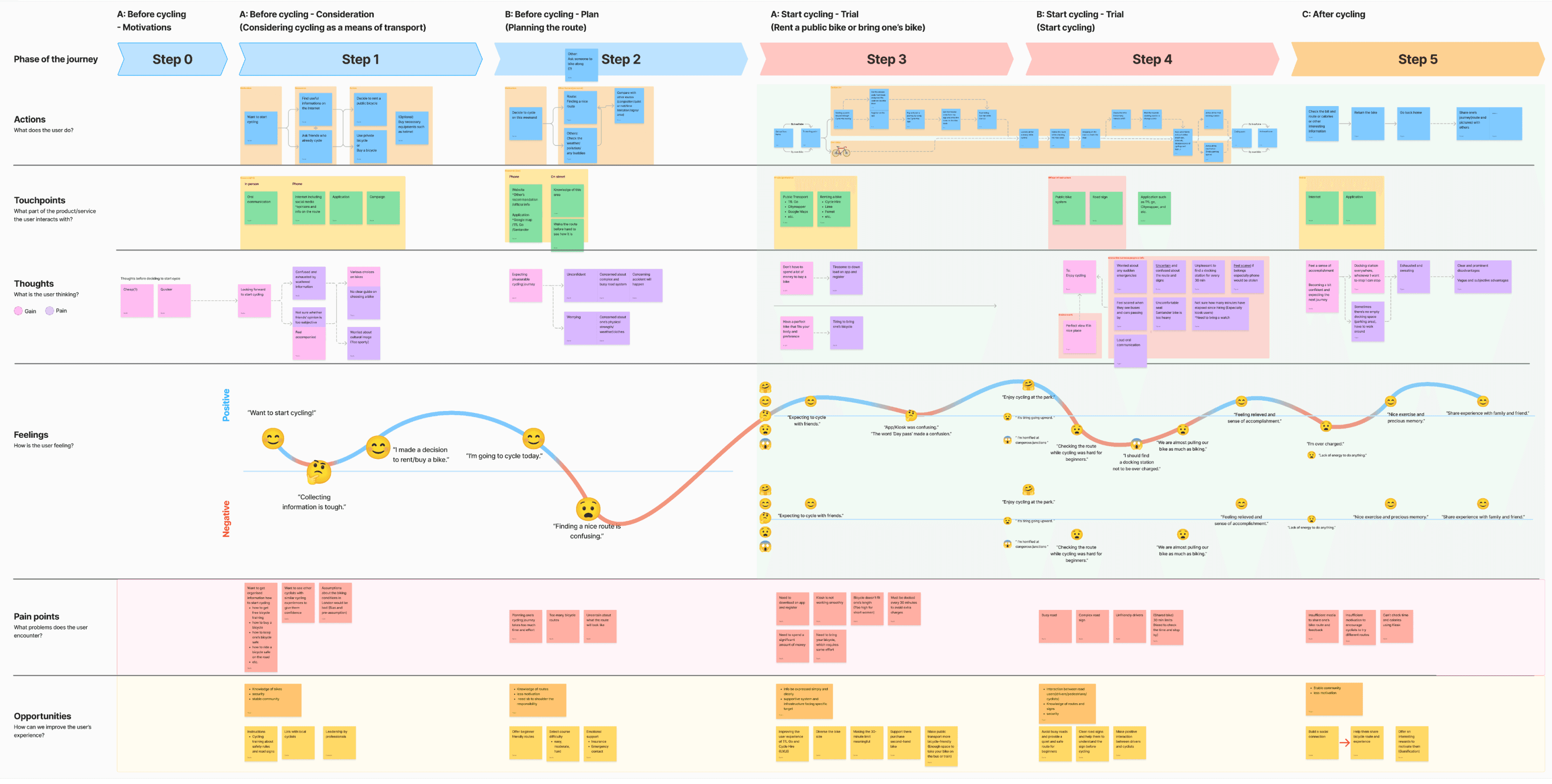
These experiences were then mapped into a user journey, revealing key emotional and practical barriers that shaped women’s cycling behaviour.
Preliminary Insights
Gender
Confidence and skill levels vary between genders
Lack of physical strength
Emotional Support
Culture
Cultural branding of cycling often presents a limited, professional image
The competition of car ownership and cycling
Infrastructure
Busy shared roads
Disconnected cycling routes
Lack of affordable and accessible storage
Safety
Conflict between people
One plan probably doesn’t always work
The research revealed critical insights related to gender, culture, infrastructure, and safety. As one cycle instructor noted, “I teach men and women in the same way, but often provide more support and encouragement to women.” This reflects a broader reality: female cyclists face more barriers to trying cycling and often struggle to decide whether to ride at all.
Hypothesis and Framework
From the insights, it became clear that women have many concerns about cycling — and taking the first step to try is often the hardest. Only when the initial experience feels enjoyable can confidence grow, eventually leading to a motivated and lasting cycling habit.
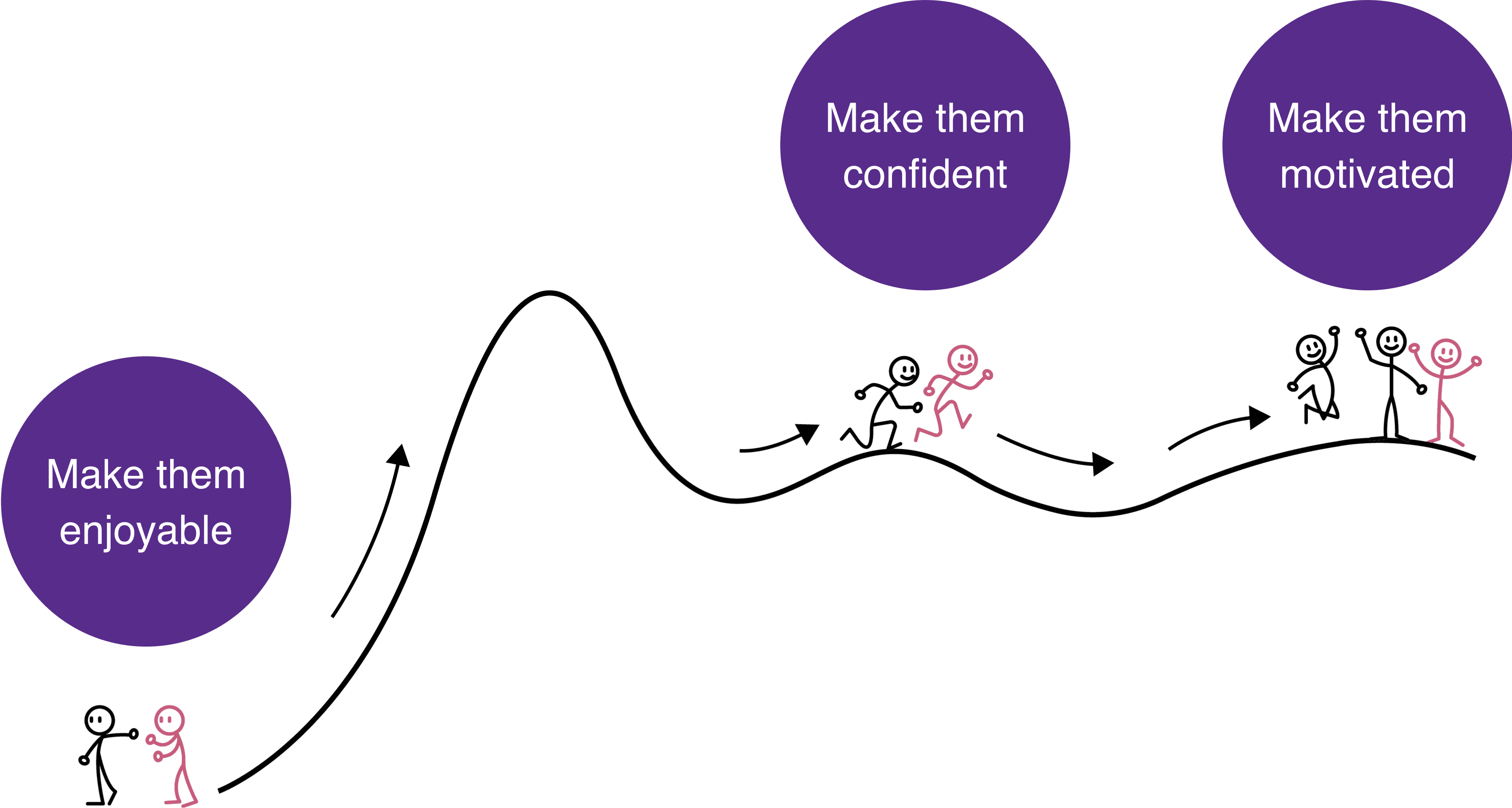
The pyramid illustrates a conceptual approach developed during the ideation phase — starting from safe and supportive environments to help women build confidence in cycling.
There is no physical difference between men and women in cycling; the challenge lies in mental and emotional readiness.
This concept aims to build confidence through community, professional training, and engaging experiences that make cycling both safe and enjoyable.
Prototyping and Developing
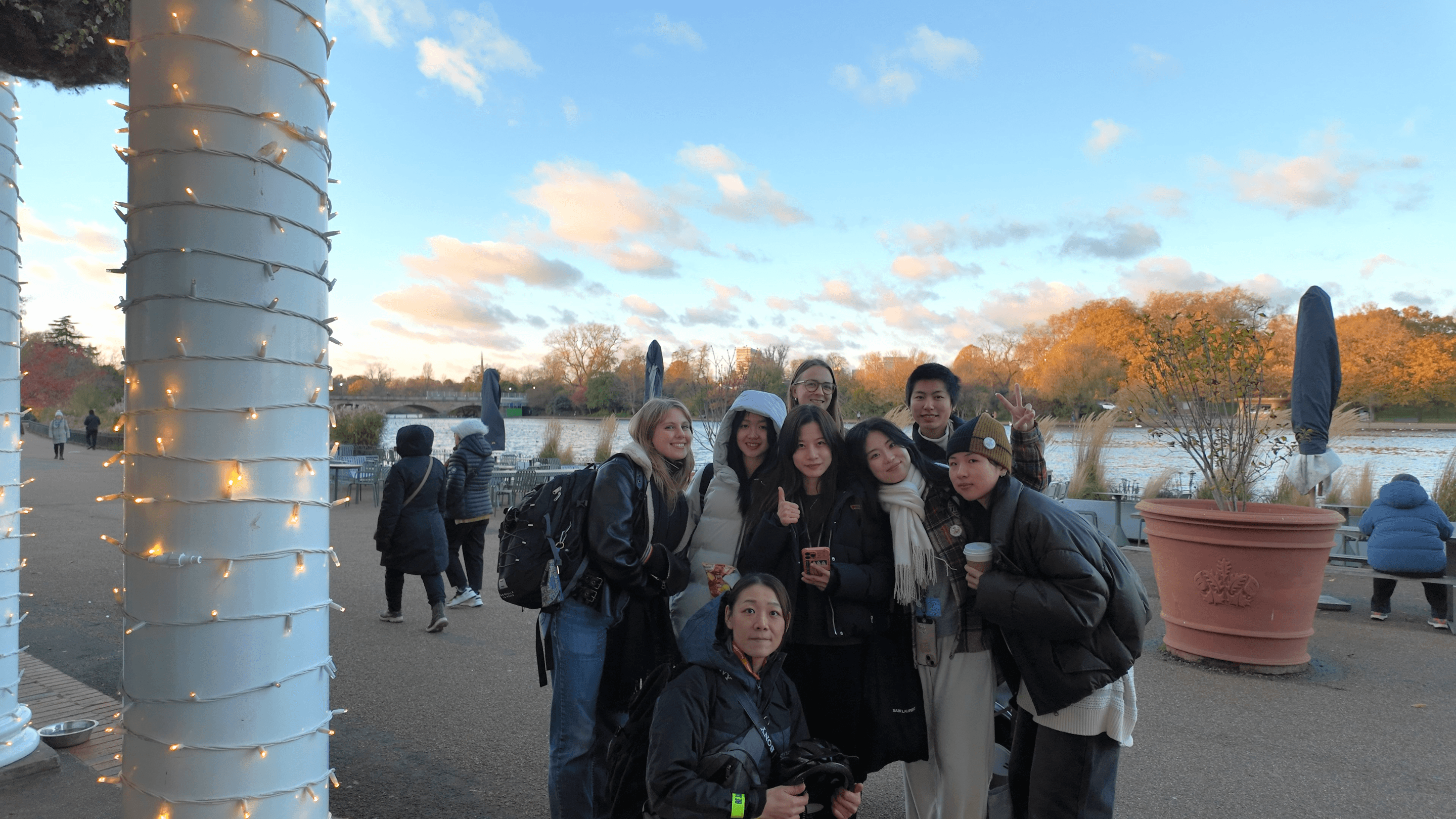
A campus cycling campaign was launched to test the concept in a real setting.

The prototyping revealed that safe environments, such as parks, can reduce women’s fear of riding on roads and enhance their sense of security. Playful mechanisms make cycling more engaging and motivating, while companionship significantly increases interest and enjoyment. Most importantly, building trust at the very beginning helps participants overcome hesitation and take the first step toward cycling.
The target group identified is female university students, who are more inclined to adopt cycling as part of their daily routines. This group possesses both the physical capability and flexible timetables to accommodate cycling. Moreover, their shared institutional environment provides a trusted and supportive foundation for behavioural change.



The Focus
Encourage students at universities and colleges across London to have FUN trying out cycling while building their CONFIDENCE in the process.
Service Concept

About Cycle Venner
Cycle Venner is a non-profit initiative dedicated to increasing cycling participation among female university students in central London. It helps students overcome confidence barriers and fosters community connections through outdoor events and shared experiences.
“Venner,” meaning “friends” in Danish, was inspired by Denmark’s strong cycling culture and reflects the project’s spirit of support, inclusivity, and togetherness.
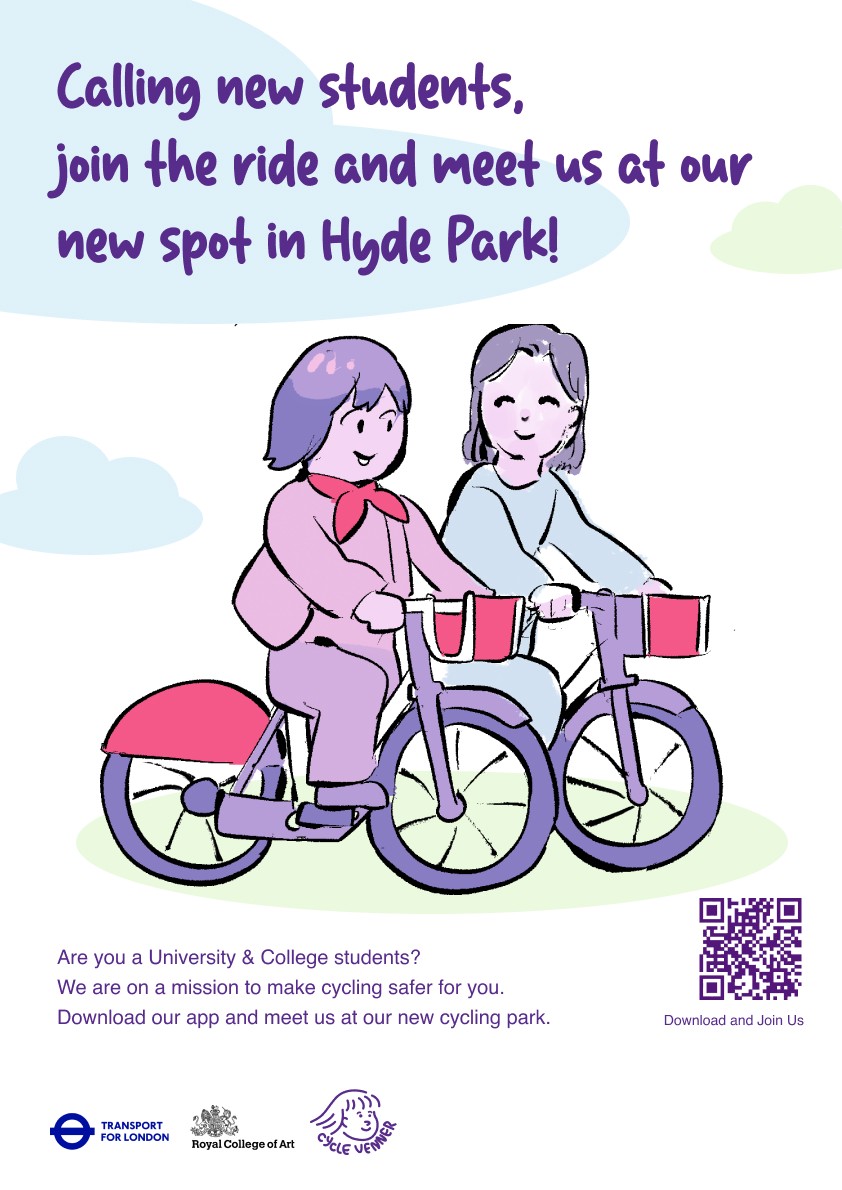

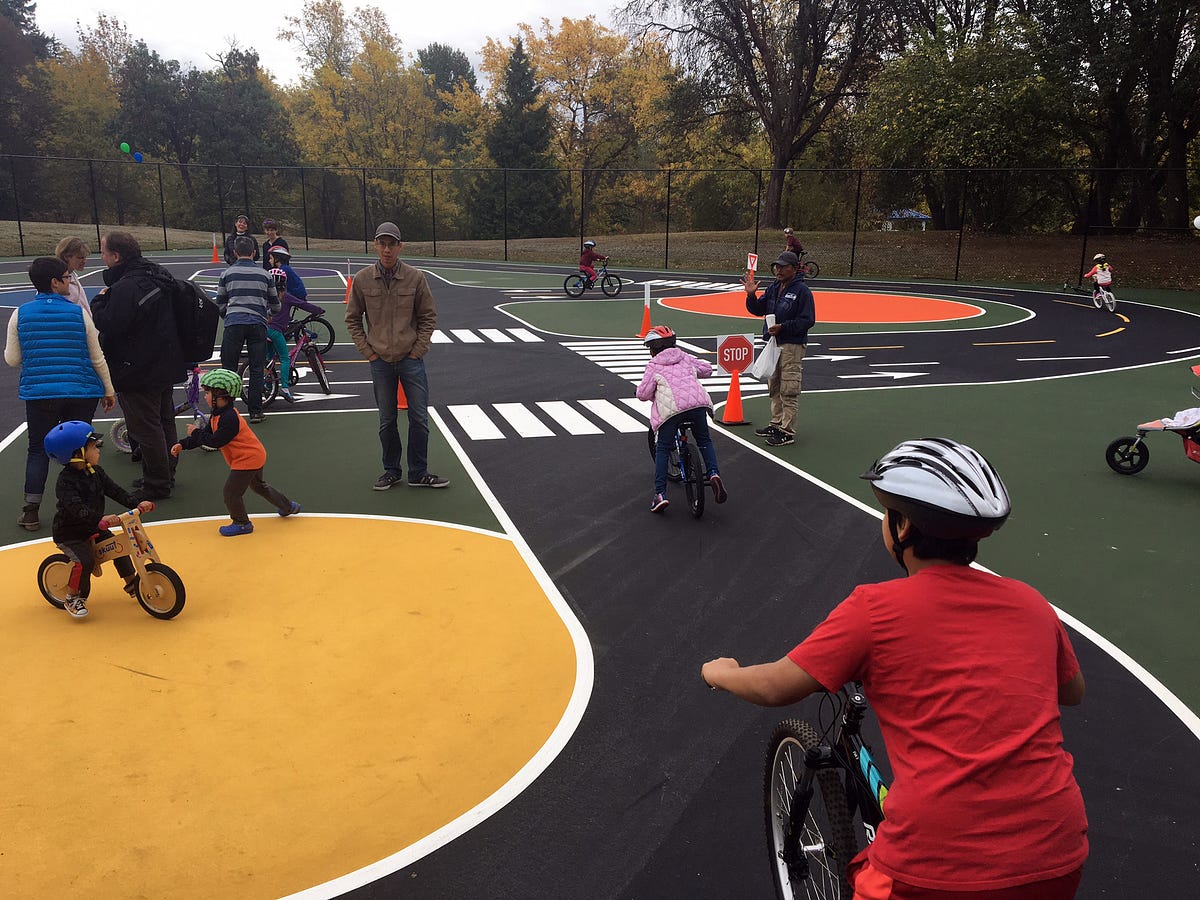
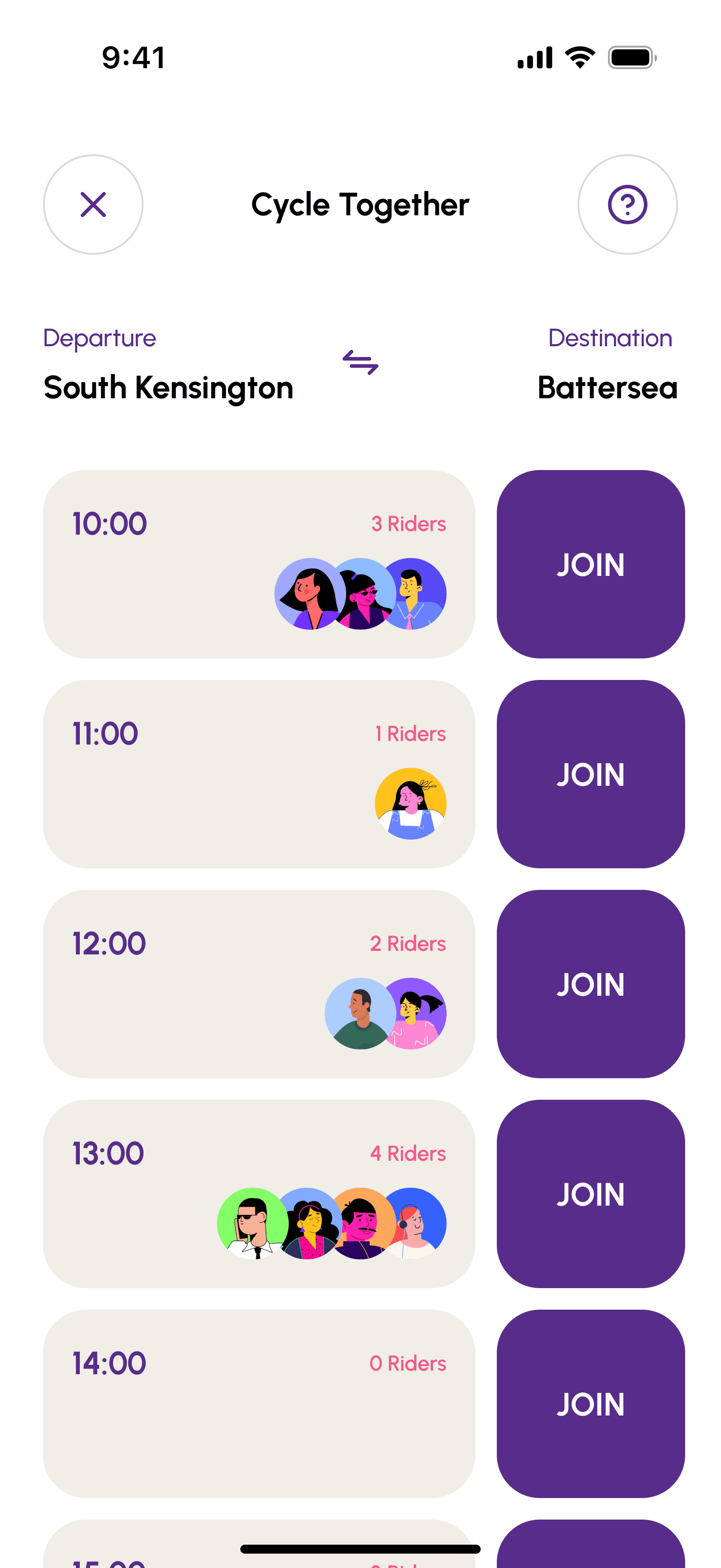
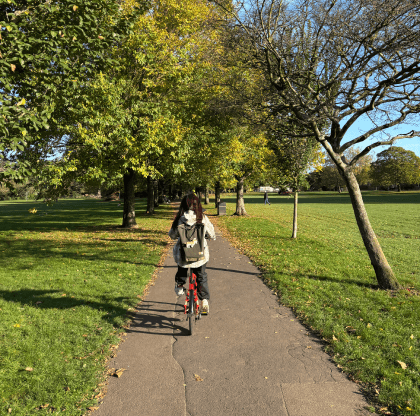
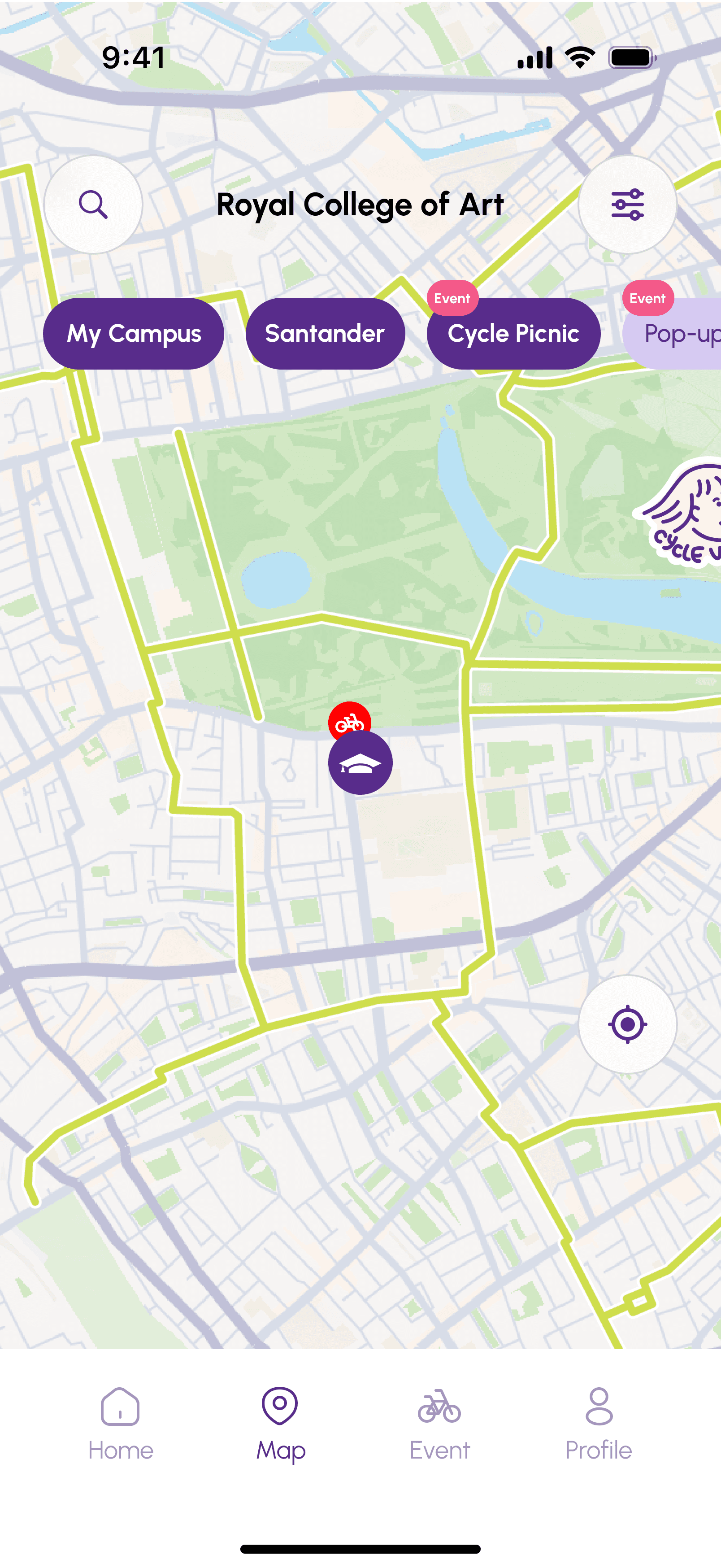
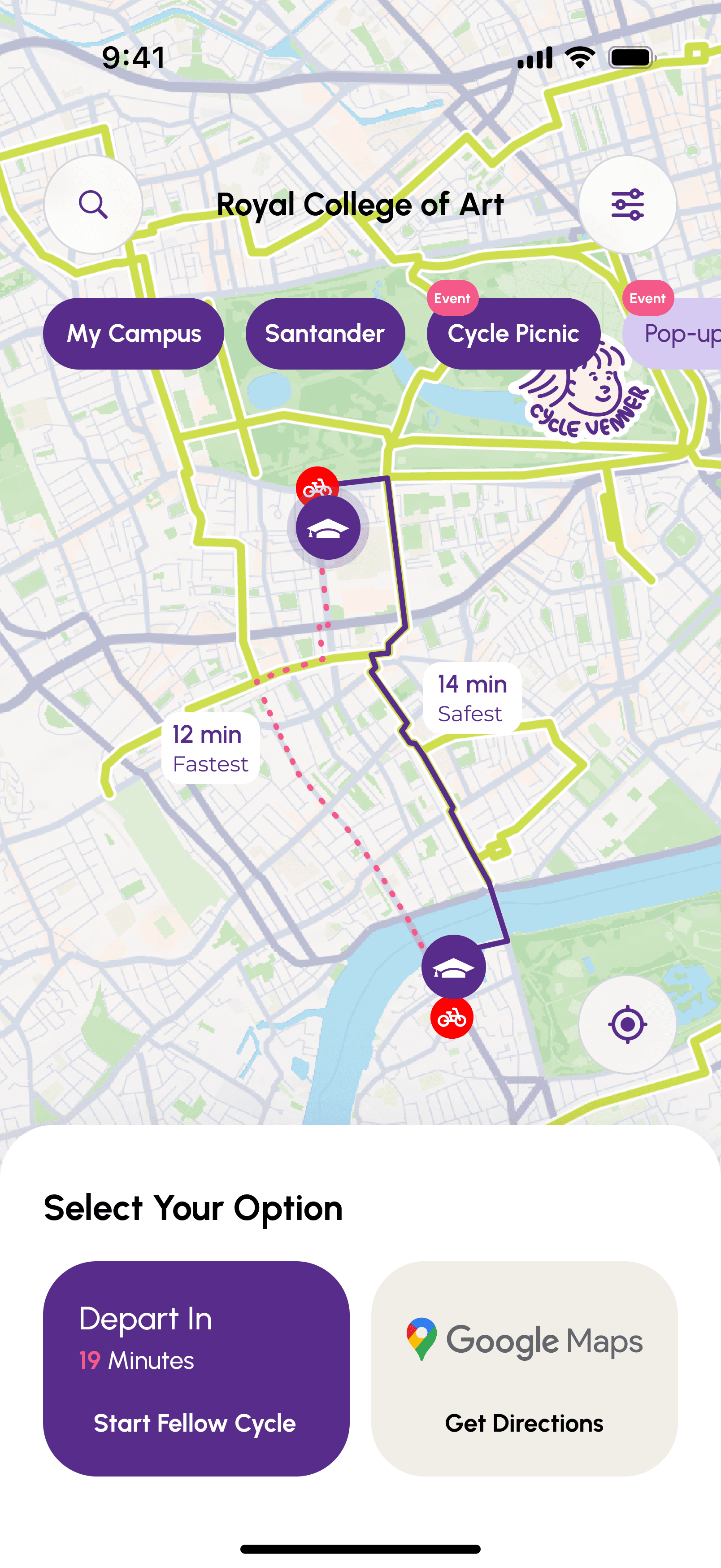
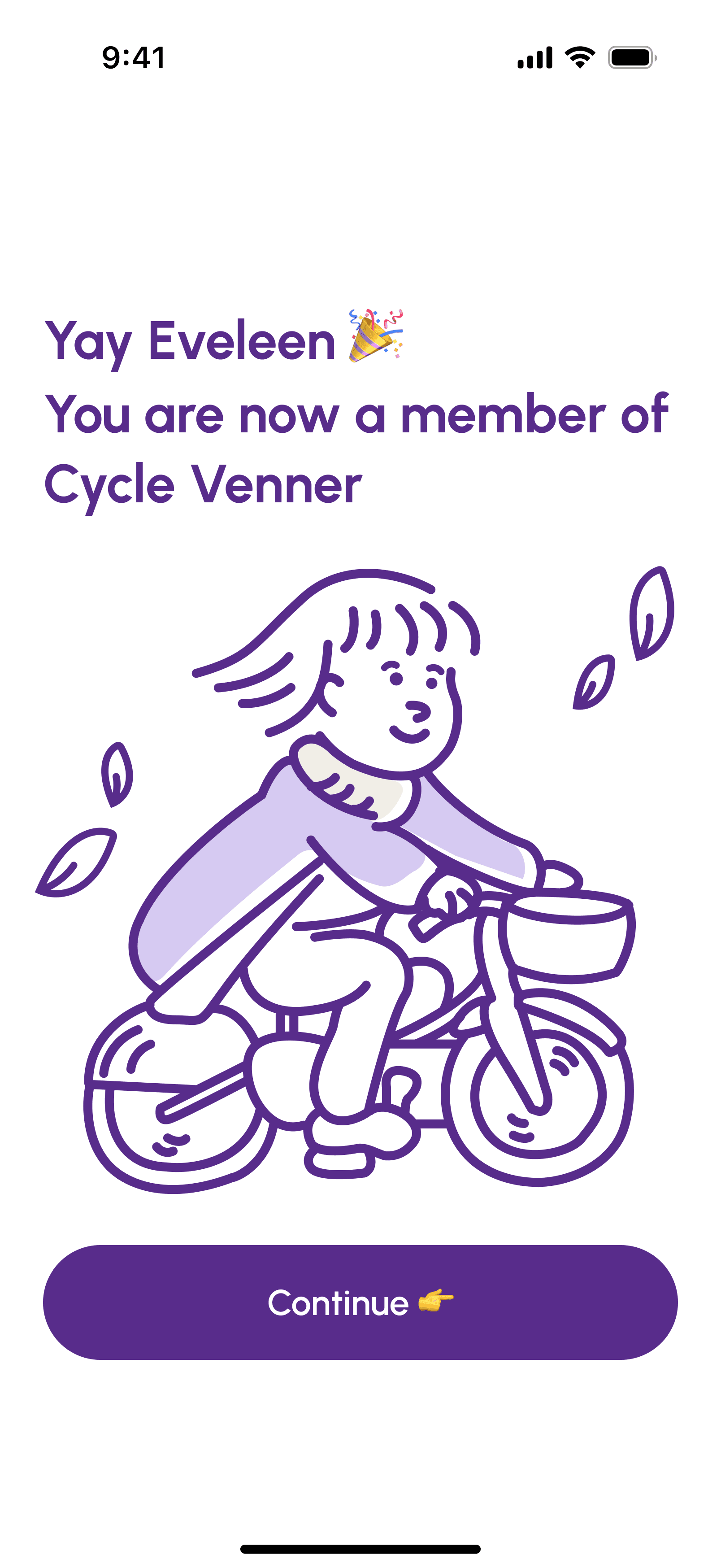
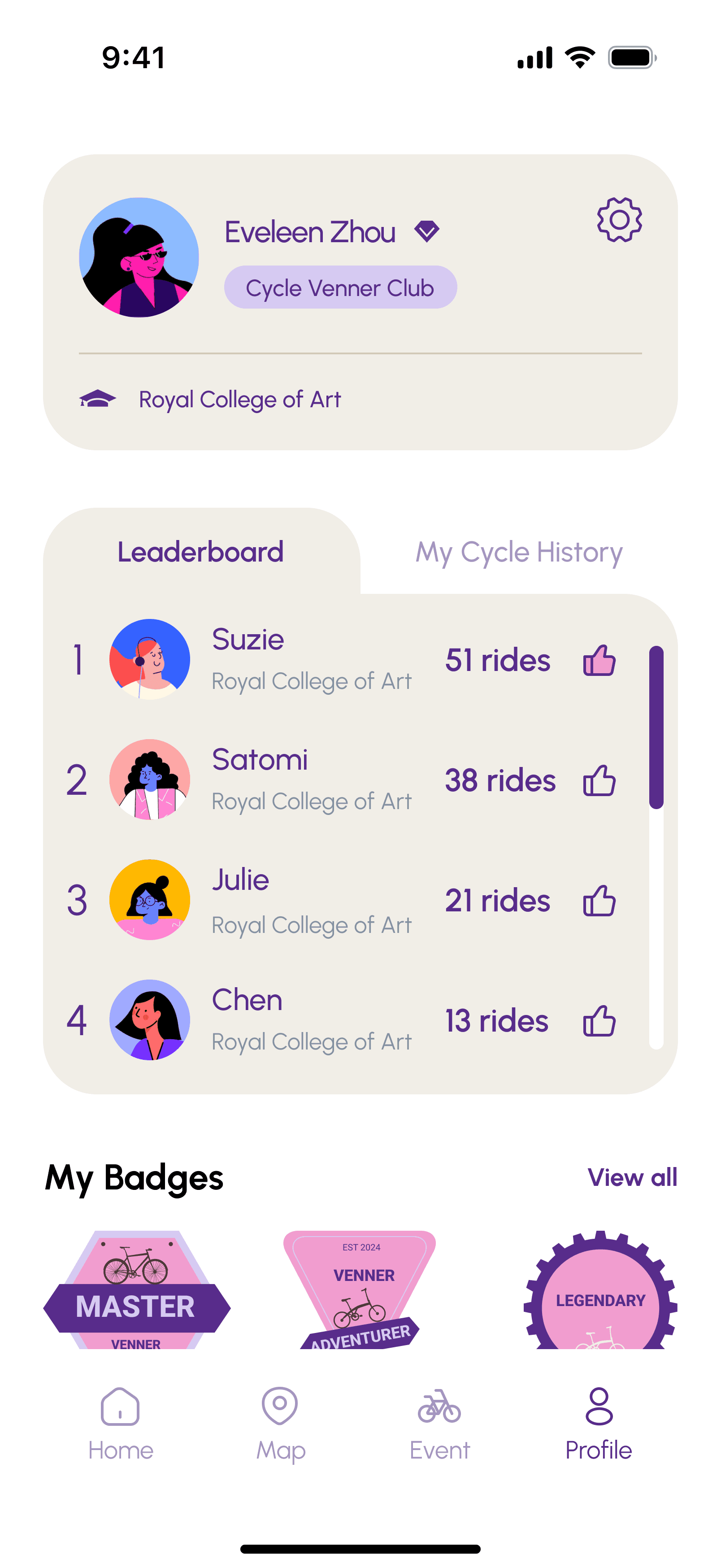
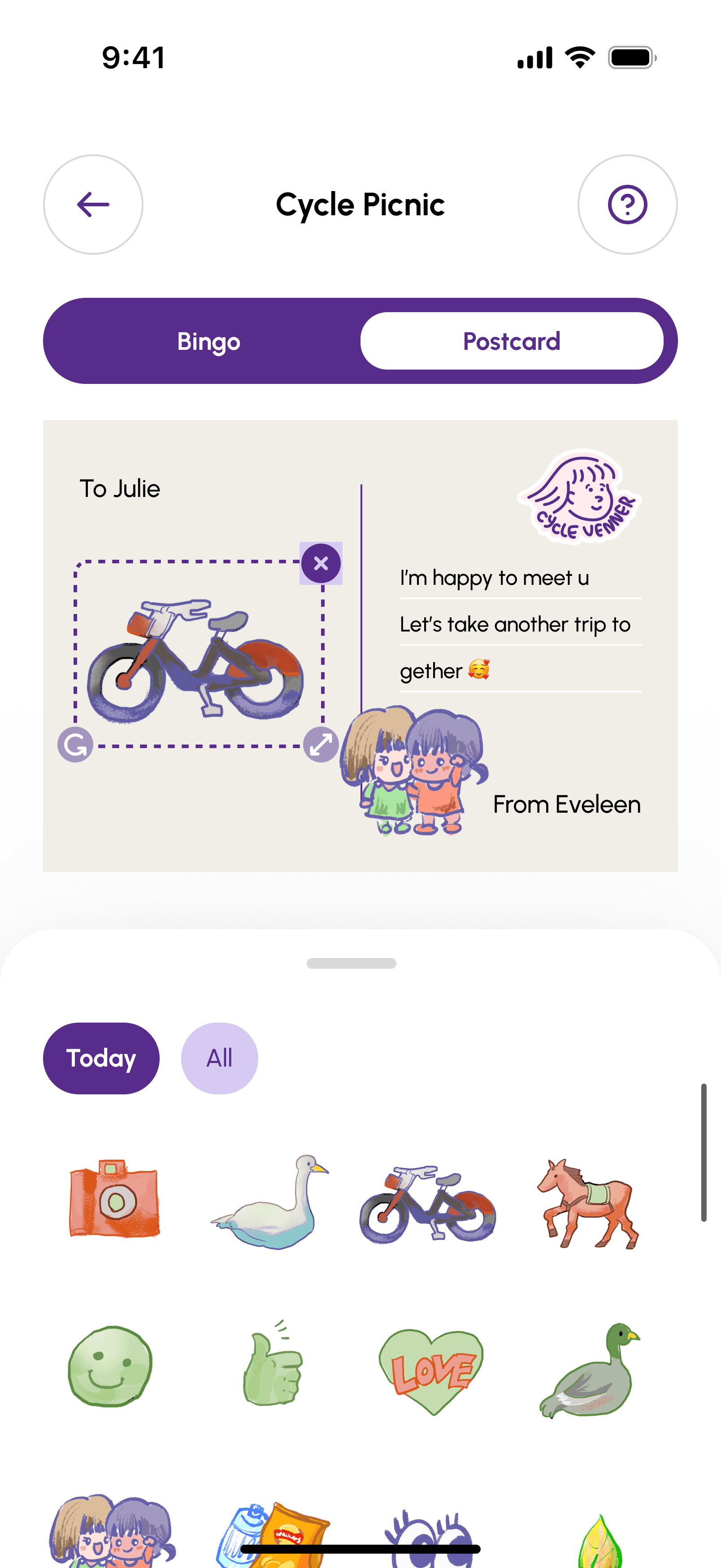
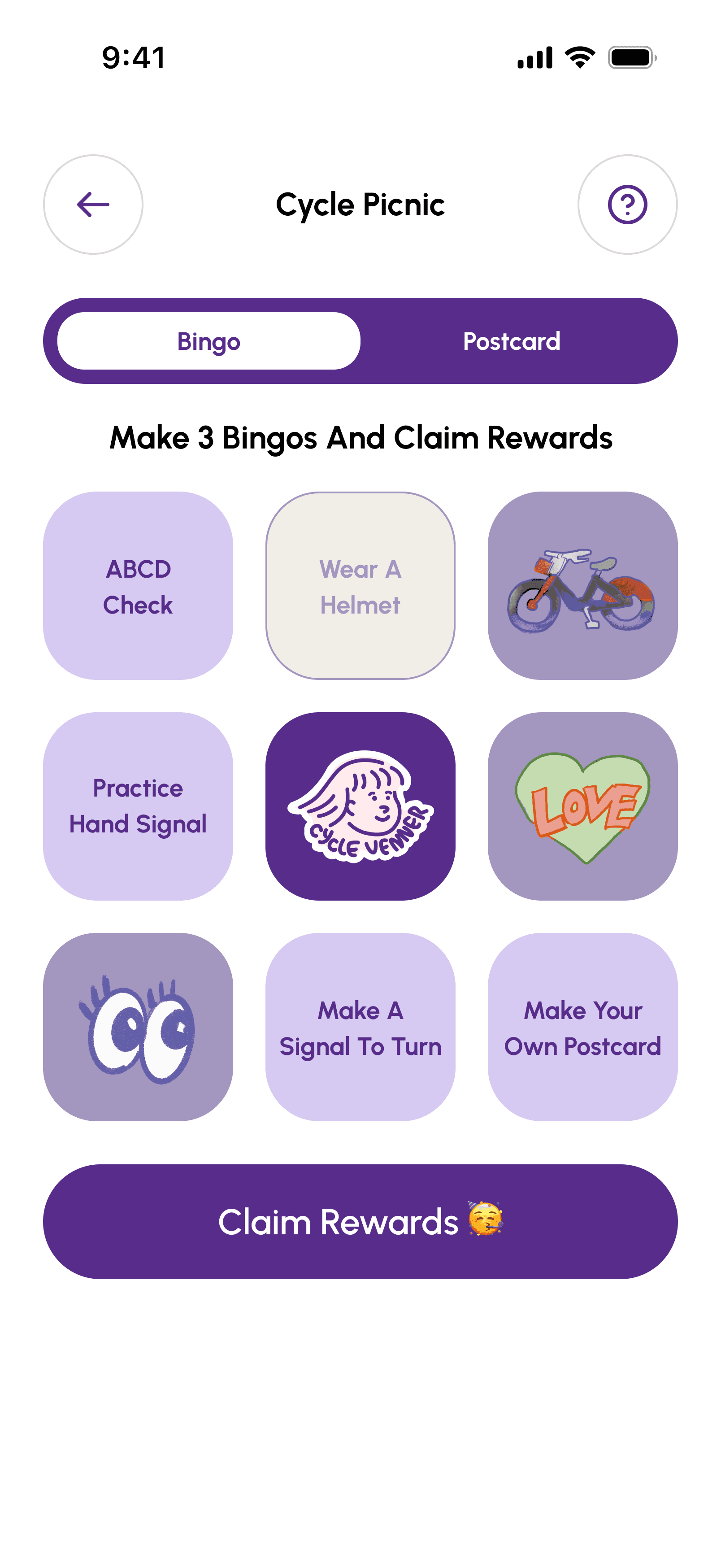
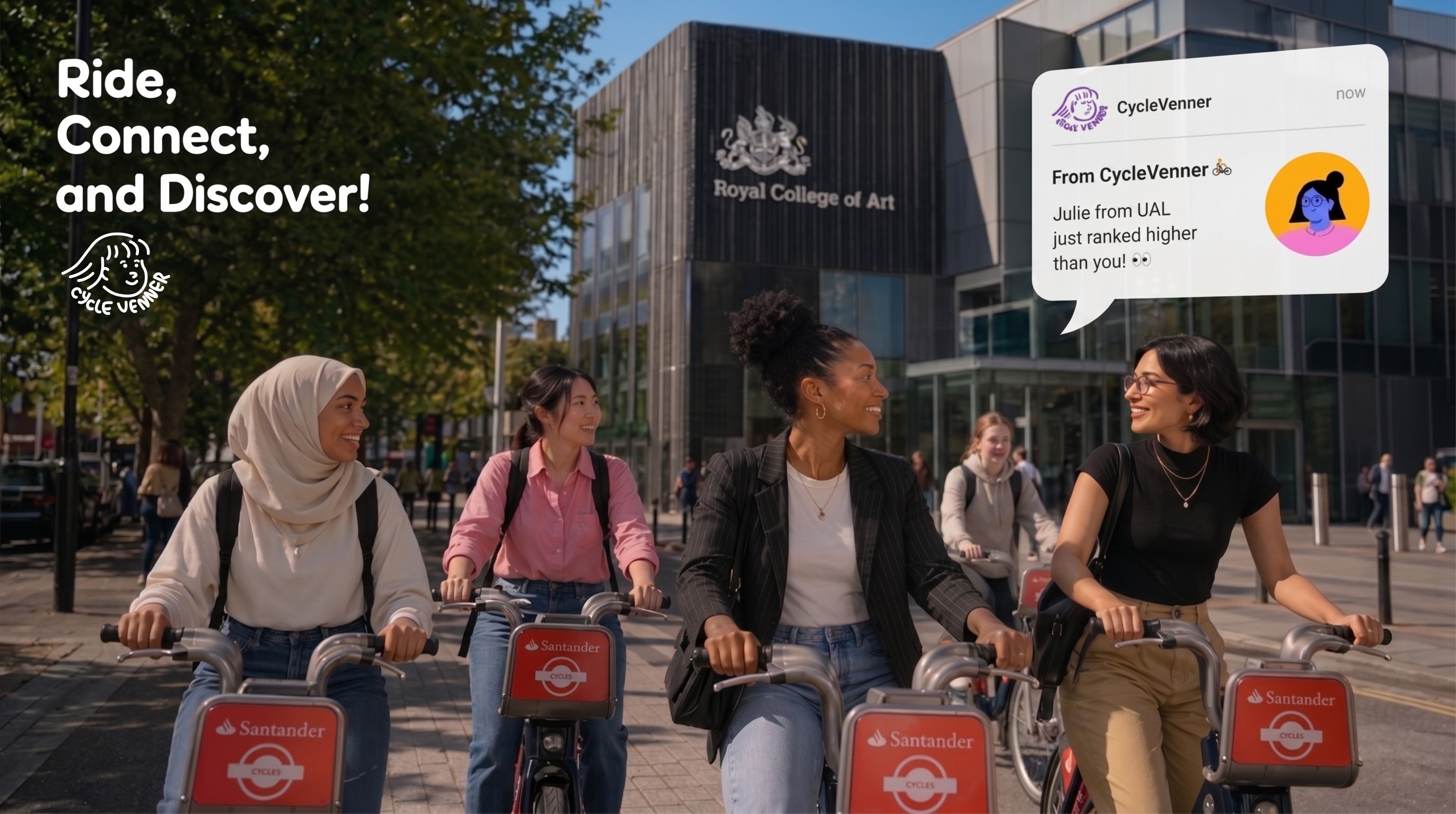
The project offers a platform and a series of events that foster communication and engagement across campuses. Its service includes three main activities designed to support students throughout the academic year — discovering London, building friendships, and embracing a healthier lifestyle. These are delivered through Cycle Picnic, Traffic Playground, and a Digital Community available via the app.
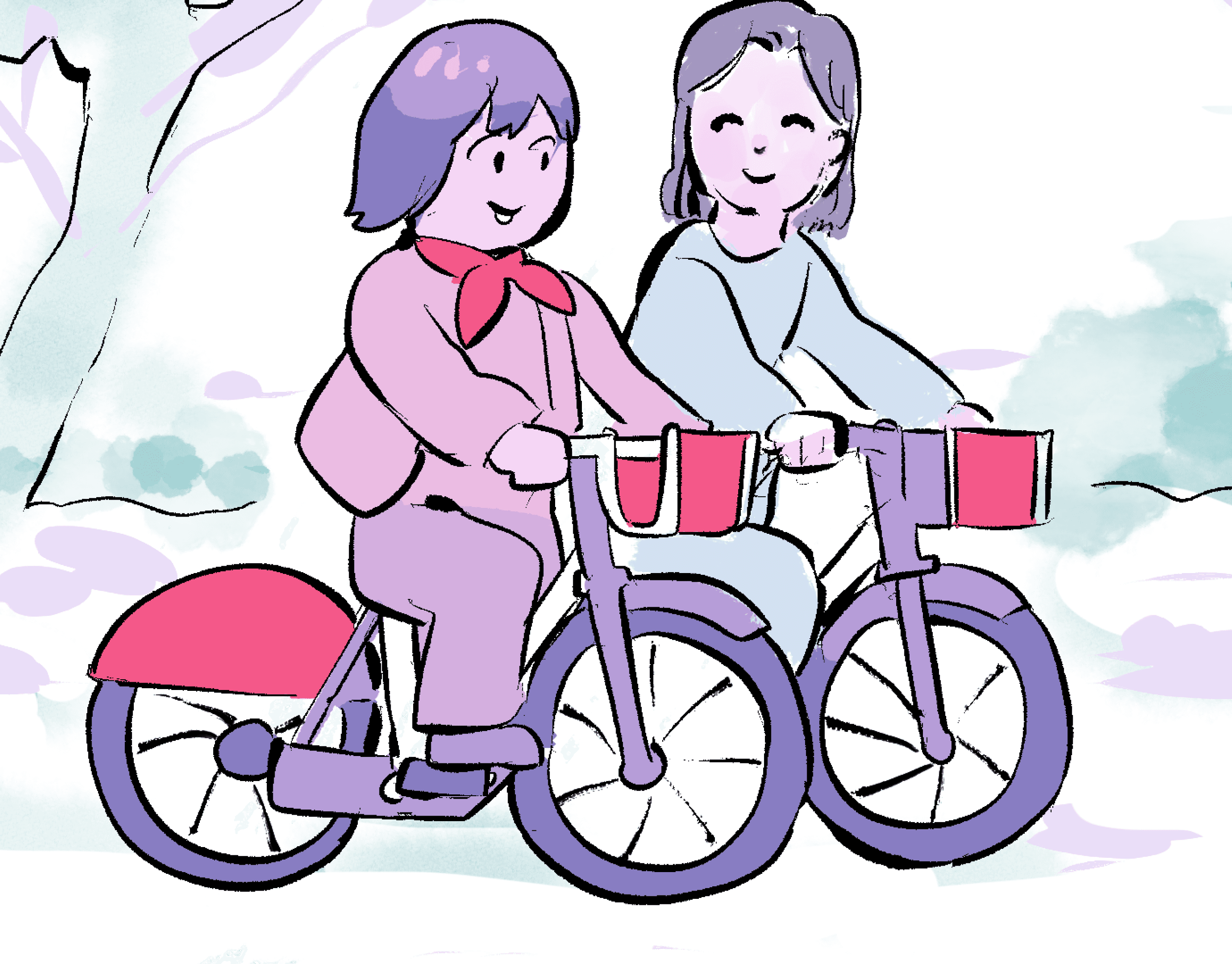
Cycle Picnic
Socialising
Companionship
Sense of Safety
Pop-up Playground
Needs of safe area to practice
Realistic cycle playground for adults
Optional
Digital Community
Sense of Belongings
Helpful Route Map
Digital
Interestingness



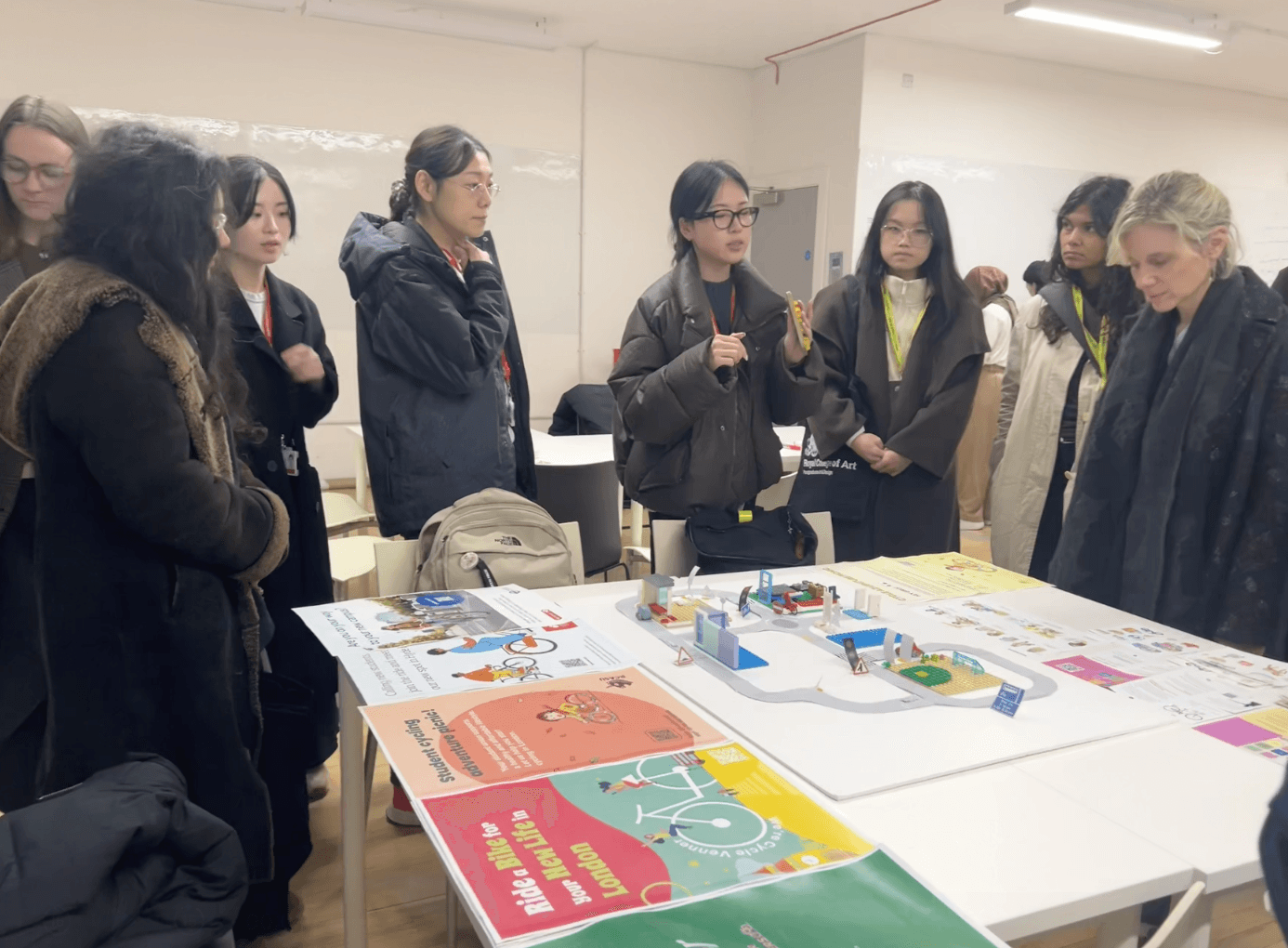
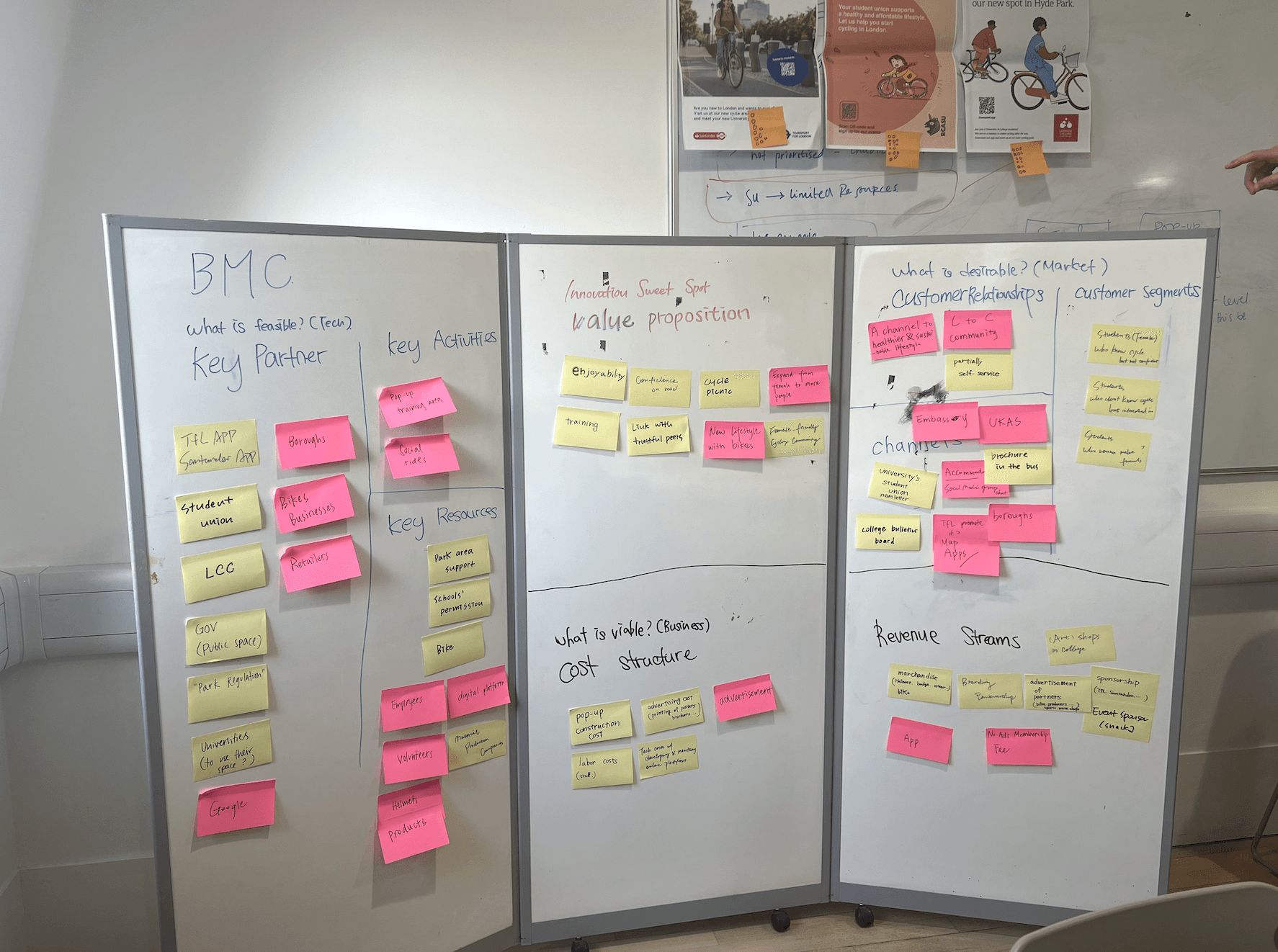
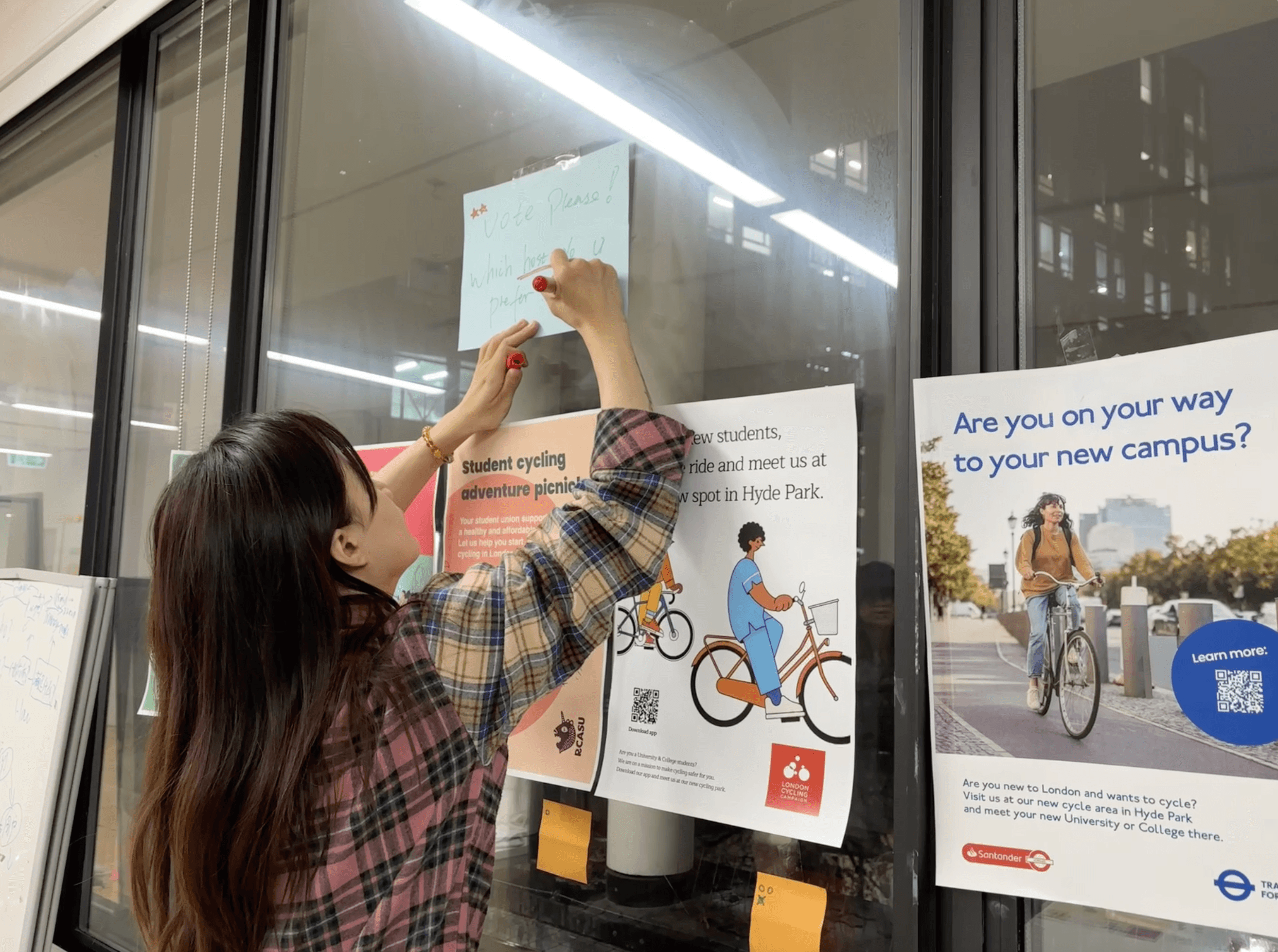
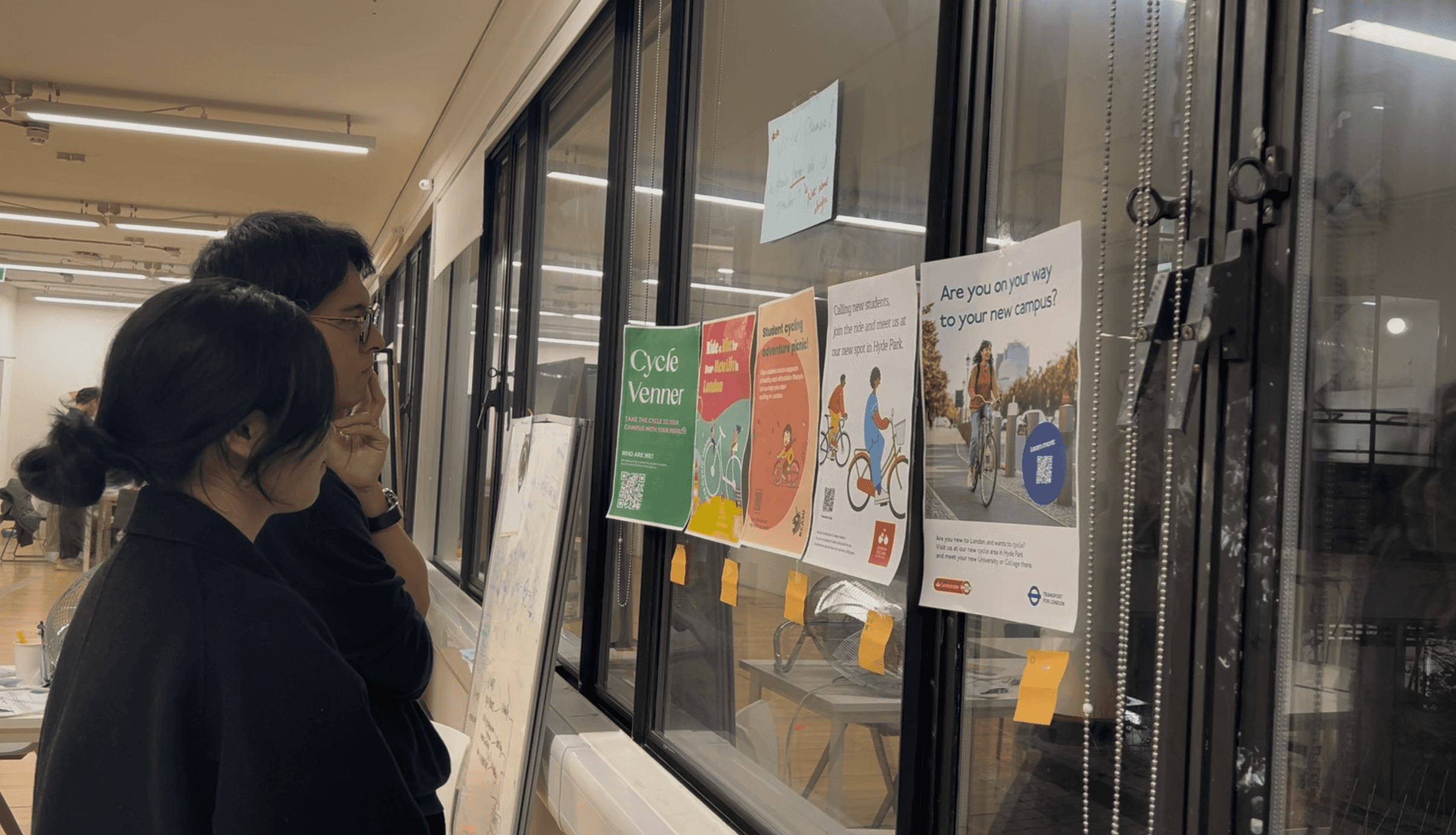
During the college open day, the design concept was presented to visitors to explore which voices students find most trustworthy in promoting cycling. The insights informed the next stage of our business model development, highlighting that initiatives led by the university and endorsed by TfL generate stronger engagement among students.
Value Proposition and Business Strategy
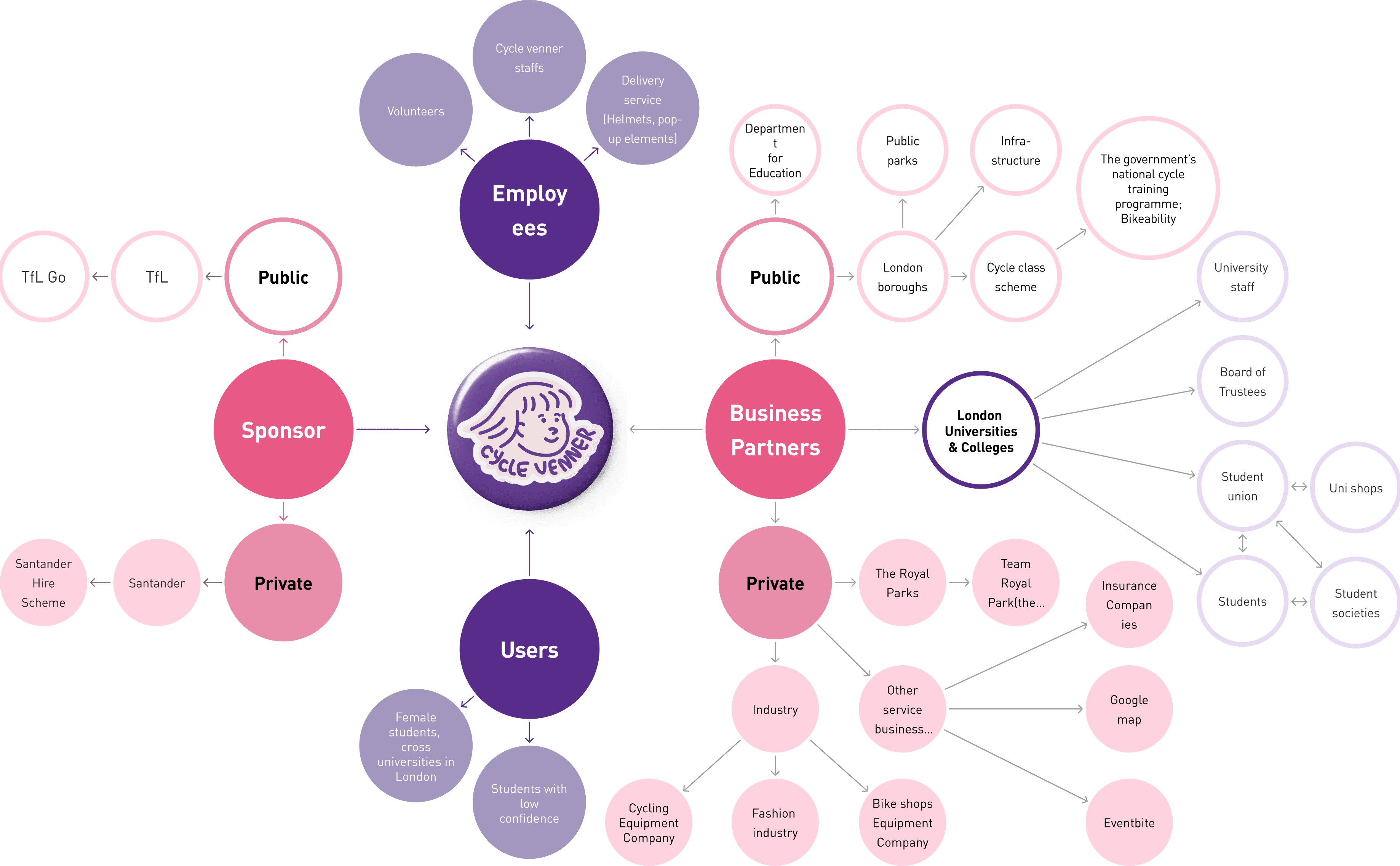
Universities & Colleges
Many universities and colleges have recognised their responsibility to reduce their environmental impact, as measured by the QS World University Rankings. Many students choose their university according to this ranking system. This means that students tend to choose more sustainable universities.



Transport for London
By supporting our business, TfL can promote healthy, sustainable habits in students. Though some students might only be here for a short period, investing in them means that the students can take their new healthy habits and bring them to their new city, sending out good habits into the world.

Santander
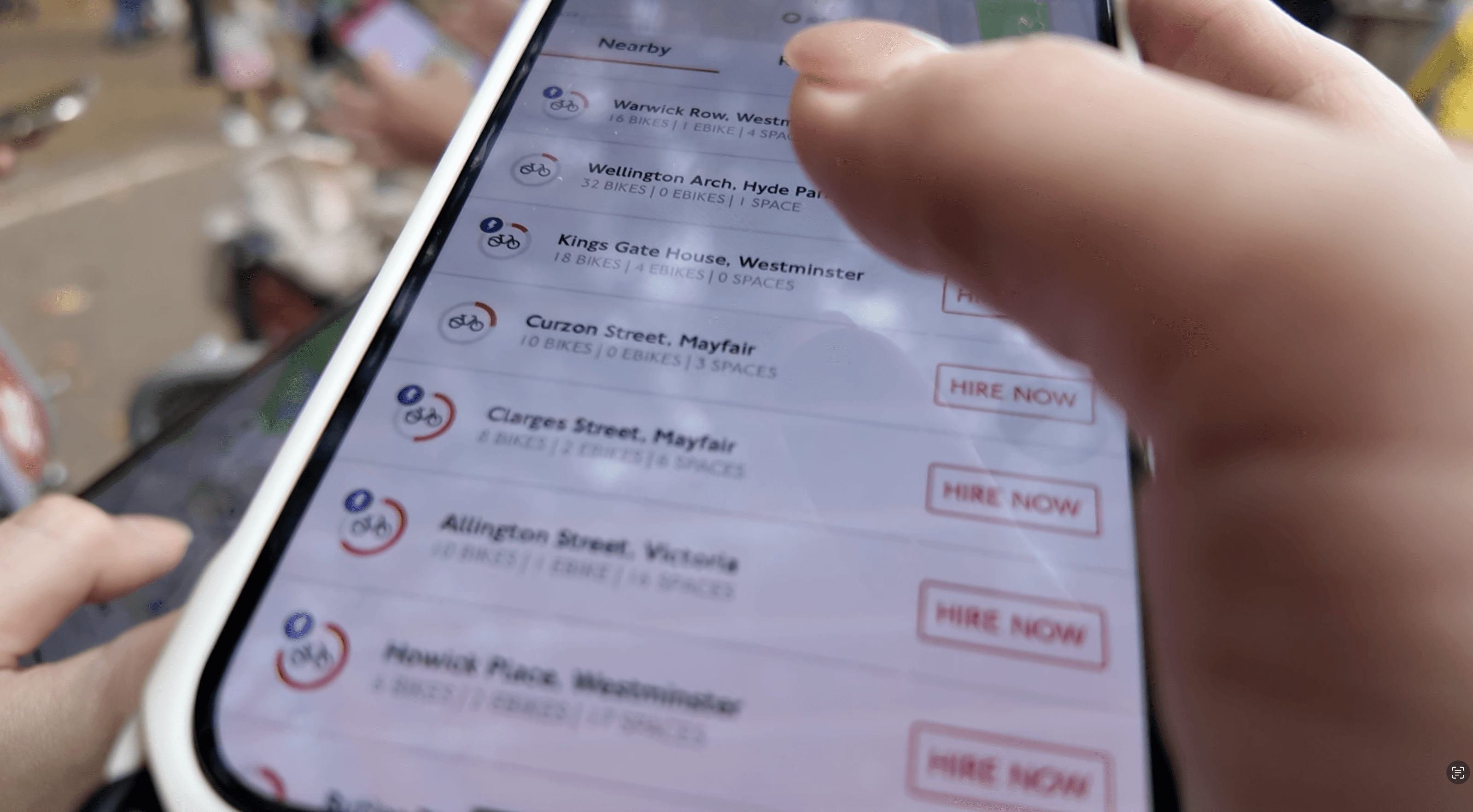
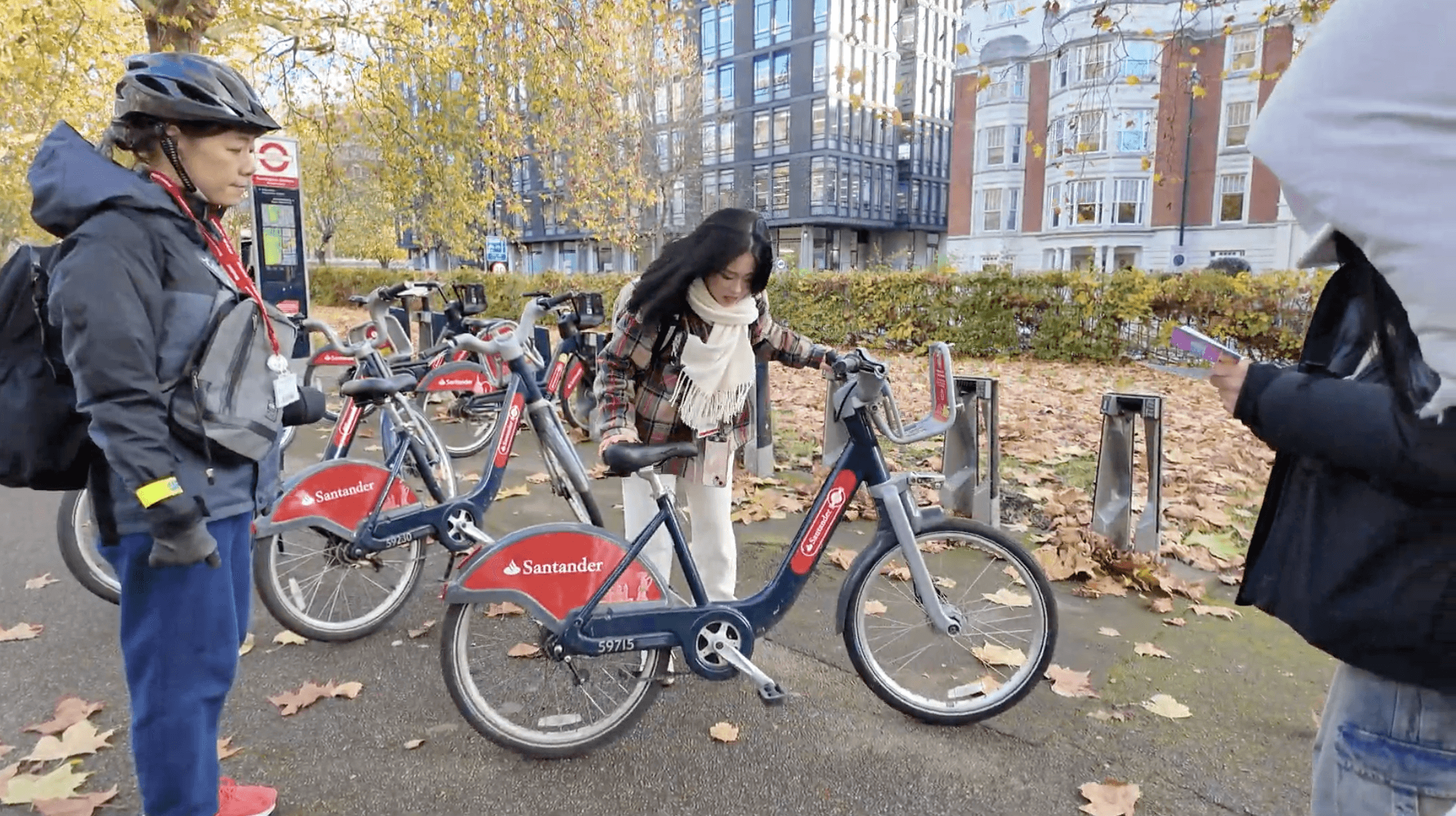
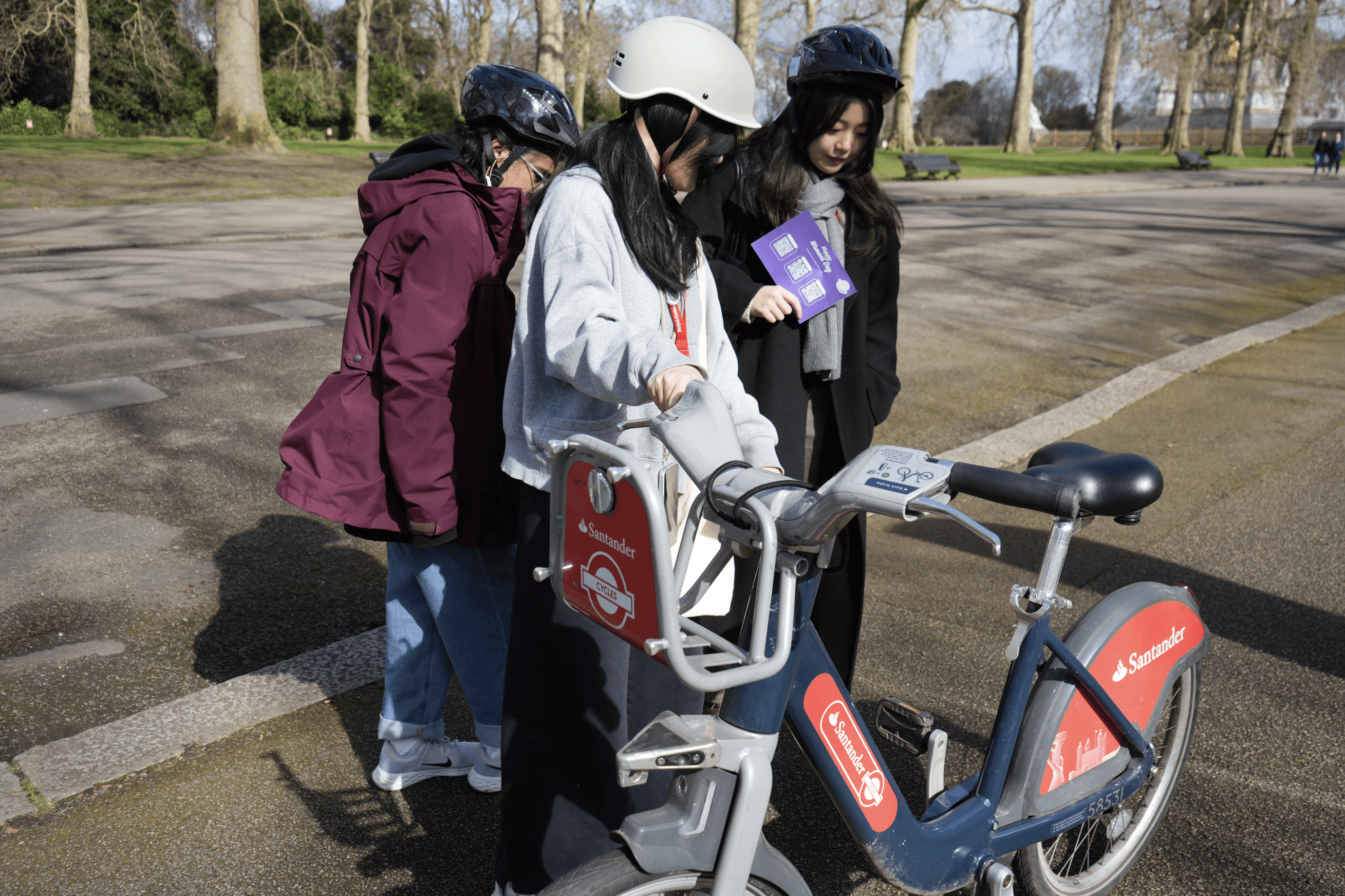
Using Santander cycles at our events introduces students to the scheme, bicycles, and app, lowering the barrier to accessing Santander services. Since many students stay in London for
a short period, Santander bikes offer an excellent alternative to owning a bike.

For universities, encouraging more students to cycle can directly contribute to their sustainability goals.
Transport for London can advance its cycling strategy by fostering lasting habits among students — sending confident cyclists into the wider world each year as graduates leave London.
For Santander Cycles, introducing the service to students helps expand its user base and promote regular bike use among the younger generation.



In terms of business strategy, the initiative begins with small-scale campus events to test ideas and gather feedback. It then expands through collaborations with brands and city partners to reach a wider audience. Ultimately, the vision is to make cycling a familiar and accessible part of university life across London — where students gain skills and enjoyment, partners enhance their reputation, and the city moves closer to its carbon reduction goals.
Ongoing Impact
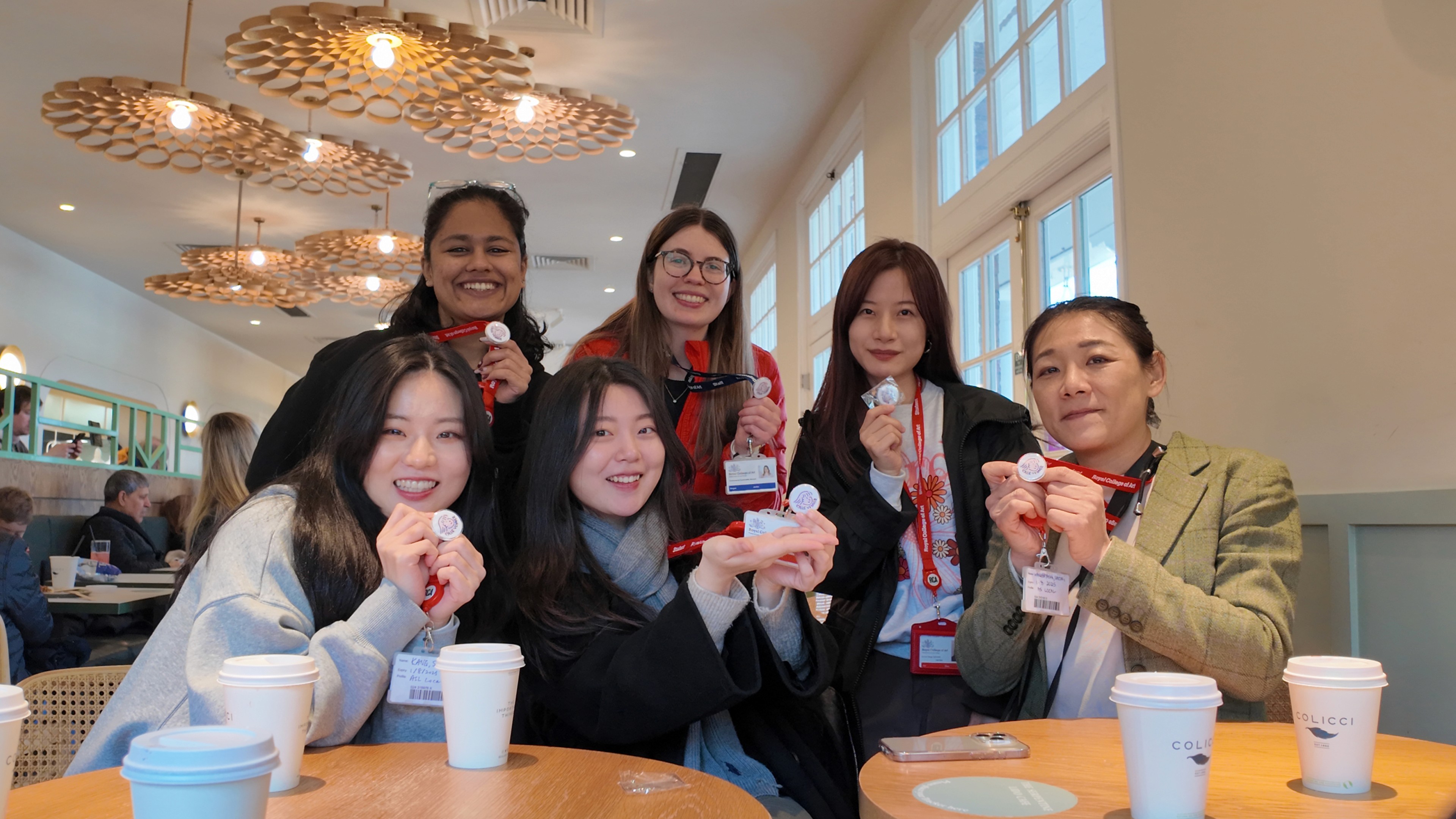
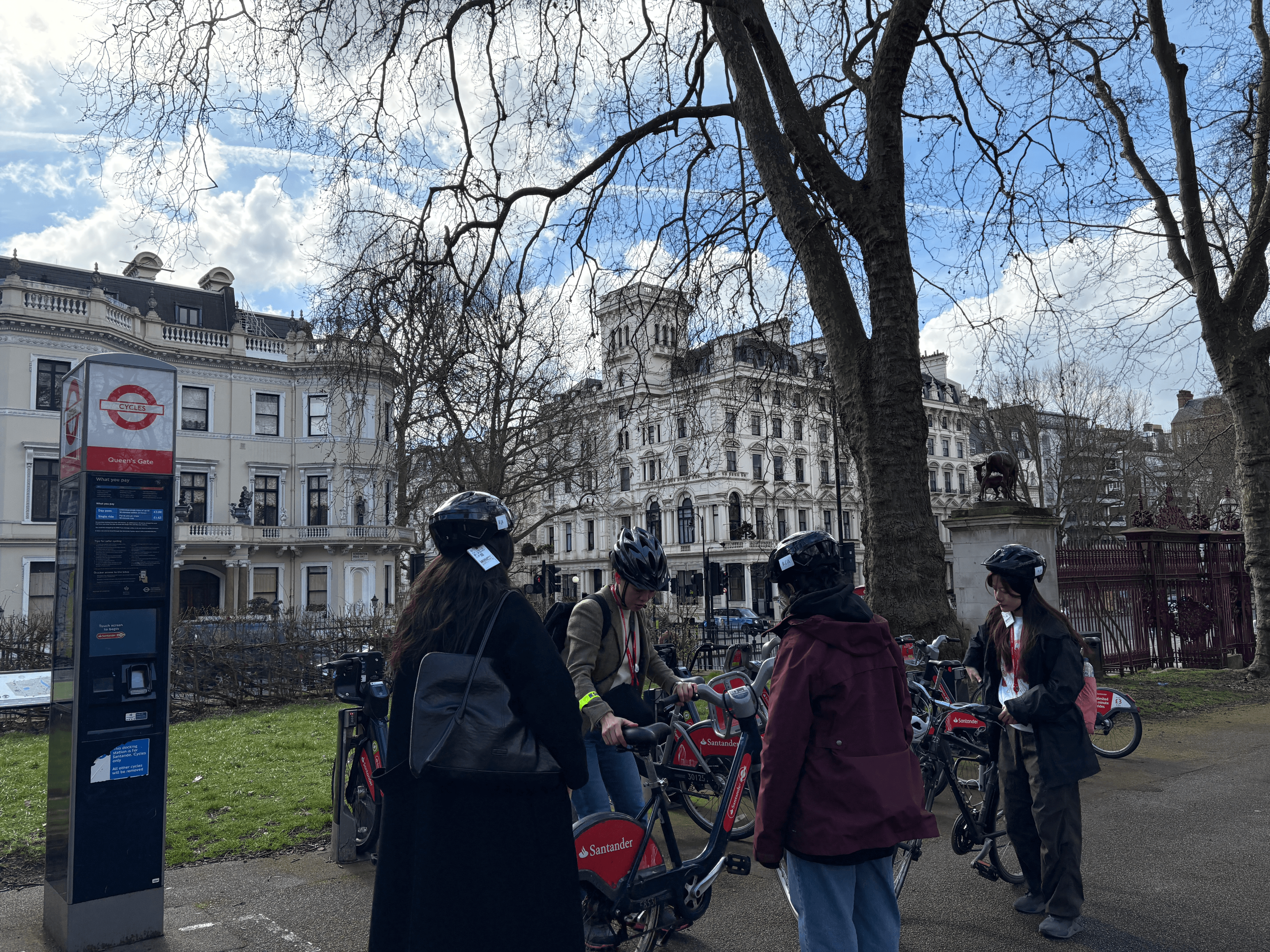
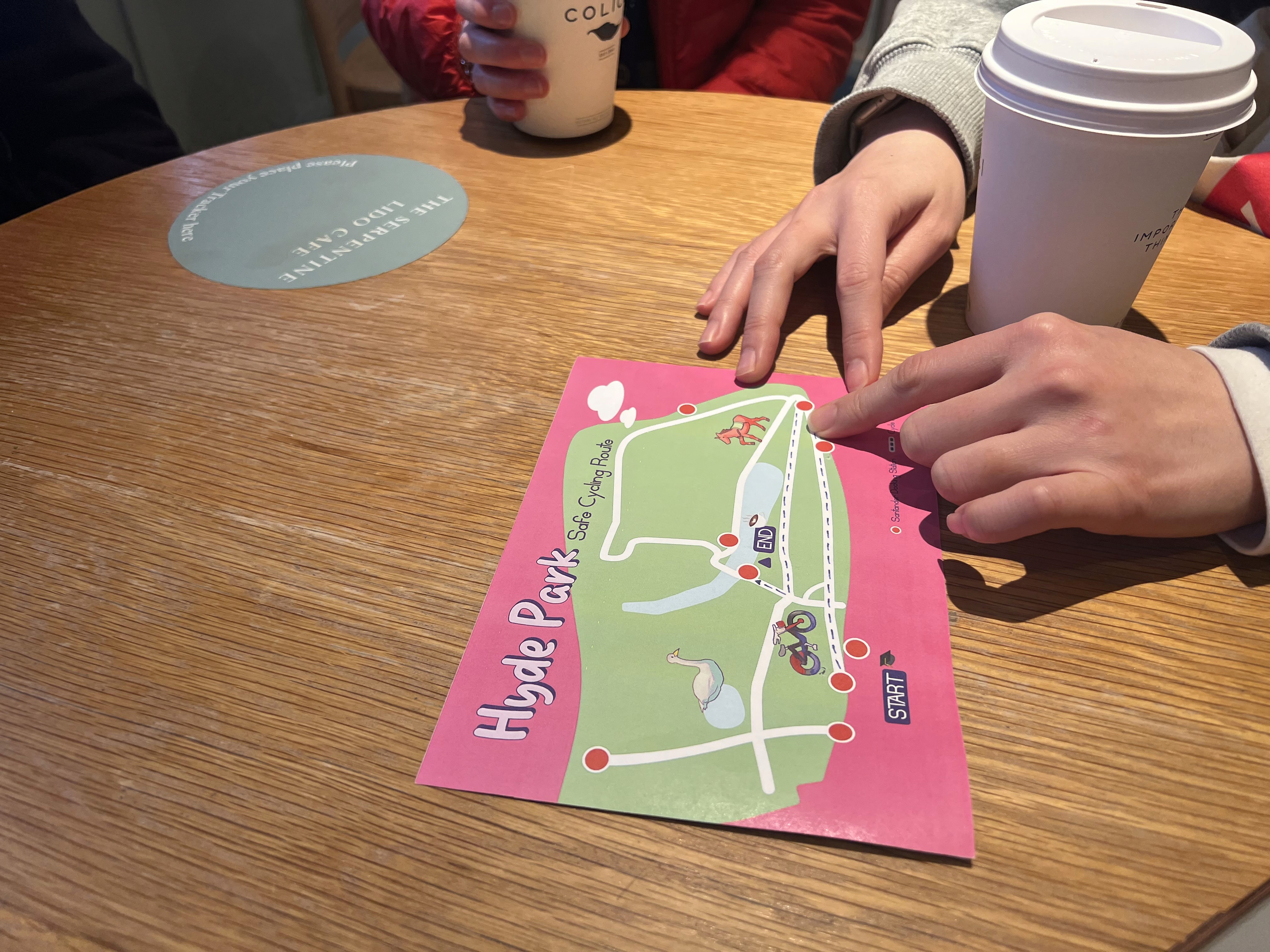
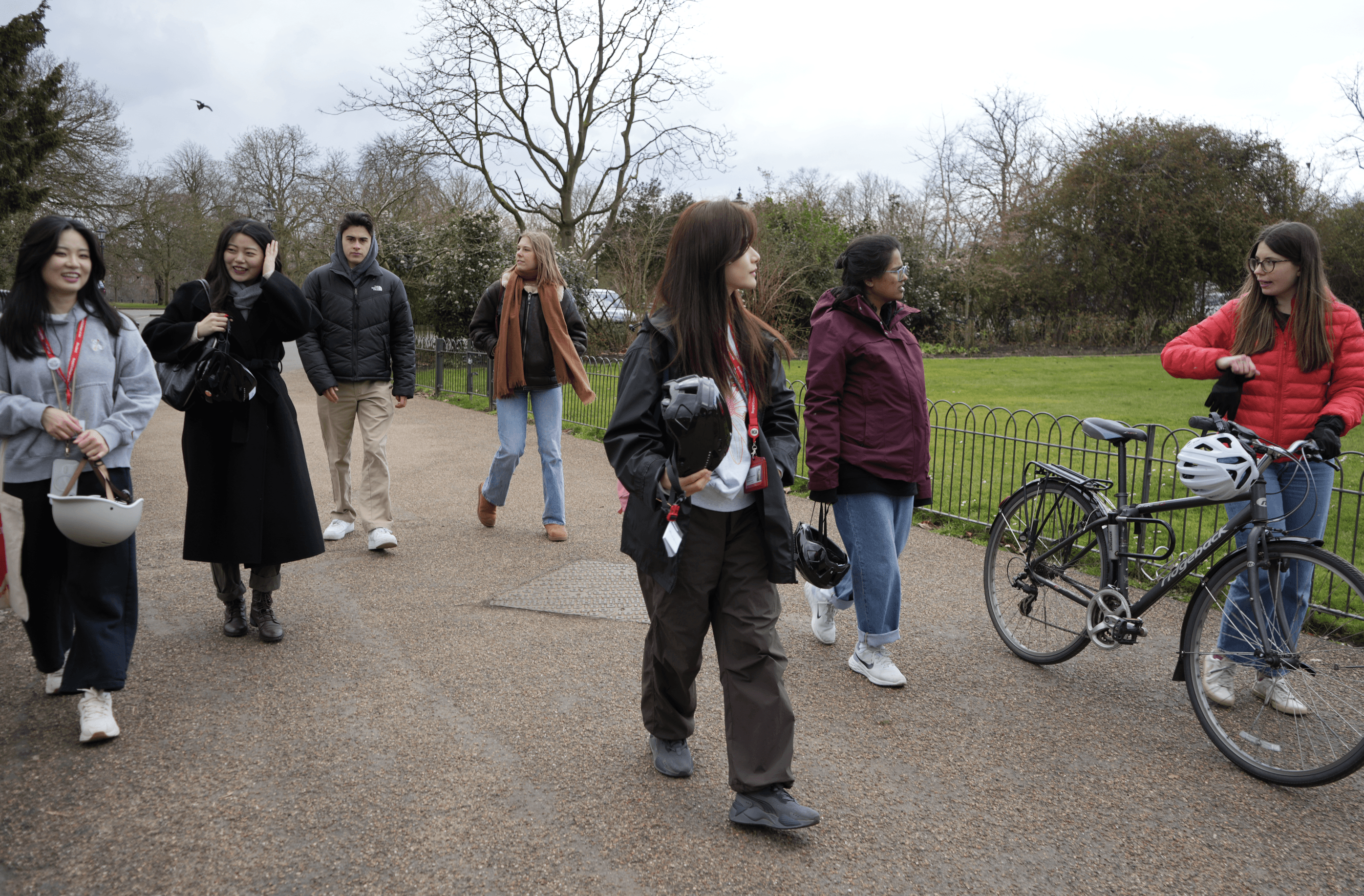
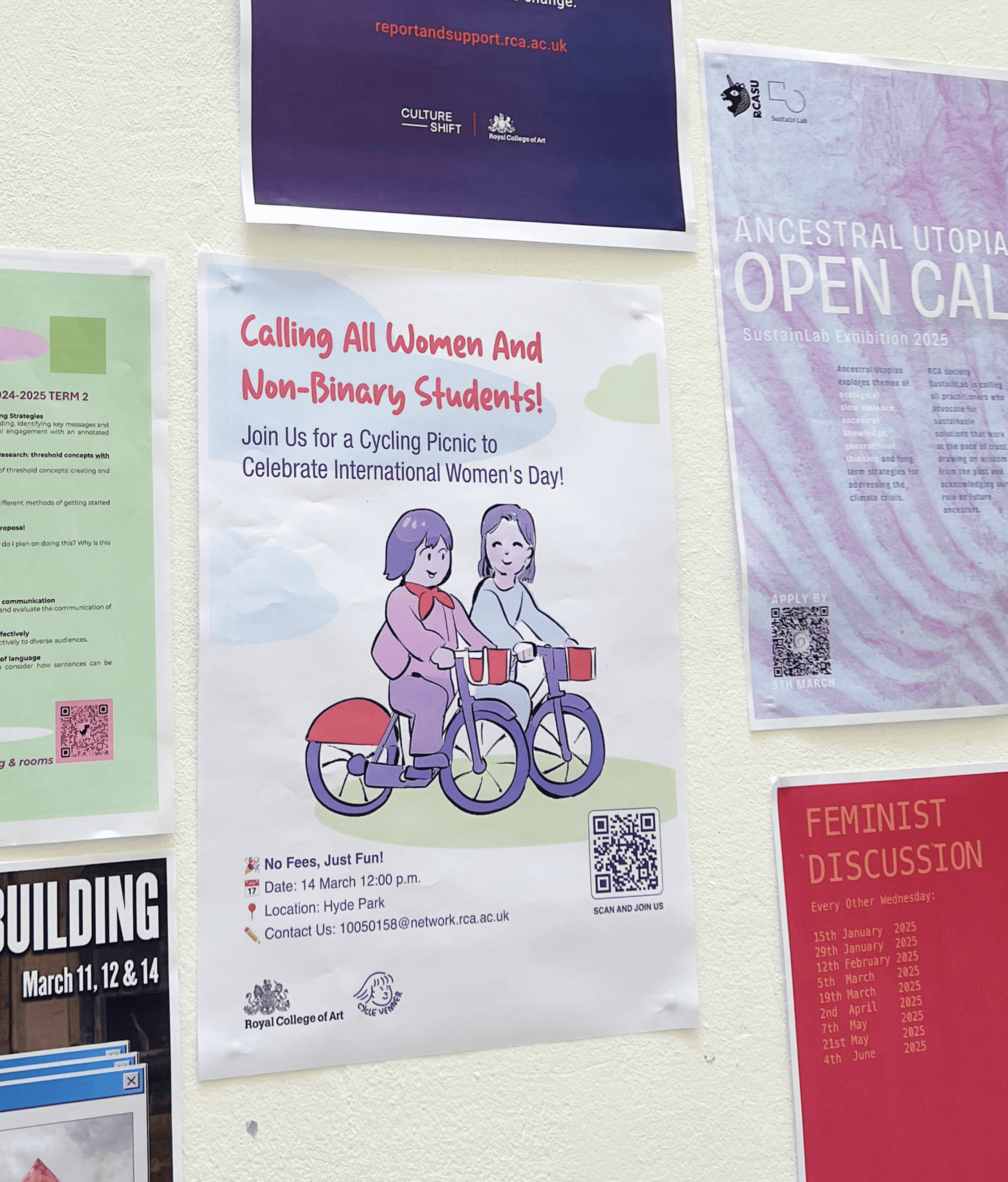
For International Women’s Day, a Cycle Picnic was organised in collaboration with the RCA Sustainability Department, starting from the campus to encourage more people to use cycling as a means of transport. The event has since become a regular campus activity, inviting professionals from Group Cycle Training to participate and support the initiative — demonstrating how a small prototype has grown into a lasting, real-world impact.


Cycle Venner reinforced a belief I carry into every project: the most effective interventions don't start with solutions — they start with understanding what holds people back. Confidence, not infrastructure, was the real barrier. That insight shaped every design decision, from the picnic format to the app's community-first logic. Sustainable behaviour change needs a system — one that connects people, institutions, and policy in a way that feels human. Because ultimately, it's rarely about the product. It's almost always about trust.