Service Innovation
Cycle Venner
A campus-based cycling confidence service helping women students move from interest to everyday urban cycling.
Strategic question
How might we help women students in London feel more confident choosing cycling?
Outcome
A campus-led service concept combining peer support, guided rides, training partnerships, and digital community touchpoints.
Impact
A real-world prototype that evolved into a recurring campus activity and revealed trust, confidence, and community support as key drivers of cycling adoption.
Starting from TfL’s cycling ambition, we focused on the confidence gap for women students.
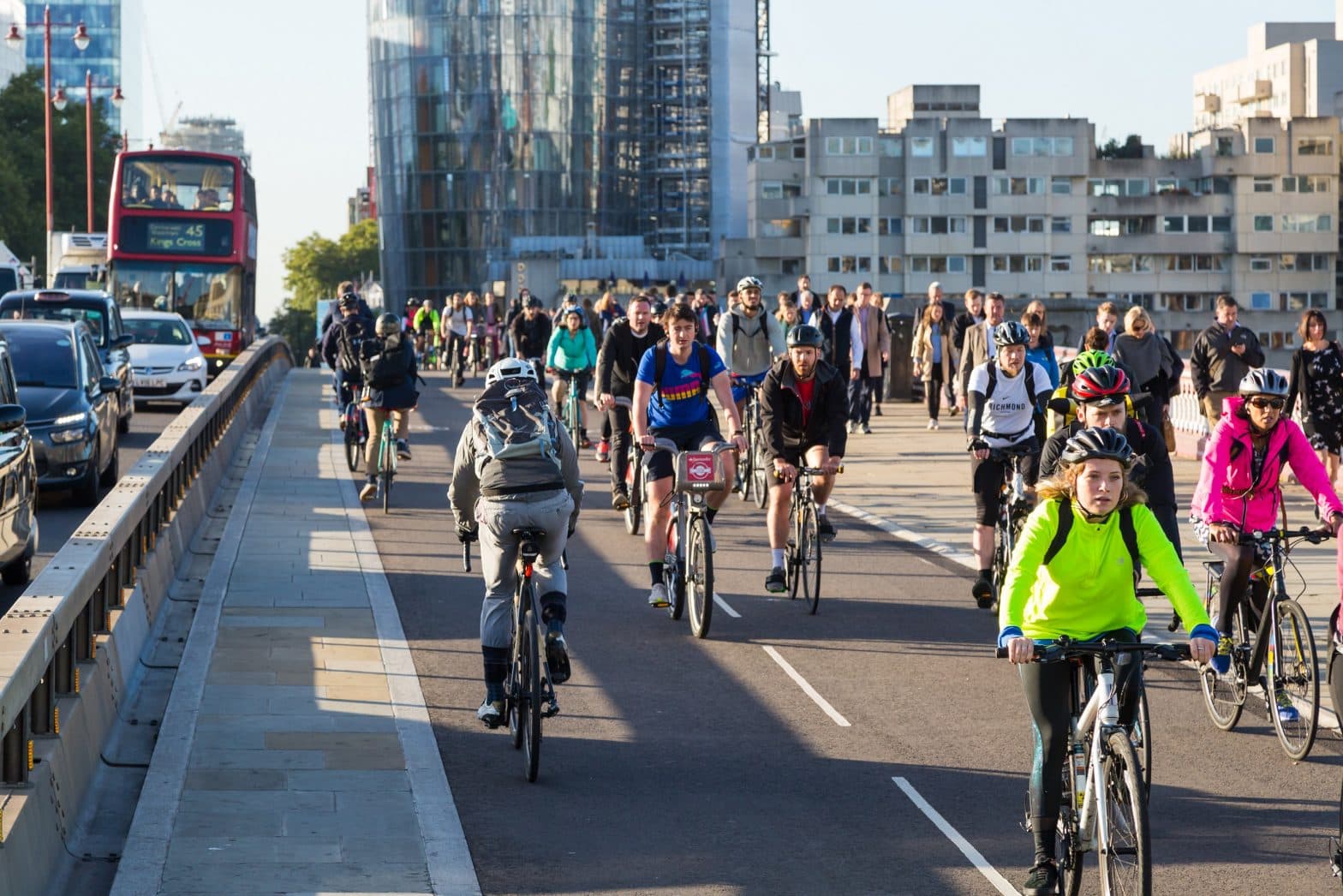
The Mayor’s Transport Strategy and Healthy Streets vision aim to make 80% of London trips sustainable by 2041—through walking, cycling, and public transport. It focuses on building better infrastructure and experiences that make people feel confident and enjoy active travel, supported by seamless, user-centred digital and physical services.
Desk Research - Understanding the Context
Female Cyclist
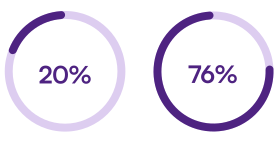
76% of women can cycle, yet only 20% cycle in London.
Women Need Safe, Protected Space for Cycling

9 out of 10 women said they would start to cycle or cycle more, if they had better infrastructure for their journeys.
Information Accessibility
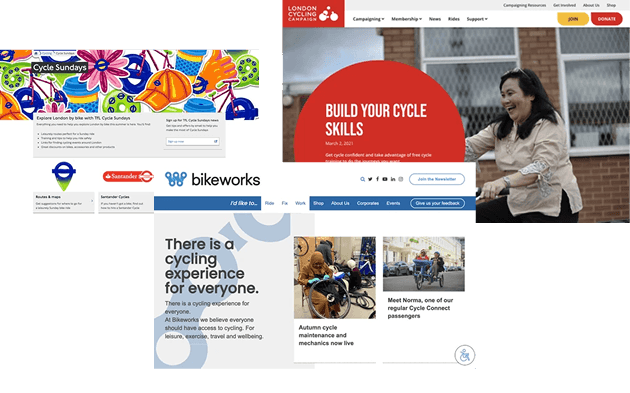
Cycling routes, tutorials, and organisations already exist, but discovering and accessing them requires effort.
The challenge is not cycling ability, but confidence. Existing resources are plentiful, yet fragmented, making the first step feel difficult.
The real challenge was not only infrastructure, but mental readiness before the first step.
Experiencing and Mapping the Problem
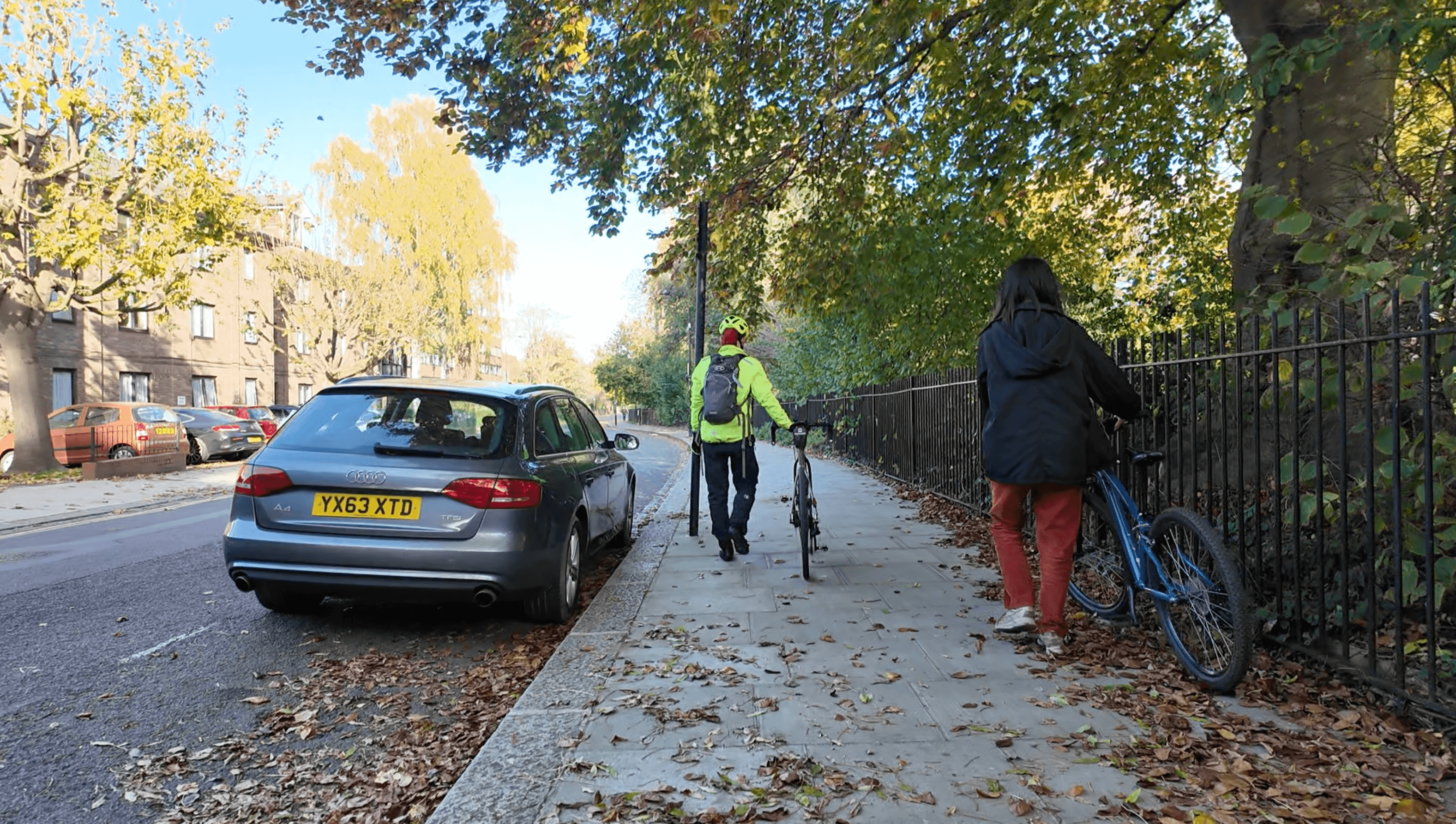
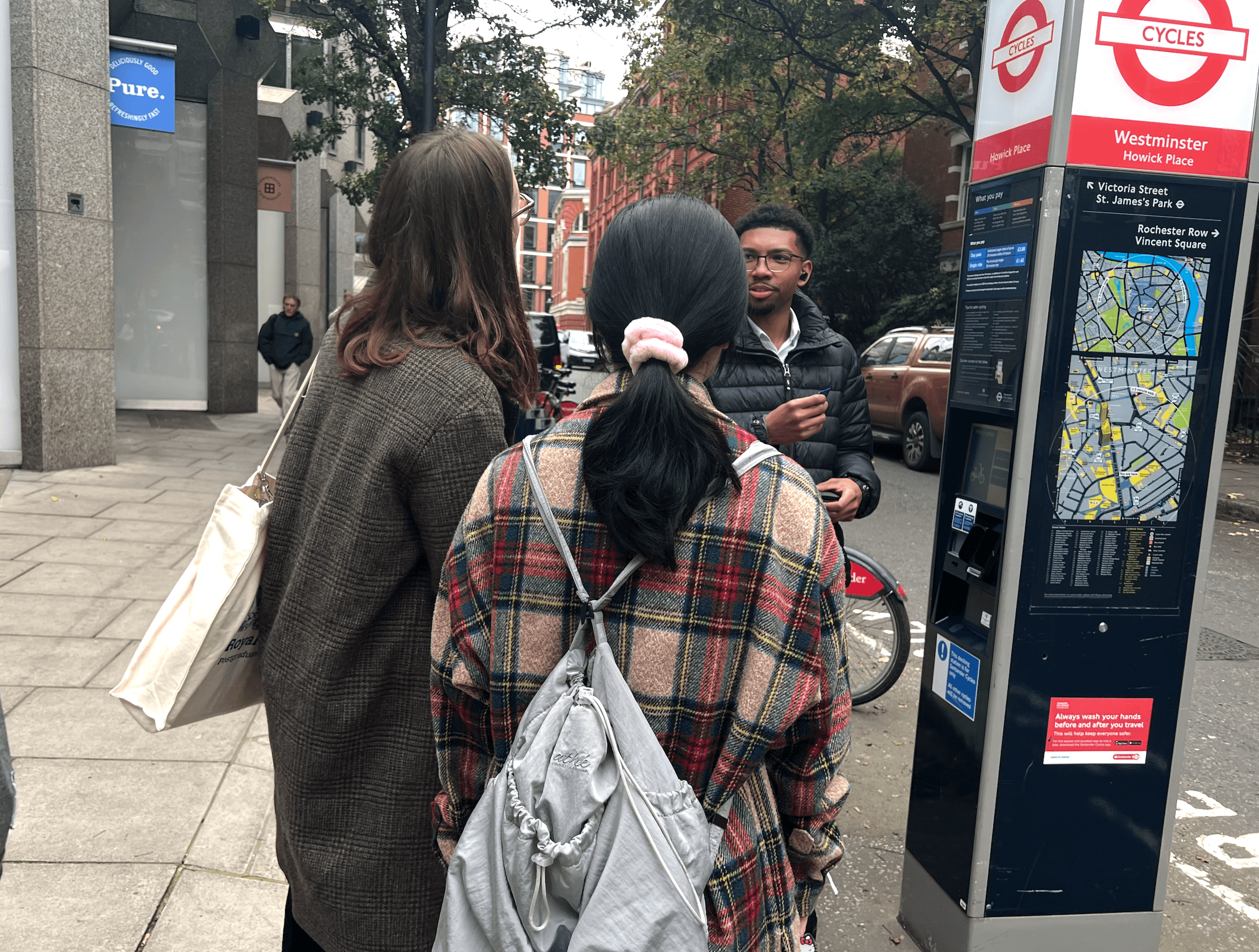
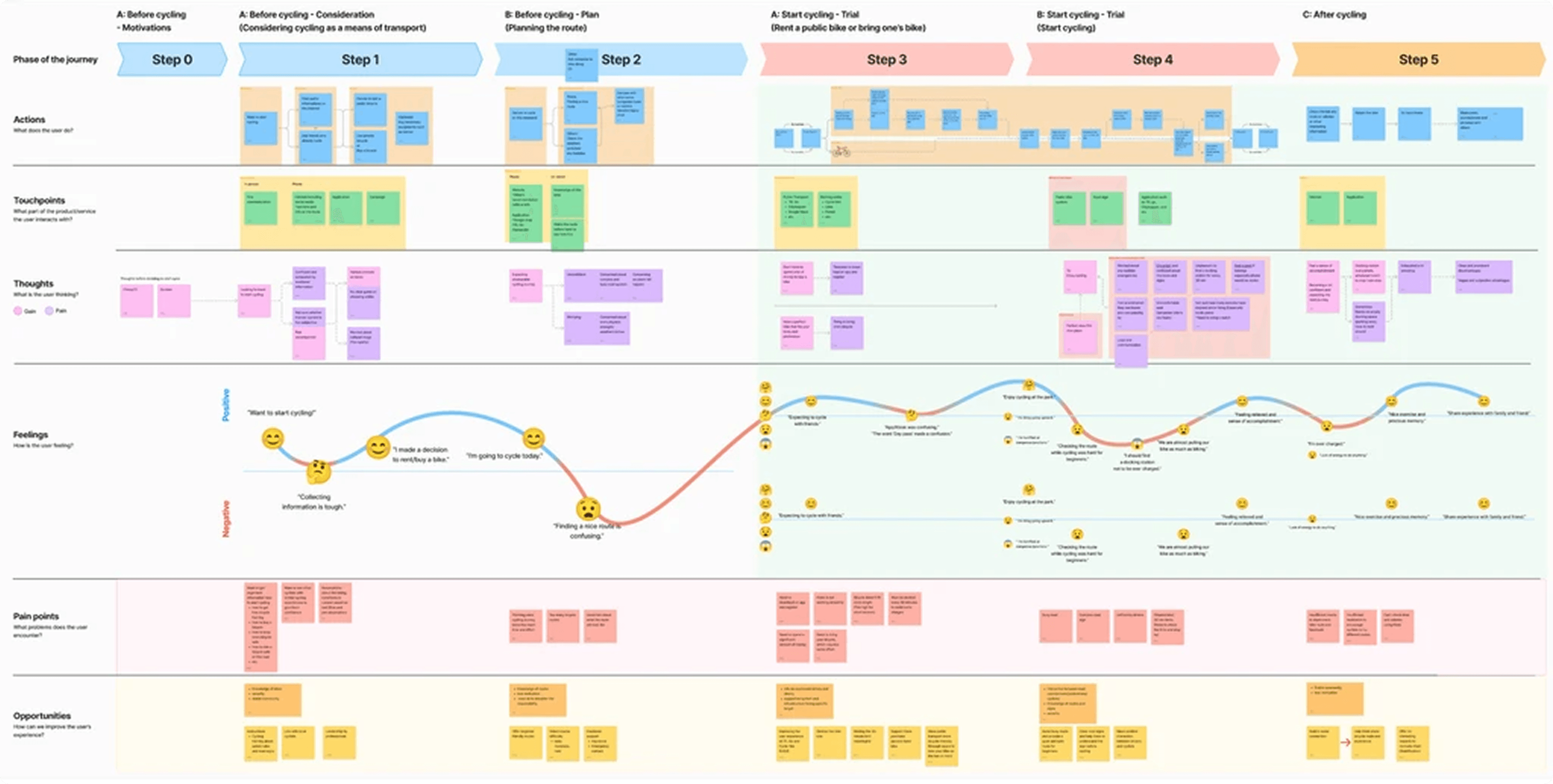
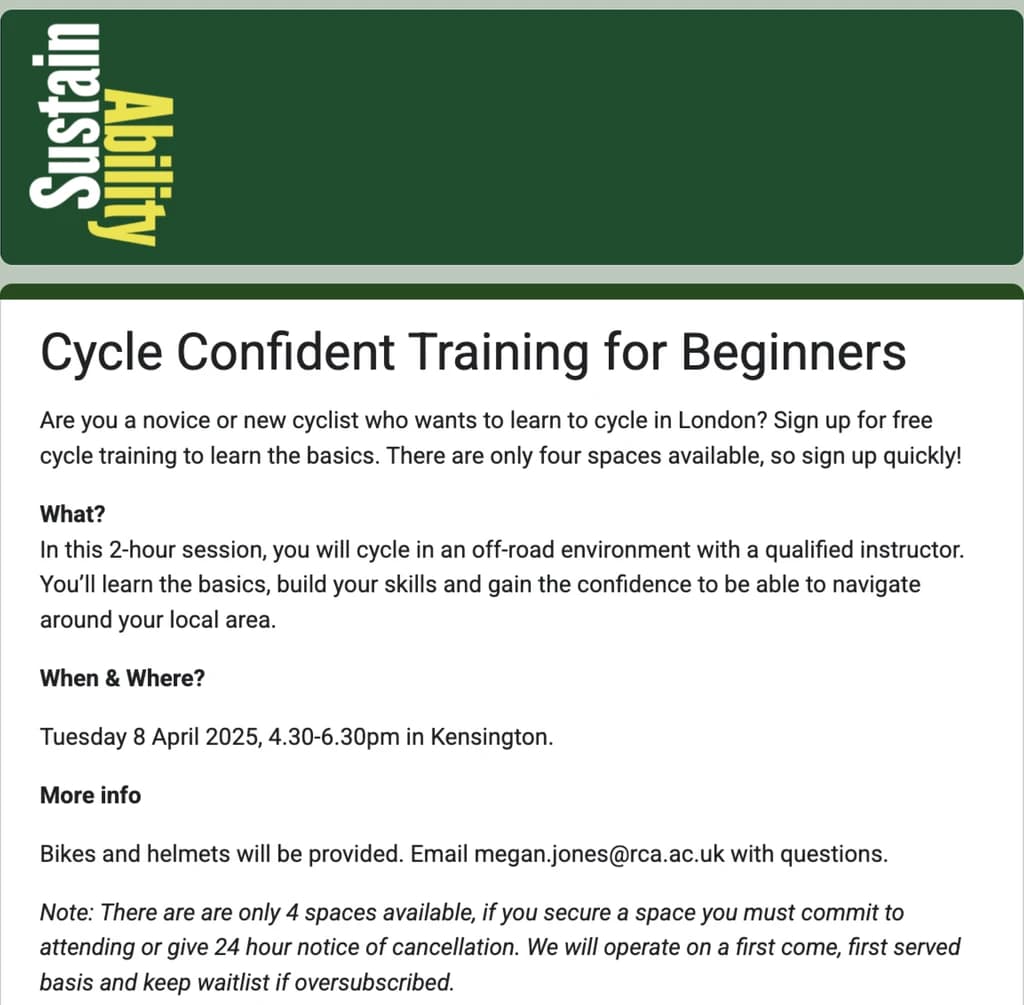
To understand why women hesitate to cycle in London, I carried out a series of first-hand explorations: trying TfL’s designated cycleways, visiting dangerous junctions, and joining free cycle training sessions. I also gathered insights through interviews with Jonathan from Hammersmith’s Group Cycle Training, RCA staff, and members of the London Cycling Campaign.
Seen through those conversations and field experiences, the barriers were not only about road conditions. They sat across gender, culture, infrastructure and safety. One cycle instructor noted that while he teaches men and women in the same way, women learners often need more support, encouragement and emotional reassurance before they feel ready to ride.
The project therefore shifted from asking how to persuade people to cycle, towards designing a system where the first attempt feels safe, social and worth repeating.
Preliminary Insights
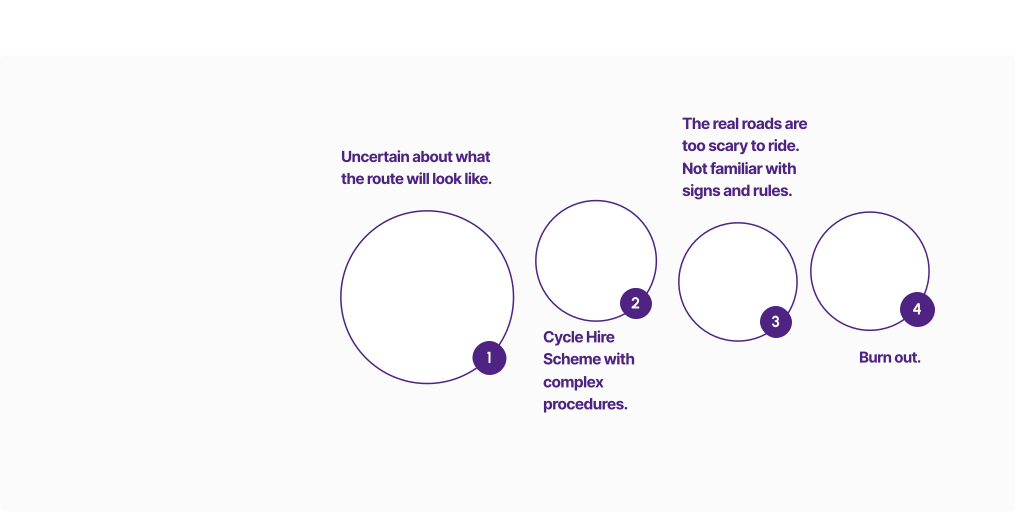
The barrier was not cycling ability alone.
Women needed a safe and low-pressure environment to build confidence before cycling became part of everyday life.
Safe start
Women preferred a protected environment to practise before entering real traffic.
Confidence over information
Information was widely available, but confidence—not knowledge—determined whether women actually cycled.
Social encouragement
Encouragement and emotional support helped women overcome anxiety more effectively than cycling guidance alone.
Design Hypothesis
From the insights, it became clear that women have many concerns about cycling — and taking the first step to try is often the hardest. Only when the initial experience feels enjoyable can confidence grow, eventually leading to a motivated and lasting cycling habit.


Rather than encouraging women to cycle immediately, the concept builds confidence step by step—from safe environments to independent everyday cycling.
Each layer represents a different stage of confidence, allowing women to progress at their own pace.
IF we encourage female cyclists to cycle in safe areas,
THEN we can boost their confidence and promote continued cycling.
Testing the Concept in a Real Campus Setting
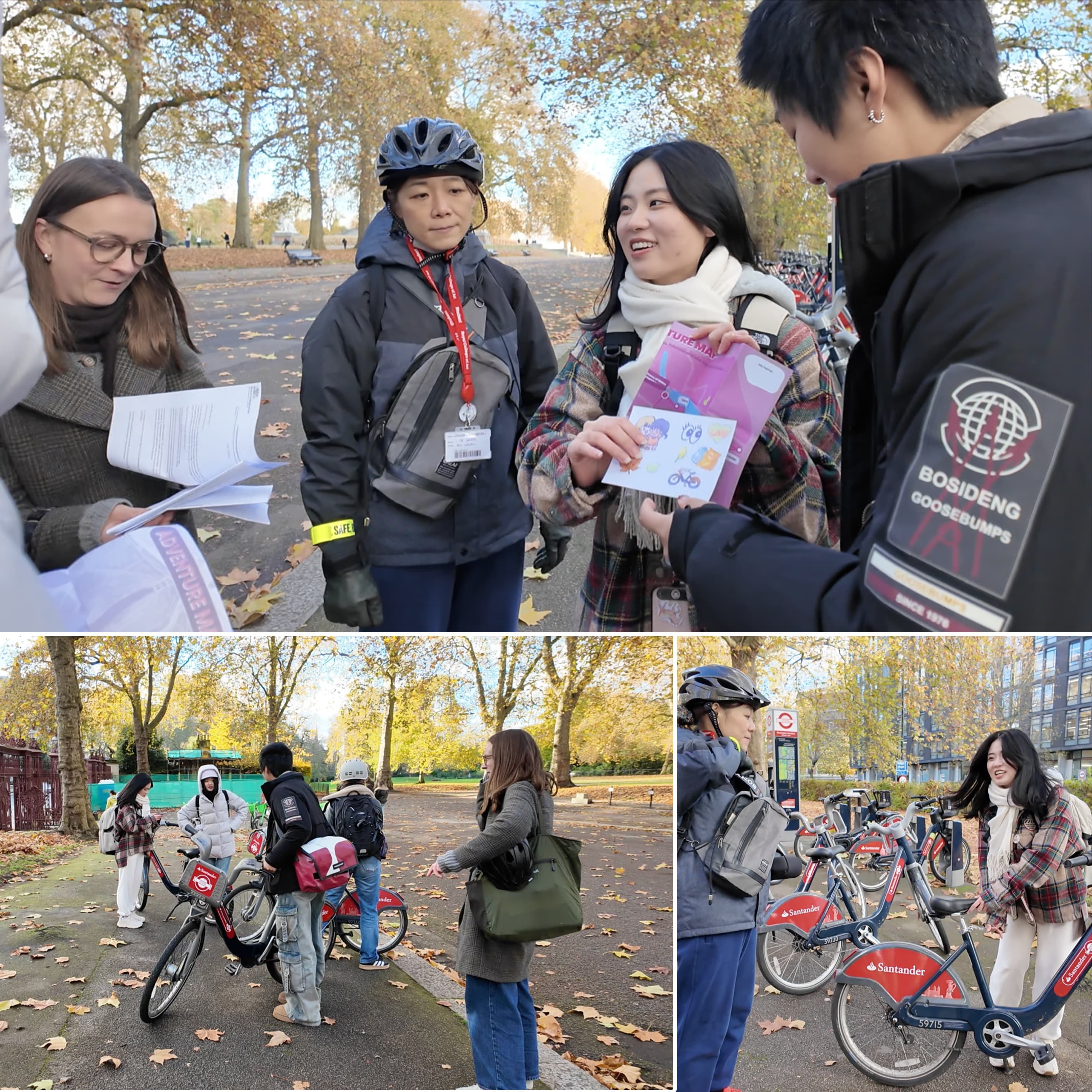
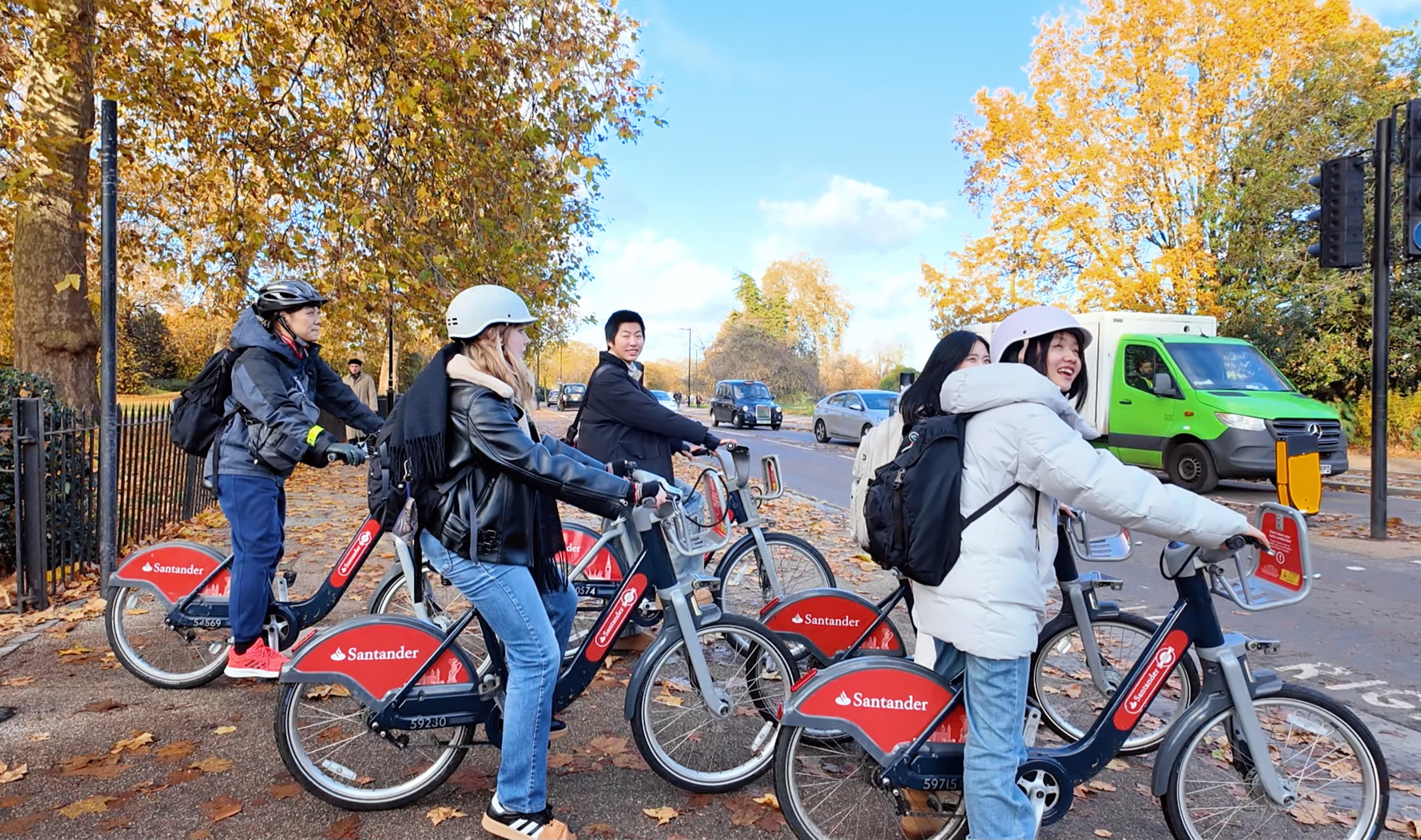
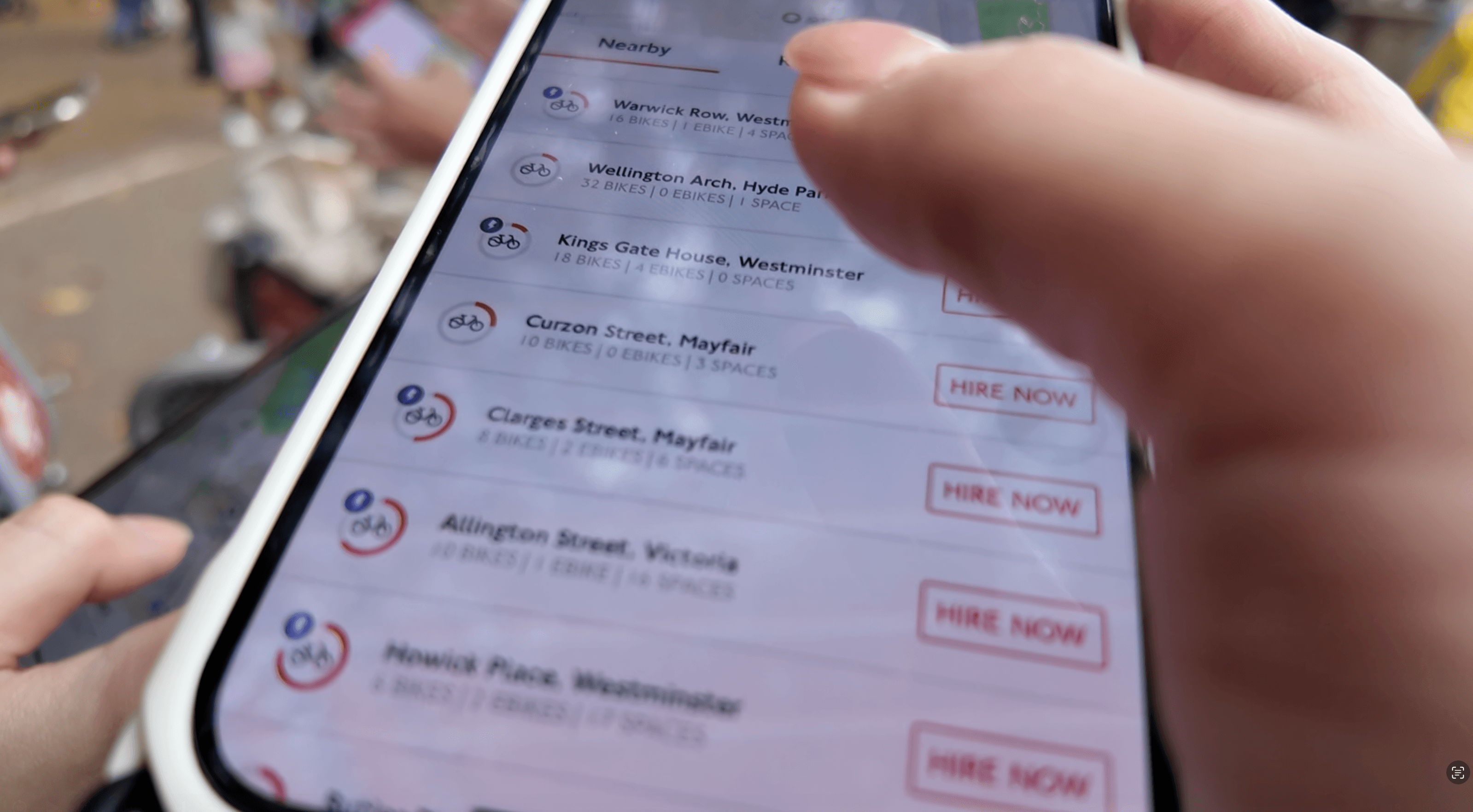
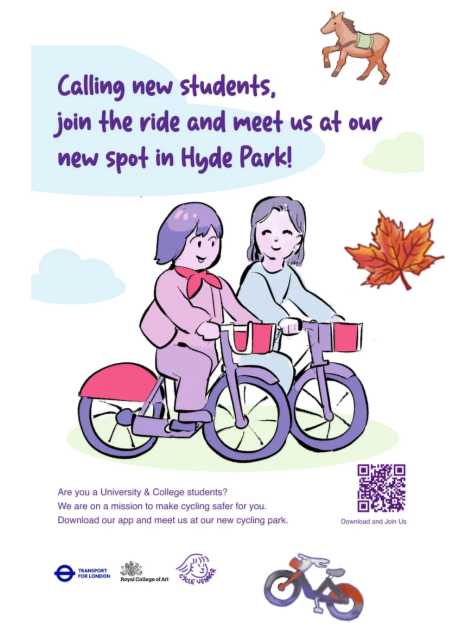
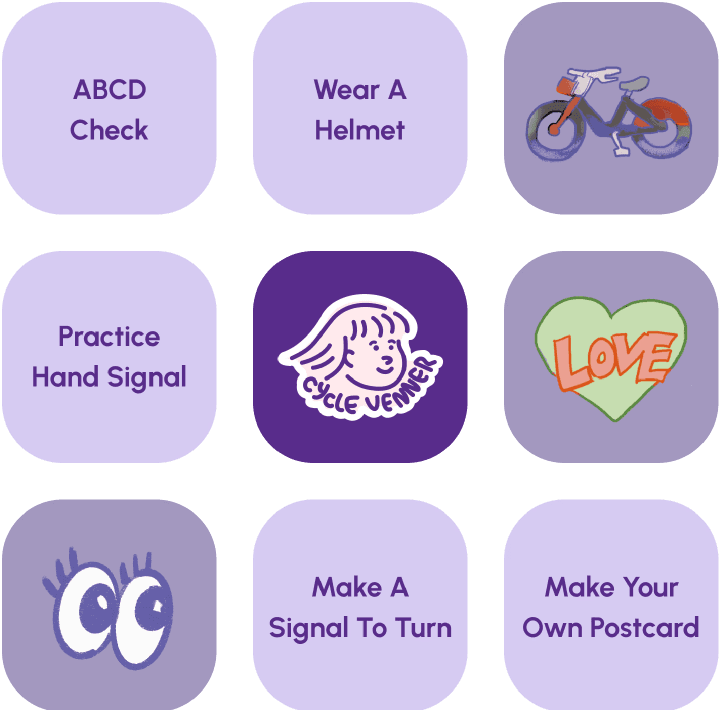
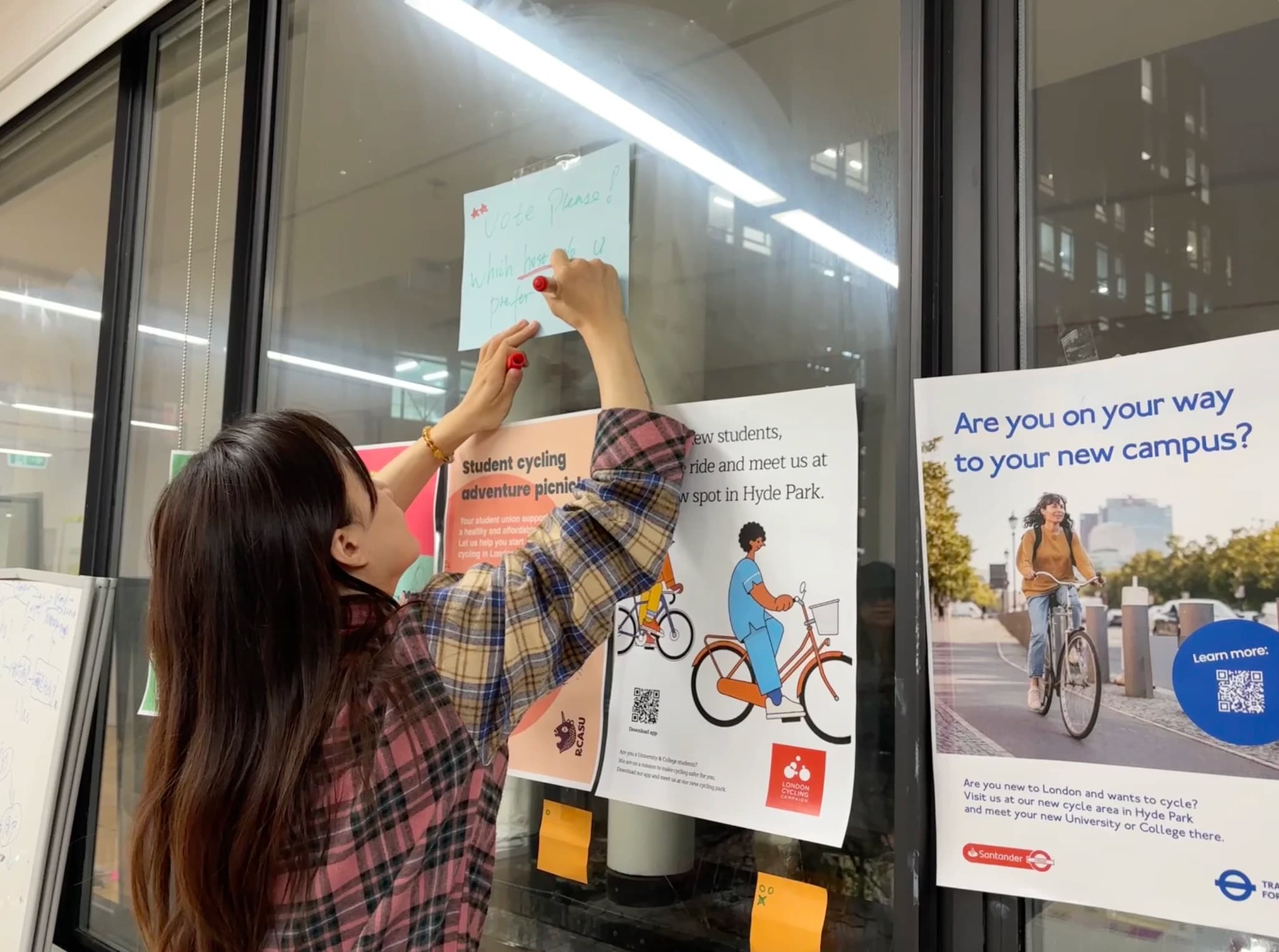
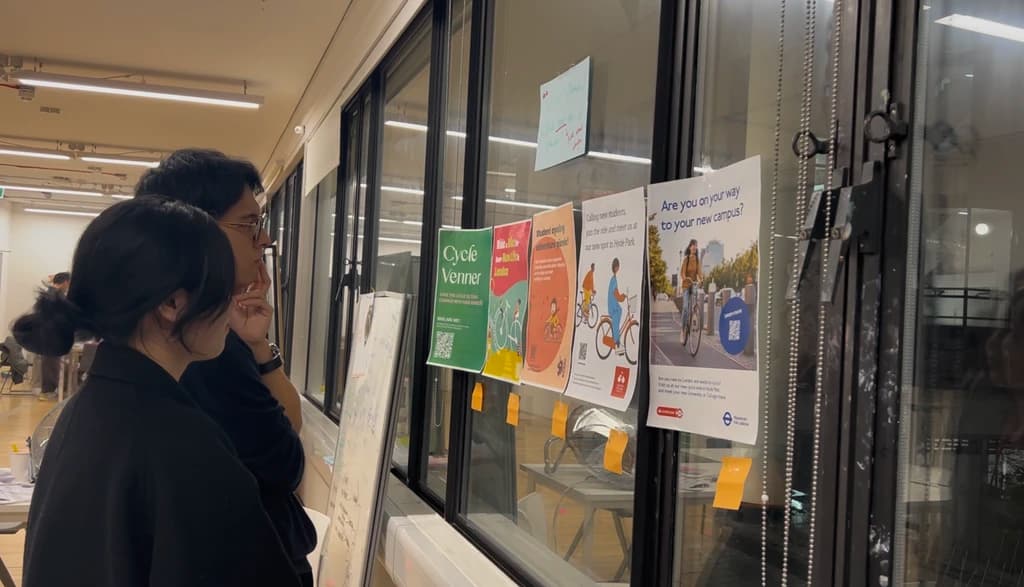
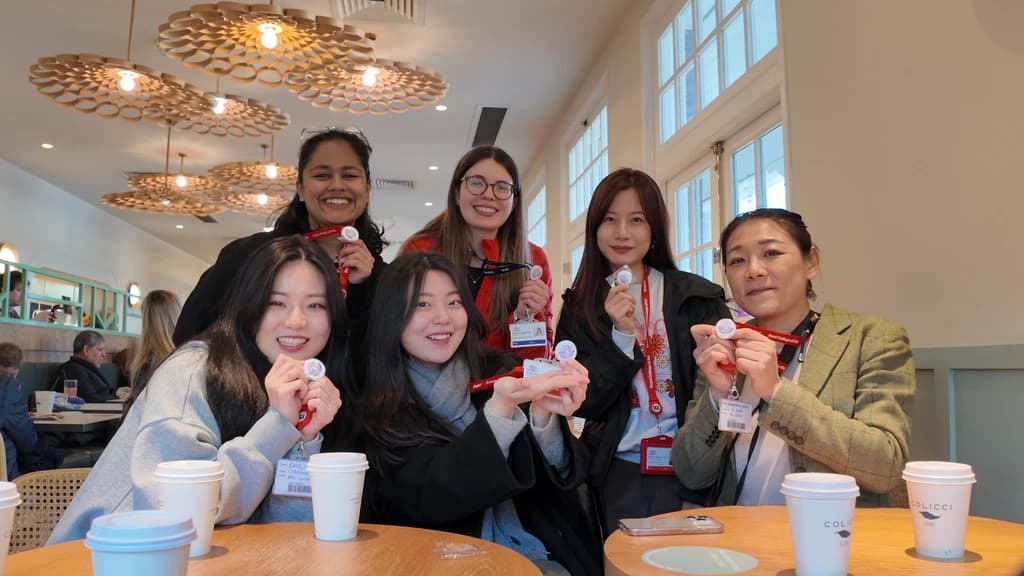
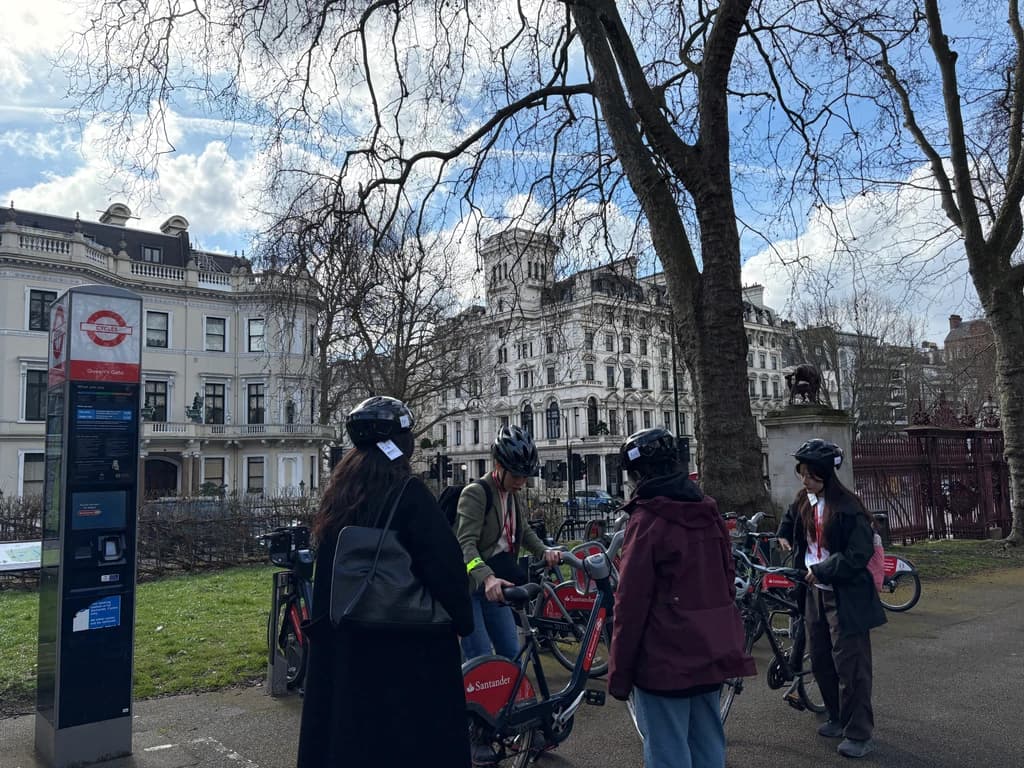
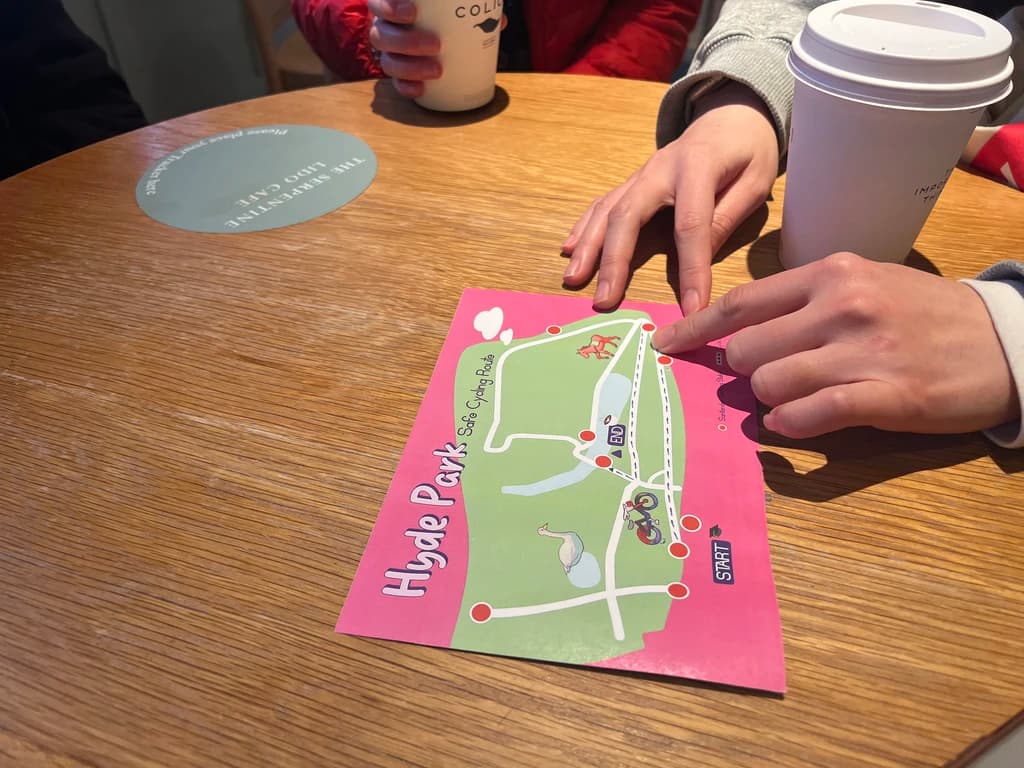
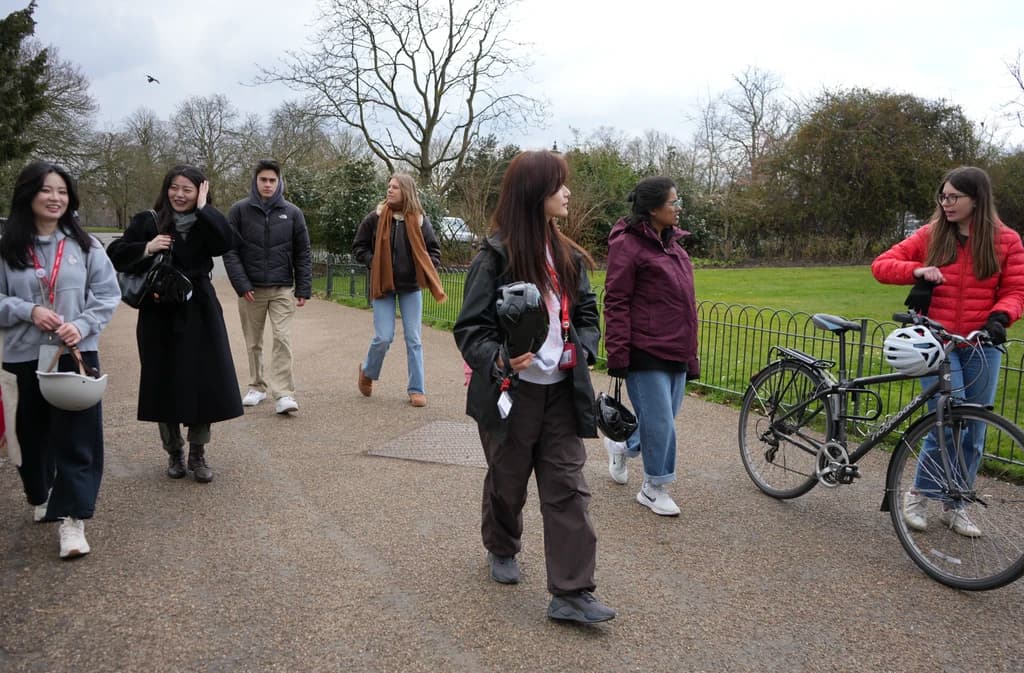
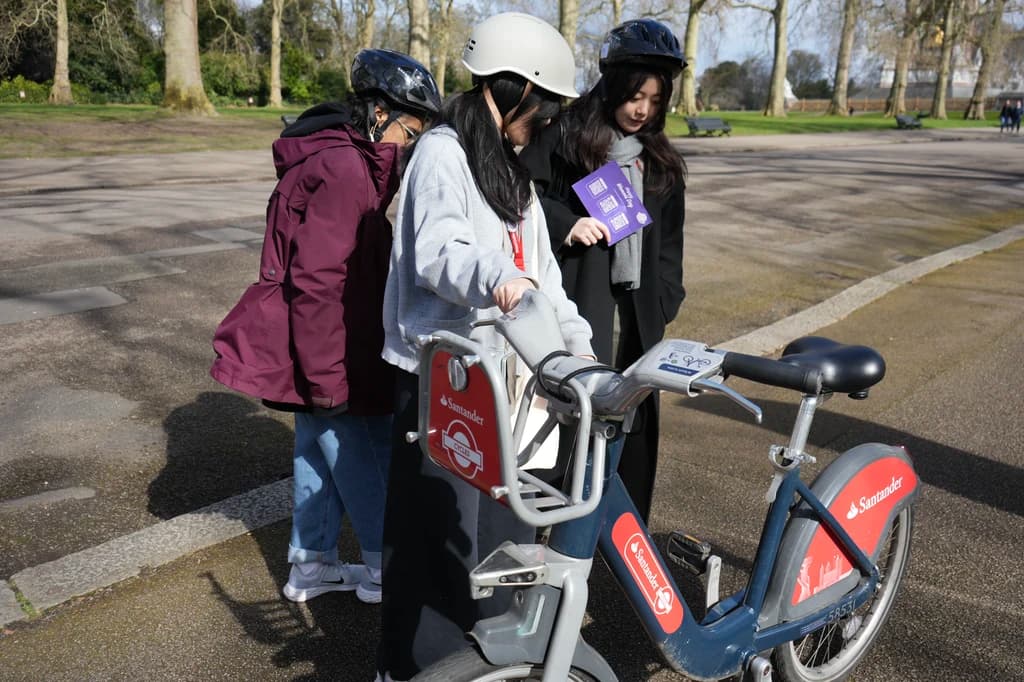
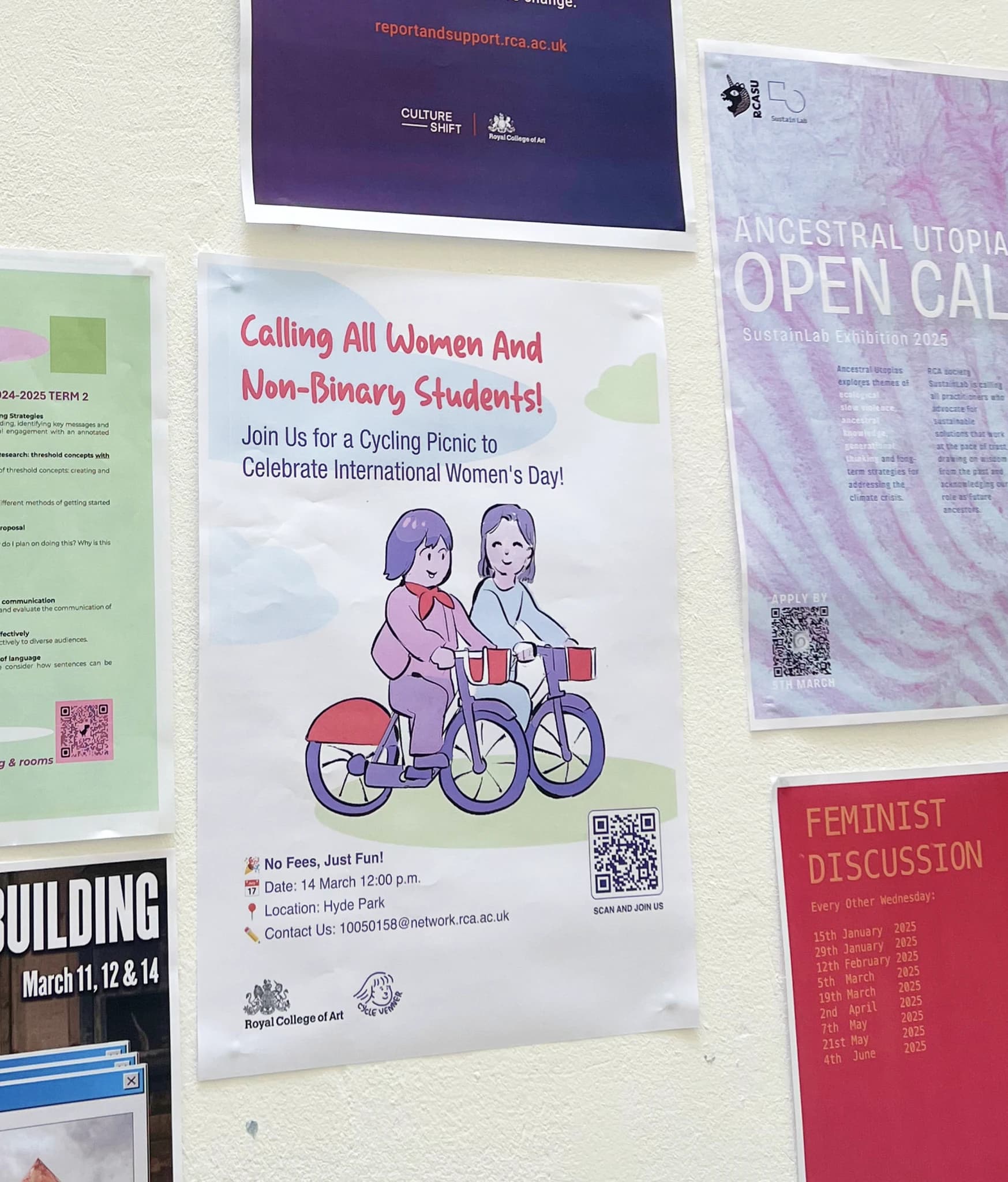
A Cycle Picnic was organised in Hyde Park, with participants recruited through campus posters. Before the event, shared-bike instructions, maps, and a bingo game were provided to enhance engagement. The test revealed that the bike rental system is not user-friendly and that participants often lack basic cycling skills.
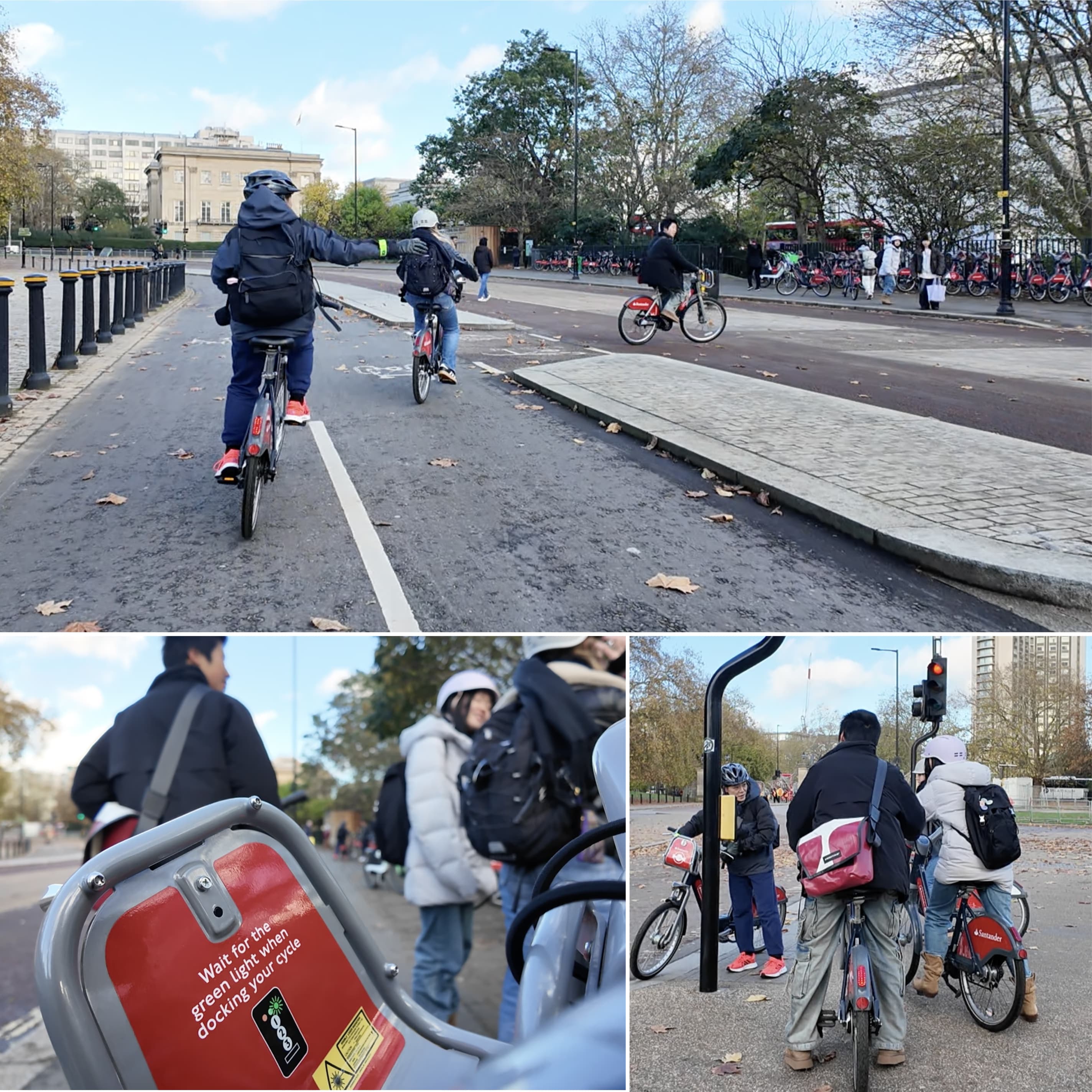
The campaign tested how a low-pressure group ride could turn cycling into a shared social experience. Participants practised renting bikes, reading routes, moving through safer areas and supporting each other during the ride.
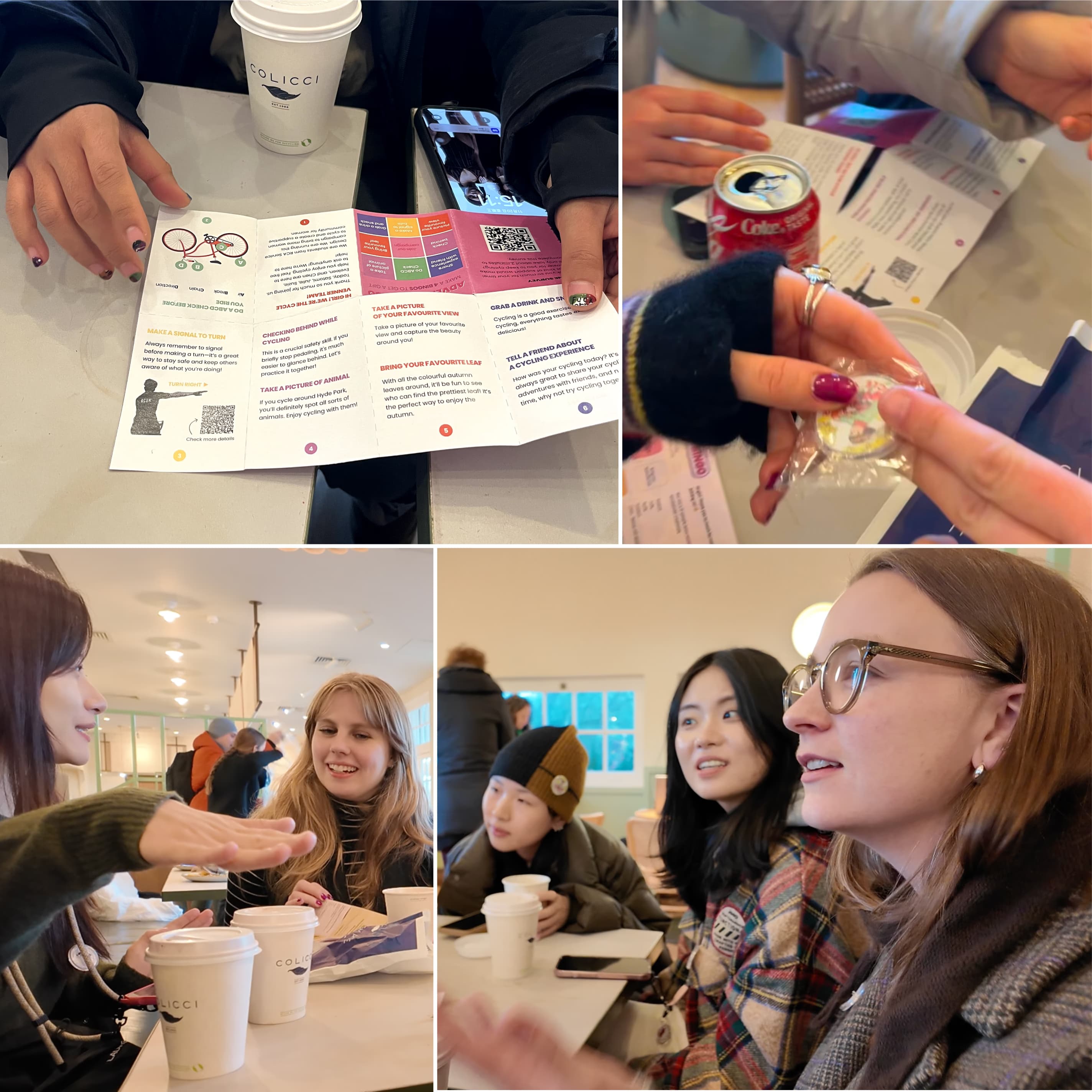
After the ride, feedback was gathered around confidence, enjoyment and willingness to cycle again. Reflection helped identify where support was still needed, from basic skills to clearer instructions and more sustained community touchpoints.
The prototype surfaced five recurring themes that shaped the concept.
Safe and enjoyable experiences encouraged participation, while trust emerged as the foundation that connected training, social support, and long-term confidence.
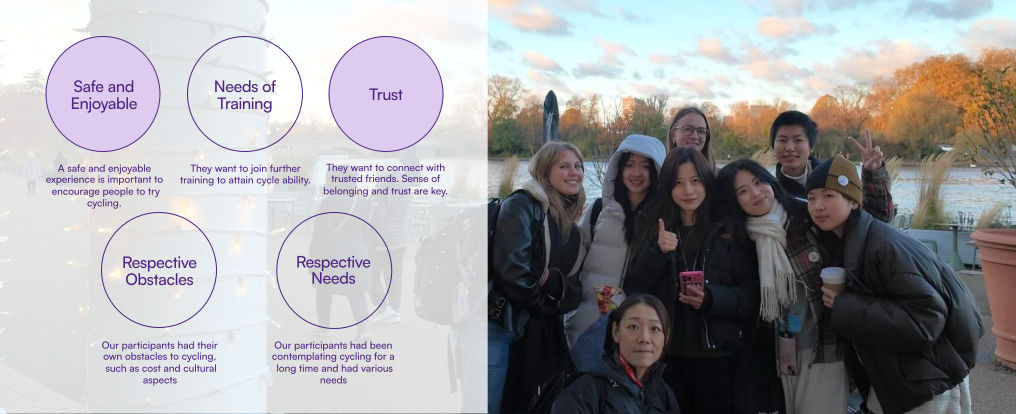
Confidence grows through trusted communities, not one-off interventions.
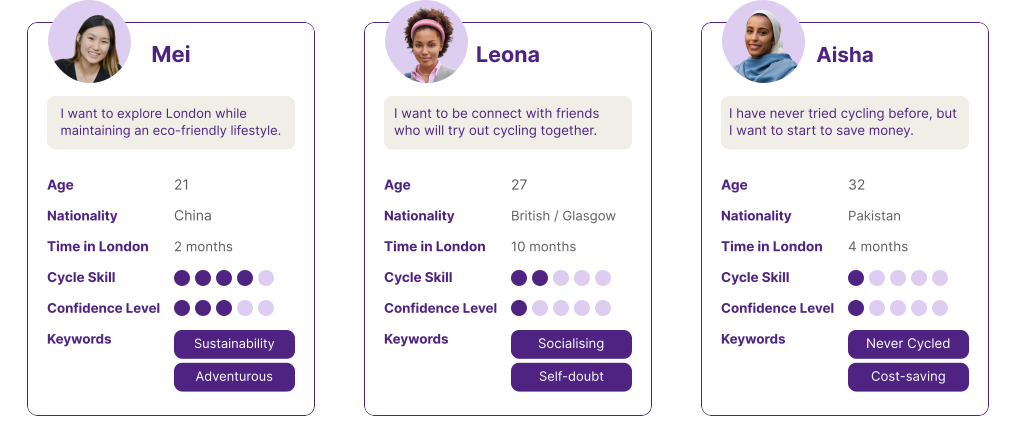
Persona: Female University Students
The target group identified is female university students, who are more inclined to adopt cycling as part of their daily routines. This group possesses both the physical capability and flexible timetables to accommodate cycling. Moreover, their shared institutional environment provides a trusted and supportive foundation for behavioural change.
Service Concept
Cycle Venner builds trust before encouraging cycling. Through university communities, students can explore cycling in a safe, social, and low-pressure environment before transitioning to everyday riding.
Why Cycle Venner?Cycle Venner is a community-led cycling initiative supporting female university students in London. Named after the Danish word Venner (“friends”), it reflects the belief that trust and companionship are the foundation for building cycling confidence. Through shared rides, outdoor events, and peer support, the initiative helps students take their first steps toward everyday cycling.
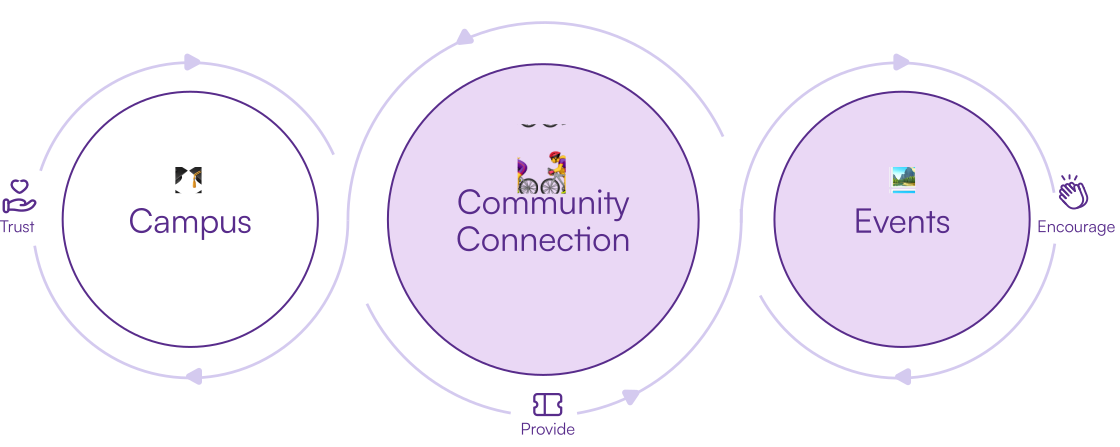
From first attempt to everyday cycling habit.
Service Growth Model
What a cycle picnic offers
Social Riding
Joining the Cycle Picnic is a relaxed and enjoyable way to socialise.
Adventurous Activities
Themed maps and light activities make the first cycling experience more inviting.
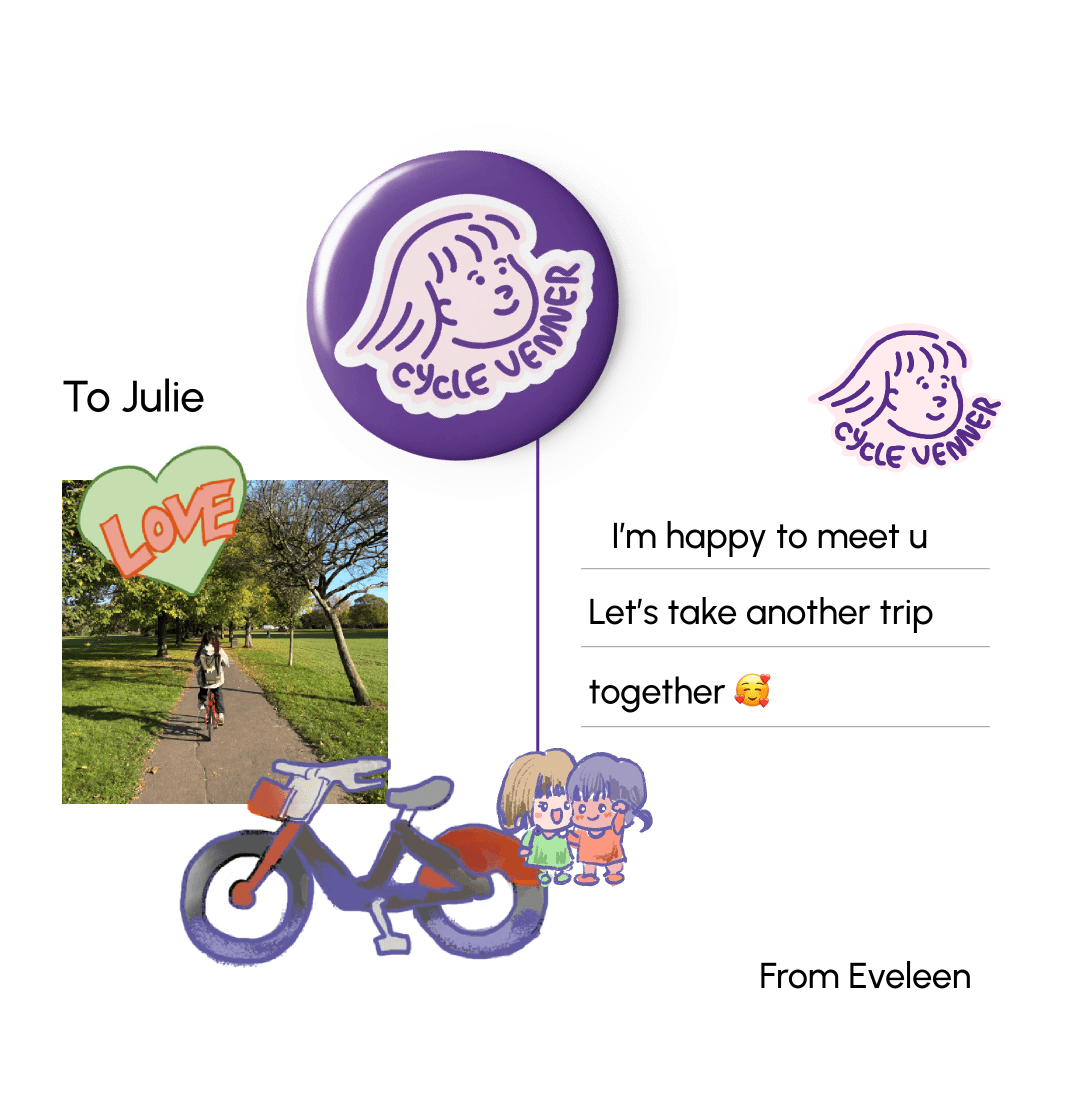
Souvenir
Small takeaways help participants remember the experience and keep the connection alive.
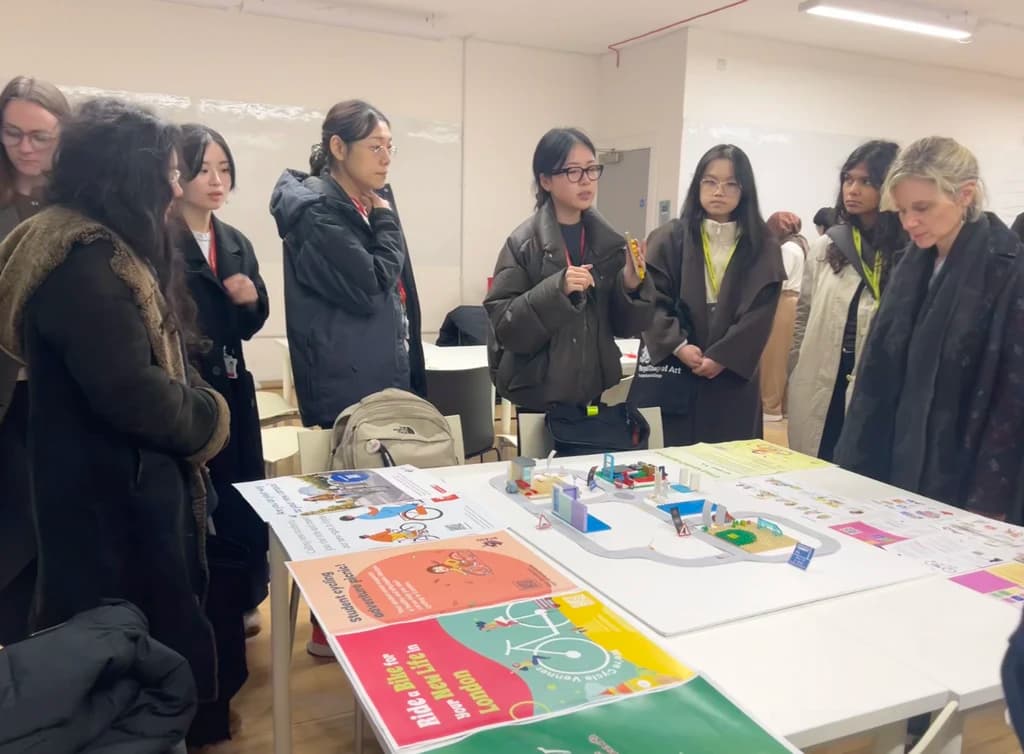
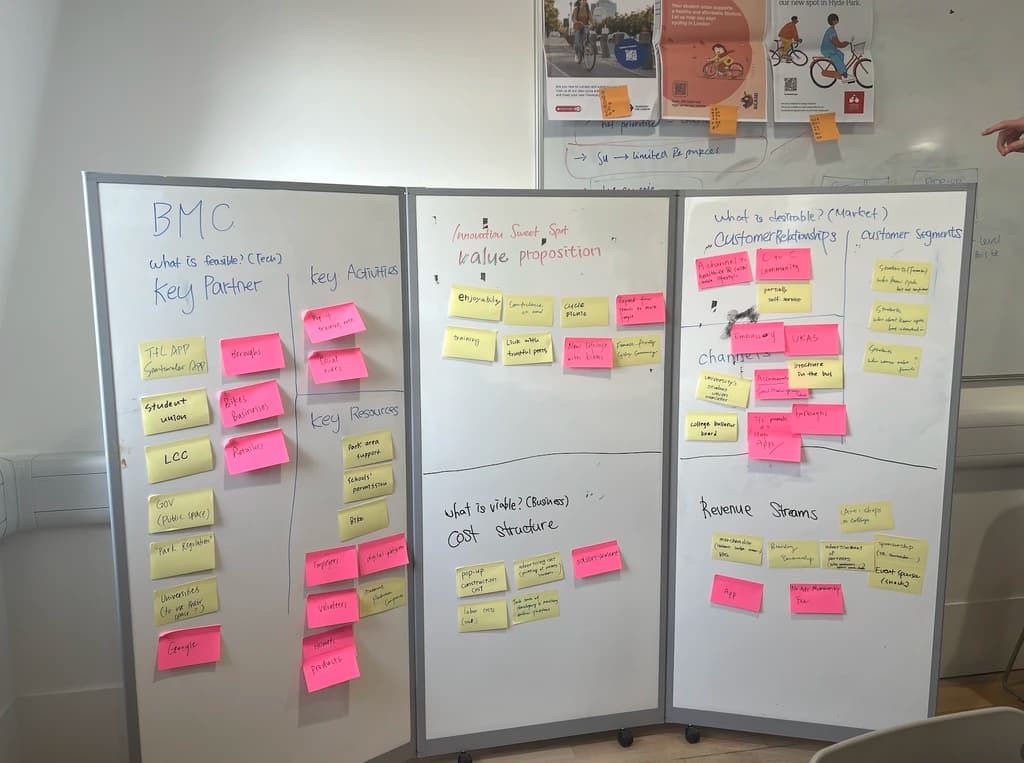
Testing the concept during a university open day revealed that institutional trust plays a critical role in encouraging participation. Students responded more positively to initiatives endorsed by universities and TfL, shaping the partnership strategy that followed.
Building a Sustainable Partnership Model
Insights from the campus pilot informed how universities, TfL, and community partners could work together to build a trusted and sustainable cycling service.
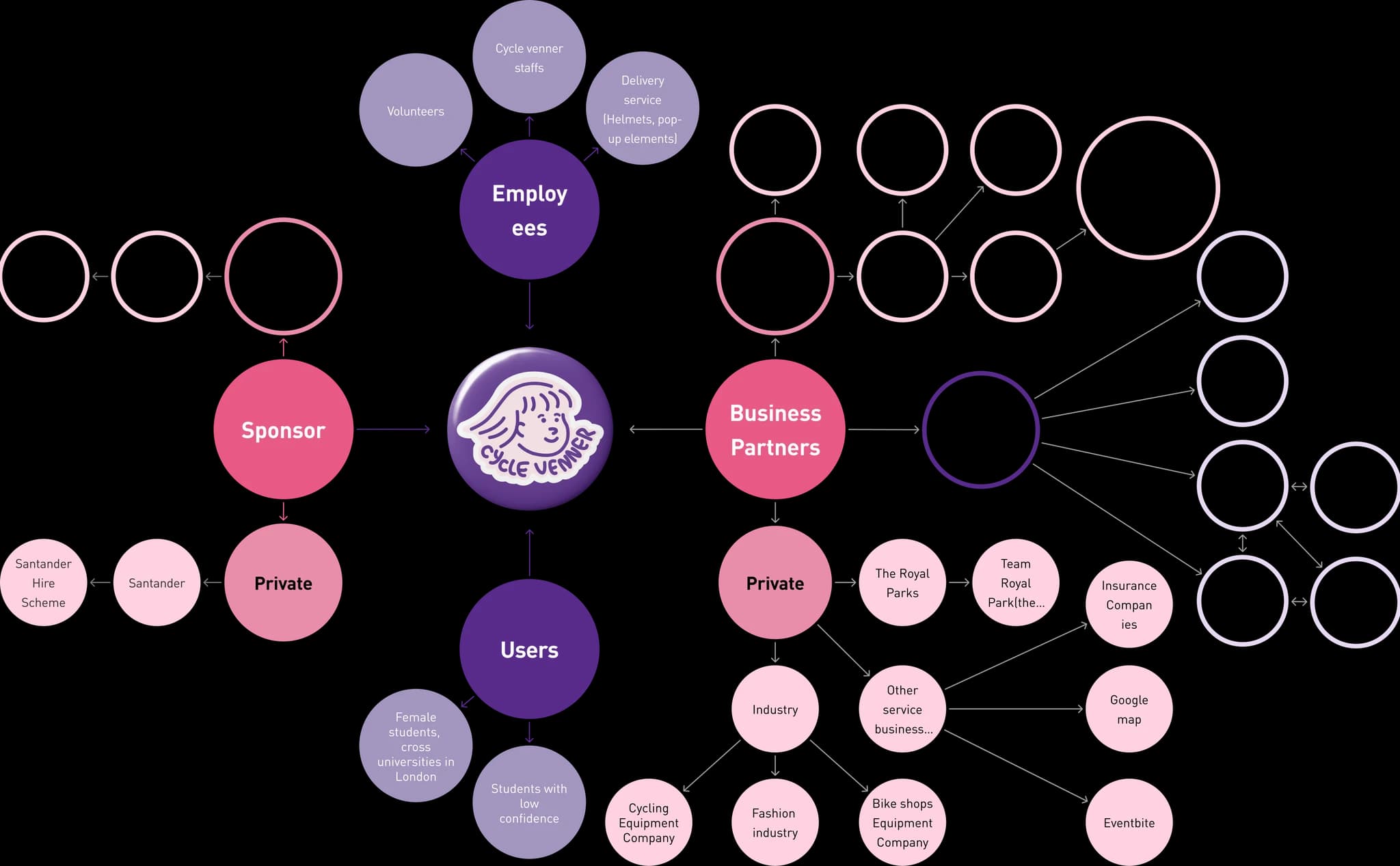
Universities
Universities can use Cycle Venner to advance sustainability goals, support student wellbeing and provide a trusted campus route into healthier travel habits.



Transport for London
TfL can extend its cycling strategy by supporting students while habits are still forming, helping confident cyclists carry sustainable travel behaviours beyond university.

Shared-bike Operators
Santander Cycles can lower the barrier to trial, introduce students to its bikes and app, and build relevance among a younger audience who may not own a bike in London.

Partnership Strategy
Trust is not only built between people, but also through institutions.
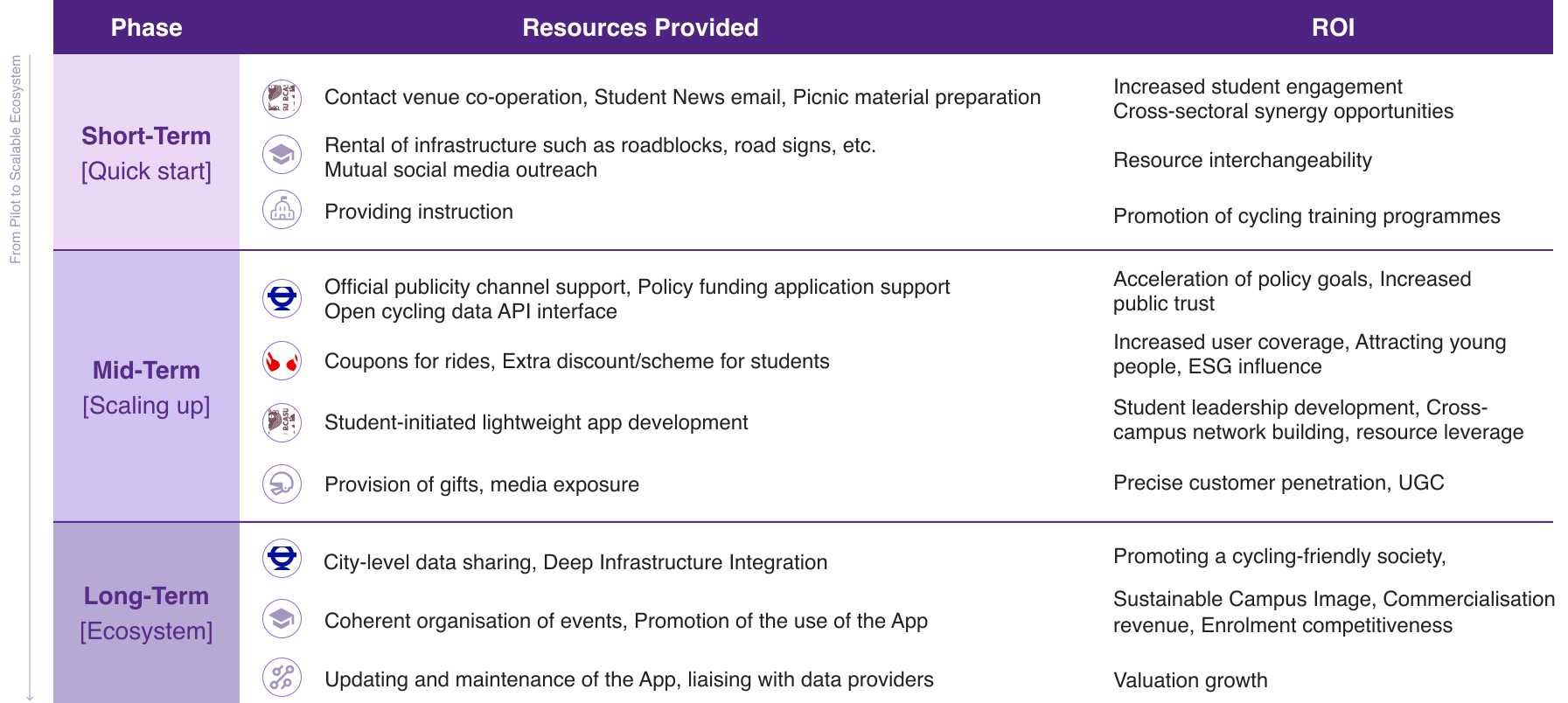
Starting with campus pilots, the initiative scales through trusted partnerships, creating shared value for students, institutions, and the wider cycling ecosystem.
Real-world Impact
Following the prototype, Cycle Venner was adopted by the RCA Sustainability team as part of its International Women’s Day programme.
What began as a student-led prototype evolved into an ongoing campus initiative, bringing together students, university staff, and professional cycling instructors to support beginner cyclists.
This demonstrated how a small service intervention could create lasting value beyond the project itself, while contributing to TfL’s long-term vision of making cycling a more accessible and everyday mode of transport across London.
Reflection
01
Start with People
Meaningful behaviour change begins by understanding what prevents people from taking the first step.
02
Build Trust
The biggest barrier wasn’t learning to cycle - it was having a trusted place to begin.
03
Design Systems
Lasting impact comes from connecting people, institutions, and communities around shared trust.
The most meaningful services don’t start with solutions.
They start by creating trust.